Caregiver Story Recording Example to Start
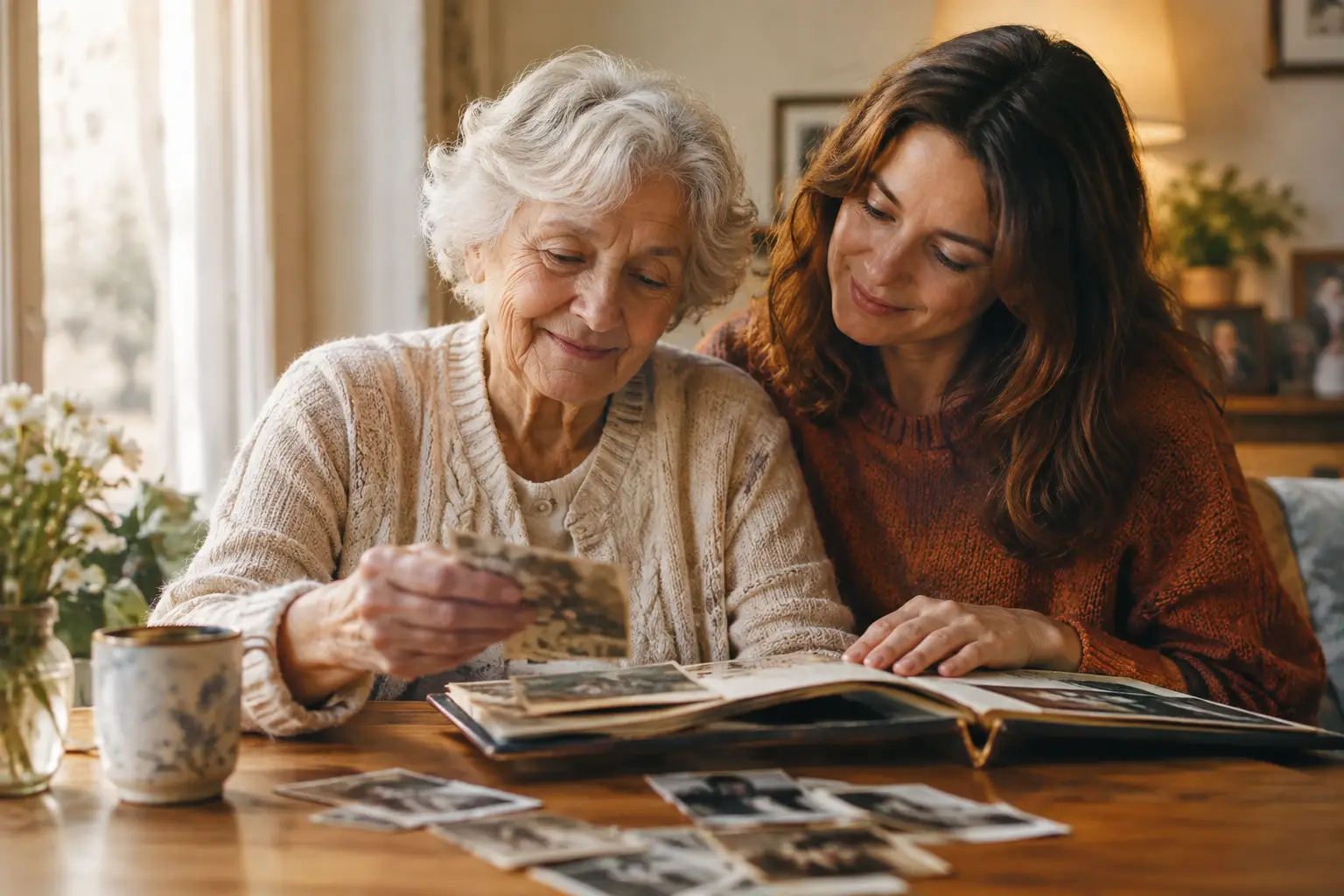
A caregiver often hears the stories no one else gets to hear: the memory that returns during breakfast, the name of a childhood friend, the small detail behind a family tradition. This caregiver story recording example shows how to turn one of those ordinary moments into something lasting - without making your loved one feel interviewed or overwhelmed.
The goal is not a perfect recording. A pause, a laugh, a correction, or a familiar expression can become the part your family treasures most. What matters is making room for their voice while there is still time to hear it.
Why caregivers are in a meaningful position to record stories
Caregiving creates closeness, but it can also make time feel scarce. Between appointments, meals, medications, and daily routines, preserving memories may seem like one more thing to manage. Yet a short conversation can fit naturally into the day. It can happen while folding laundry, sitting by a window, or resting after lunch.
You also have an advantage: you know what kind of day they are having. If your loved one is tired, ask one gentle question and let the recording be brief. If they are animated by an old song or photograph, follow that thread. A five-minute memory shared with ease is more valuable than an hour that feels pressured.
Story recording can offer connection, too. For some people, being asked about their life affirms that their experiences still matter. For others, it may bring up grief, confusion, or memories they would rather leave private. Both responses deserve respect. Your role is to invite, not insist.
A caregiver story recording example
Imagine you are sitting with your father after dinner. He has been looking through a box of old photographs, and you notice a picture of him standing beside a pickup truck. Instead of asking broad questions such as, “Tell me about your life,” begin with what is already in front of you.
Caregiver: “Dad, I see you smiling in this picture. Do you remember where this was taken?”
Father: “That was outside my uncle Ray’s garage. I was probably nineteen. He let me work there during the summer.”
Caregiver: “What did you like about working with him?”
Father: “He never rushed anybody. If you brought him a problem, he would lean on that old workbench and say, ‘Well, let’s see what the car is trying to tell us.’ I still think about that when something goes wrong.”
Caregiver: “What did Uncle Ray teach you that you carried into your own life?”
Father: “Patience, mostly. And to keep a good set of tools. Your grandmother used to say I collected wrenches like other people collected stamps.”
Caregiver: “What would you want your grandchildren to know about him?”
Father: “That he made people feel capable. Even when you didn’t know what you were doing, he’d find a way to let you help.”
That is enough for one recording. It holds a family relationship, a lesson, humor, and the rhythm of a father’s own speech. You do not need to pull out every detail in one sitting. Ending while the conversation still feels warm makes it easier to return another day.
What makes this example work
The questions are specific, but they leave room for the person speaking to lead. A photograph, recipe card, favorite hat, military keepsake, or piece of music can give the conversation a natural starting point. Familiar objects are especially helpful when memory is changing, because they do not require someone to search for an answer from nowhere.
Notice, too, that the caregiver does not correct or challenge the speaker. If a date is uncertain or a detail differs from what another relative remembers, let the story stand as it is. Personal memories are not courtroom testimony. They reveal how a person understood their life.
The final question looks forward. Asking what a loved one wants younger family members to know can bring a story beyond the past and into the legacy they want to leave. That may be a value, a family joke, an apology, a blessing, or simple practical advice.
How to prepare for a gentle recording session
Choose a quiet, familiar place with as little background noise as possible. Turn off the television, silence notifications, and sit close enough for clear audio. If your loved one uses hearing aids, glasses, or a mobility device, make sure they are comfortable before you begin.
Explain the purpose in plain language. You might say, “I would love to save your voice telling this story so the family can hear it later. Is that okay with you?” Consent matters, even within close families. Let them know they can stop, skip a question, or ask for a recording to be deleted.
Keep your first session short. Ten to fifteen minutes is often plenty, especially for someone living with fatigue, illness, or cognitive changes. If they become quiet, distracted, or upset, pause. You can offer reassurance without forcing a return to the subject: “Thank you for sharing that. We can stop for today.”
Before recording, think of one memory rather than a whole life history. “Tell me about the house you grew up in” is easier to enter than “Tell me everything about your childhood.” One story often opens the door to another.
Questions that invite a real voice, not a formal interview
The best questions are rooted in affection and curiosity. Try asking about a person, place, tradition, or turning point that already feels familiar to them.
You might ask, “Who made you laugh when you were young?” “What did your kitchen smell like growing up?” or “What was the best advice you ever received?” For a parent or grandparent, “What do you remember about the day I was born?” can be deeply meaningful, but only if it feels comfortable for both of you.
Questions about daily life are often overlooked and can become precious with time. Ask how they got to school, what they wore to work, what a Saturday evening looked like, or how they met a lifelong friend. These details help future generations understand not only what happened, but what life felt like.
If your loved one has difficulty recalling the past, stay in the present. Ask about a favorite song, a food they enjoy, what they are proud of, or a message they would like to give the family. A recording does not need to be a chronological biography to be meaningful.
When a story becomes emotional
Some memories arrive with joy. Others carry loss. As a caregiver, you may feel tempted to move past painful moments quickly. Sometimes that is the kindest choice. Other times, a person may want to be heard.
Follow their lead. You can say, “Would you like to tell me more, or would you rather talk about something else?” Avoid promising that recording will make grief easier. It may not. But being listened to with patience can be a gift in itself.
If a loved one shares something deeply personal, ask before saving or sharing it with others. Not every recording is meant for every family member. Clear permission protects their dignity and helps prevent misunderstandings later.
Preserve the recording while the moment is fresh
Afterward, give the file a simple name that your family will recognize, such as “Dad on Uncle Ray’s Garage - June 2026.” Add a brief note about who was present, what prompted the story, and any names mentioned. Those few details can make a recording easier to understand years from now.
Store a copy somewhere your family can reliably access, rather than leaving it only on one phone. A dedicated memorial and legacy space can also help organize recordings alongside photographs, written memories, and messages from relatives. With VoiceForEternity, families can preserve these spoken stories on a permanent QR-linked memorial page, allowing loved ones near and far to hear the voice behind the memory.
You do not need the right equipment, a list of perfect questions, or a special occasion to begin. The next quiet moment may be enough. Ask about the photograph on the table, press record with permission, and listen closely. Their voice has a place in your family’s future.