A Guide to Family Memory Backups That Last
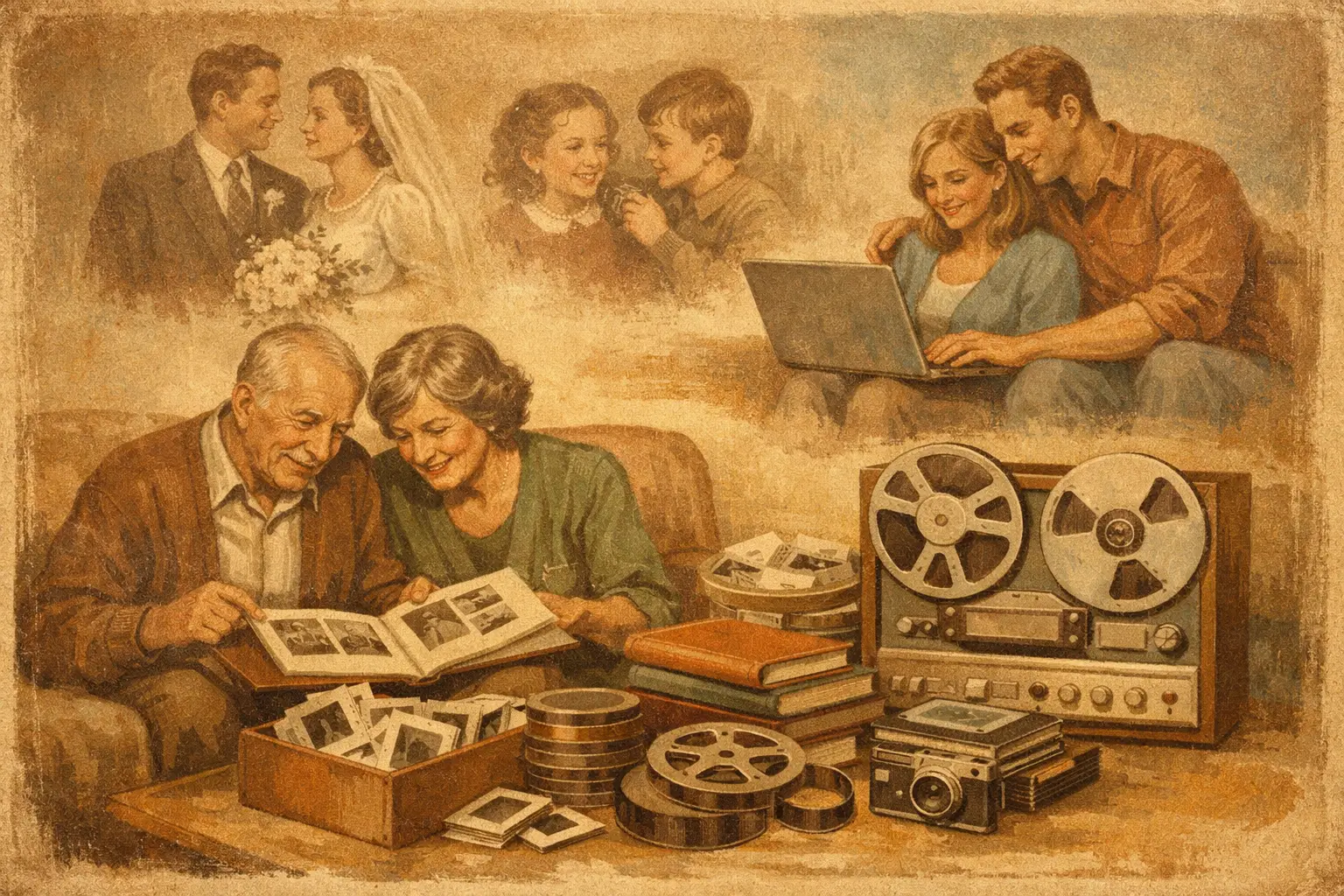
The recording may be only three minutes long: your father laughing at his own joke, your grandmother describing the first house she bought, your spouse leaving a birthday message for a child. Yet if that phone is lost, damaged, or replaced without a transfer, that small piece of a person can disappear without warning. A thoughtful guide to family memory backups begins there: with the understanding that a memory is not safely preserved simply because it exists on a device.
Family archives deserve more care than a single folder labeled “Photos” or a stack of old phones in a drawer. The goal is not to make technology complicated. It is to create a clear, gentle system that protects the voices, images, stories, and messages your family would miss most.
Start With What Cannot Be Recreated
Most families have more digital material than they can sort in a weekend. Begin with the irreplaceable items, not every screenshot or duplicate photo. A clear voice recording, a video of a loved one telling a childhood story, a handwritten note, a wedding toast, or a message recorded during illness carries meaning that cannot be downloaded again.
Ask a simple question: if this file vanished tomorrow, would someone in our family feel the loss deeply? If the answer is yes, it belongs in your protected collection.
Audio deserves special attention. A photograph can preserve a face, but a voice preserves rhythm, humor, accent, tenderness, and the familiar way someone says your name. For families supporting an aging parent or facing a serious diagnosis, recording a few conversations now can matter more than waiting for the “right” time to create a complete life history.
You do not need a perfect interview. Start with ordinary prompts: What was your first job? What did your parents teach you? What do you want your grandchildren to know? Tell me about the day you met Mom. Short answers become treasured ones.
Use the 3-2-1 Approach for Family Memories
A practical guide to family memory backups should give you a plan that works even when life gets busy. The classic 3-2-1 approach is a helpful foundation: keep three copies of meaningful files, store them in two different types of places, and keep one copy somewhere separate from your home.
For example, you might keep original recordings and photos on a home computer or external drive, maintain a second copy on another drive, and save a third copy in a trusted cloud storage account. If a laptop fails, a drive is misplaced, or a home is affected by fire or flooding, you are not relying on one point of failure.
This does not mean every copy must be complicated. What matters is separation. Two files on the same phone are still vulnerable to the same accident. A backup drive stored beside the computer offers little protection from a house fire. The more meaningful the memory, the more valuable that extra layer becomes.
Name Files So Someone Else Can Understand Them
A file named “IMG_4827” may make sense only until the person who created it is unavailable to explain it. Use descriptive names that preserve context, such as “Grandpa_James_tells_how_he_met_Evelyn_2025-04-12” or “Mom_birthday_message_for_Lucas_2024.”
Include a date when you know it, the person speaking or pictured, and a brief description of what is happening. This small habit makes future searching easier and gives the next generation a starting point when names and faces become less familiar.
For scanned letters, recipes, certificates, or journals, consider adding a short note in the file name or folder explaining whose item it is and why it matters. A recipe card becomes more than ingredients when a grandchild knows it was made every Christmas Eve.
Keep Originals, Then Create Easy-to-Share Copies
Original files should be protected in their highest available quality. Avoid repeatedly editing, compressing, or sending the only version through messaging apps, which can reduce quality. Keep the original audio, photo, or video file in a master archive before creating smaller copies for text messages, social media, or family group chats.
Organize that master archive in a way that feels natural to your family. Some people prefer folders by person, such as “Grandma Rosa” or “Dad.” Others prefer folders by event, such as “Family Reunion 2019” or “Stories From the Hospital.” Either can work. The best system is one a family member can understand without needing a detailed manual.
A simple structure may include folders for voices and interviews, photographs, videos, documents, and special messages. Within those, use names or years. Resist the urge to build an elaborate system you will not maintain. Clarity is more valuable than complexity.
Choose a Home for Living Memories
Traditional backups are essential, but a family legacy also needs a meaningful way to be found, heard, and shared. A hard drive can preserve a recording, yet it does not always invite someone to press play.
For especially important stories and messages, consider a dedicated memorial or legacy platform designed for family access. VoiceForEternity, for example, gives families a place to record and organize a loved one’s voice and memories, then connect them to a permanent QR-linked memorial page. This can make a voice accessible at a gravesite, on an urn, in a garden, or from across the country.
There is a trade-off to consider. Cloud platforms offer convenience and collaboration, while personal storage gives you direct control of your copies. The strongest approach often uses both: keep original files in your own archive while placing selected memories in a trusted, family-facing space where people can actually experience them.
Before choosing any service, understand how access works, who can contribute, what happens if family circumstances change, and whether ongoing fees could affect long-term availability. When preservation is tied to remembrance, clarity about ownership and permanence matters.
Give More Than One Person Access
A family archive should never depend entirely on one person knowing a password, owning a phone, or remembering where the drive is stored. Choose at least one backup steward - perhaps an adult child, sibling, spouse, or trusted relative - and let them know where the archive lives.
This is not about giving up privacy. Sensitive recordings, medical details, or private letters can remain restricted. It is about preventing an archive from becoming inaccessible at the moment a family most needs it.
Write down the basics in a secure place: the names of storage locations, how to access them, who should receive copies, and any wishes about sharing. Update this information when you change devices, move files, or add a new storage account.
Families who live far apart may also benefit from a shared routine. One relative can scan old photographs, another can record interviews, and someone else can label files. The work becomes lighter when it is shared, and the resulting archive reflects more than one person’s perspective.
Check Your Backups Before You Need Them
A backup that has never been opened is only a hope. Once or twice a year, set aside an hour to test the system. Open several audio files, photos, documents, and videos from each storage location. Confirm that the files play correctly, the drive still works, and the right people can access what they need.
Use the same check-in to add new material. A holiday gathering, a new baby, a retirement celebration, or a quiet afternoon listening to family stories can all become an opportunity to preserve something real. You do not have to capture every moment. A few intentional recordings each year can become a remarkable collection over time.
Technology changes, too. If an old file type no longer opens easily or a storage device is aging, move the files to a current format and replace the hardware. Preservation is an act of ongoing care, not a task completed once and forgotten.
Make Room for the Ordinary Voice
Families often save the milestone moments and overlook the everyday ones. But years later, a simple voicemail, a familiar greeting, or a story told at the kitchen table may be the recording that brings someone closest again.
Choose one person this week. Ask for one story. Save it with a name, make a second copy, and tell someone else where it lives. That small act is not merely a backup. It is a way of saying that their voice, their life, and their place in your family are worth carrying forward.