How to Preserve Spoken Accents for Generations
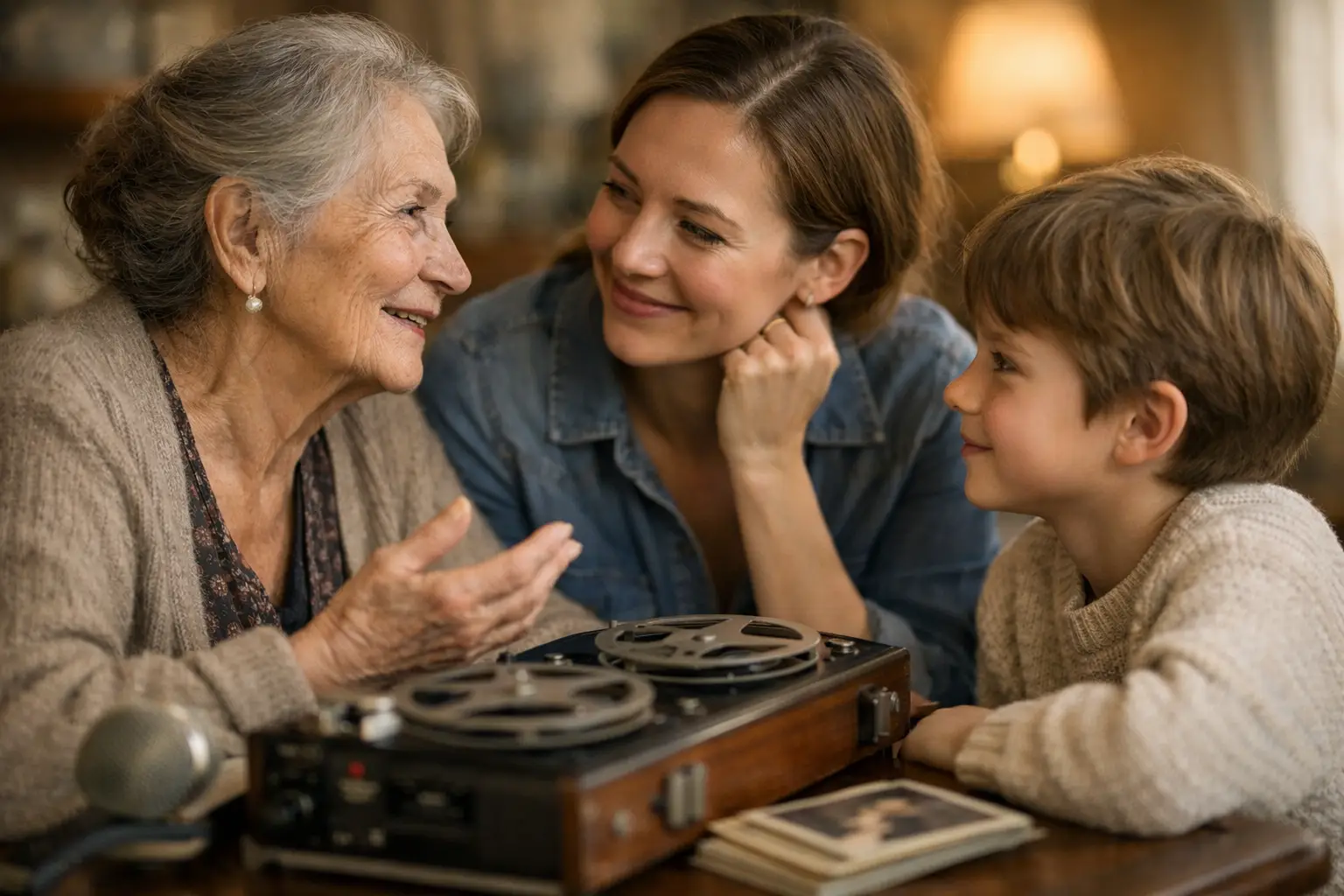
A familiar accent can bring someone into the room more quickly than a photograph. It lives in the way a grandmother says a child’s nickname, the rhythm of a father telling a joke, or the particular pronunciation of a hometown street. Learning how to preserve spoken accents means saving more than words. It means keeping the sound of a person’s life, place, and personality available to the people who will miss them.
Accents can soften, shift, or disappear across generations. Families move, children grow up hearing different voices, and memories become harder to describe in writing. A recording lets future listeners hear what a written story cannot fully hold: the pauses, the laughter, the warmth, and the words that sounded uniquely like home.
Why a Spoken Accent Is Part of a Legacy
An accent is not an imperfection to correct or a detail to smooth away. It may reflect a childhood region, a first language, years spent in another country, military service, immigration, a close-knit community, or a life shared with people from many places. Even when someone’s accent changes over time, each version tells part of their story.
For children and grandchildren, hearing that voice can create a connection that facts alone cannot provide. They may learn where their loved one came from, but a recording can help them feel it. The way someone says “coffee,” “y’all,” “soda,” or a family surname can carry a whole world of belonging.
This is especially meaningful when a loved one speaks more than one language. Their voice may change in tone, humor, and expression when they speak the language of their parents or childhood. Preserving those moments honors the full person, not only the version of them that appeared in public or on paper.
How to Preserve Spoken Accents With Natural Recordings
The best recordings are rarely formal speeches. A loved one does not need a perfect voice, a polished story, or a quiet studio to leave something meaningful behind. What matters is capturing speech that sounds like them.
Record everyday conversation, not only life histories
A life story interview is valuable, but everyday language often reveals an accent most naturally. Ask your loved one to describe how they made a favorite meal, tell a story about their first job, explain a family tradition, or remember a childhood friend. When people are comfortable and focused on something familiar, their natural expressions and pronunciation tend to come through.
You might also record them reading a favorite poem, a prayer, a recipe card, a letter, or a children’s book they once read aloud. These recordings can become especially treasured because they preserve both the voice and a meaningful piece of family culture.
Avoid asking someone to “say something in your accent.” That can make a person feel self-conscious, particularly if they have spent years being teased or corrected for the way they speak. Instead, create a comfortable conversation where their voice can simply be heard and appreciated.
Ask questions that invite local language and memories
Specific questions often bring out the phrases, pronunciations, and stories that general questions miss. Ask what people called certain foods where they grew up, what games they played as children, how they got to school, or which sayings their parents used most often.
Questions about place are particularly helpful. Invite them to describe their neighborhood, the sounds outside their childhood home, a local celebration, or the first time they traveled away. Place-based memories naturally bring back regional vocabulary and the cadence of earlier years.
If your loved one has roots outside the United States, ask about words that do not translate neatly into English. Let them explain what those words mean, when they are used, and who used them. A brief explanation beside the original phrase gives future listeners both the sound and the context.
Preserve family sayings exactly as they were said
Every family has language that belongs to it: pet names, gentle warnings, teasing expressions, mispronounced words that became traditions, and phrases repeated at every holiday gathering. Write these down if you can, but record them aloud whenever possible.
Do not edit out grammar, regional speech, or repeated words. A cleaned-up transcript may be easier to read, but the recording should remain true to the speaker. The point is not to make the voice sound more formal. The point is to preserve the voice your family recognizes.
Make the Recording Clear Without Making It Complicated
You do not need expensive equipment to capture a meaningful voice. A phone or computer microphone can work beautifully when used with a little care. Choose a quiet room, turn off televisions and loud appliances, and place the device close enough to hear the speaker clearly without asking them to raise their voice.
Before beginning, make a short test recording. Listen with headphones if possible. If the room sounds echoey, try a smaller space with curtains, rugs, or upholstered furniture. These soft surfaces can reduce harsh echoes.
Keep sessions short enough to feel comfortable. Twenty or thirty minutes may be more than enough, especially for an older loved one or someone who tires easily. Several gentle conversations often create a richer archive than one long interview. A person may remember something important days later, after the pressure of the first conversation has passed.
If a loved one has a soft voice, speech changes caused by illness, or difficulty speaking for long periods, record what is possible now. Even a few sentences, a greeting, or a favorite phrase can become deeply meaningful. There is no minimum length for a voice to matter.
Save the Story Around the Accent
A recording becomes more useful to future family members when it includes a little context. Label each audio file with the speaker’s name, date, location, and topic. A simple note such as “Grandpa Joe sharing memories of his Brooklyn childhood, May 2026” can help a grandchild understand the recording decades from now.
Where possible, add the names of people mentioned in the story. This is particularly helpful with old nicknames, relatives known by first name only, or places that no longer exist. You do not need to interrupt the speaker to gather every detail. You can add notes afterward while the conversation is fresh in your mind.
It can also help to preserve a transcript alongside the audio, especially for family members who are hard of hearing or who do not speak the same language. But the transcript should support the recording, not replace it. Spellings and punctuation cannot capture the musical quality of someone’s voice.
Create a Lasting Home for the Recordings
A voice recording should not live only on one phone, in an old voicemail account, or on a computer folder no one else can find. Devices fail, passwords are lost, and family members may not know where important files were saved.
Keep original recordings in more than one secure place, and make sure a trusted family member knows how to access them. Organize them by person and topic so they remain easy to revisit. This is where a dedicated memorial and legacy archive can offer reassurance: recordings, stories, and family contributions can be gathered in one place rather than scattered across devices.
VoiceForEternity.com gives families a way to organize these recordings into a lasting memorial page that can be shared through a QR-linked plaque. For a family spread across states or generations, that can make a loved one’s voice easier to find when a birthday, anniversary, holiday, or quiet moment calls for it.
Let the Process Be Imperfect and Honest
Many families delay recording because they want the right questions, the right time, or a day when everyone feels ready. But voices are living things. They change, and sometimes time is shorter than anyone expects.
Begin with one small question. Ask your mother how her own mother called her in from outside. Ask your grandfather to tell the story behind his nickname. Ask your spouse to describe the place they felt happiest as a child. Let laughter, pauses, background sounds, and even a few interruptions remain when they are part of the real moment.
One day, someone you love may press play and hear not just an accent, but the person behind it: their history, their humor, their tenderness, and the sound of home.