How to Interview Aging Relatives With Care
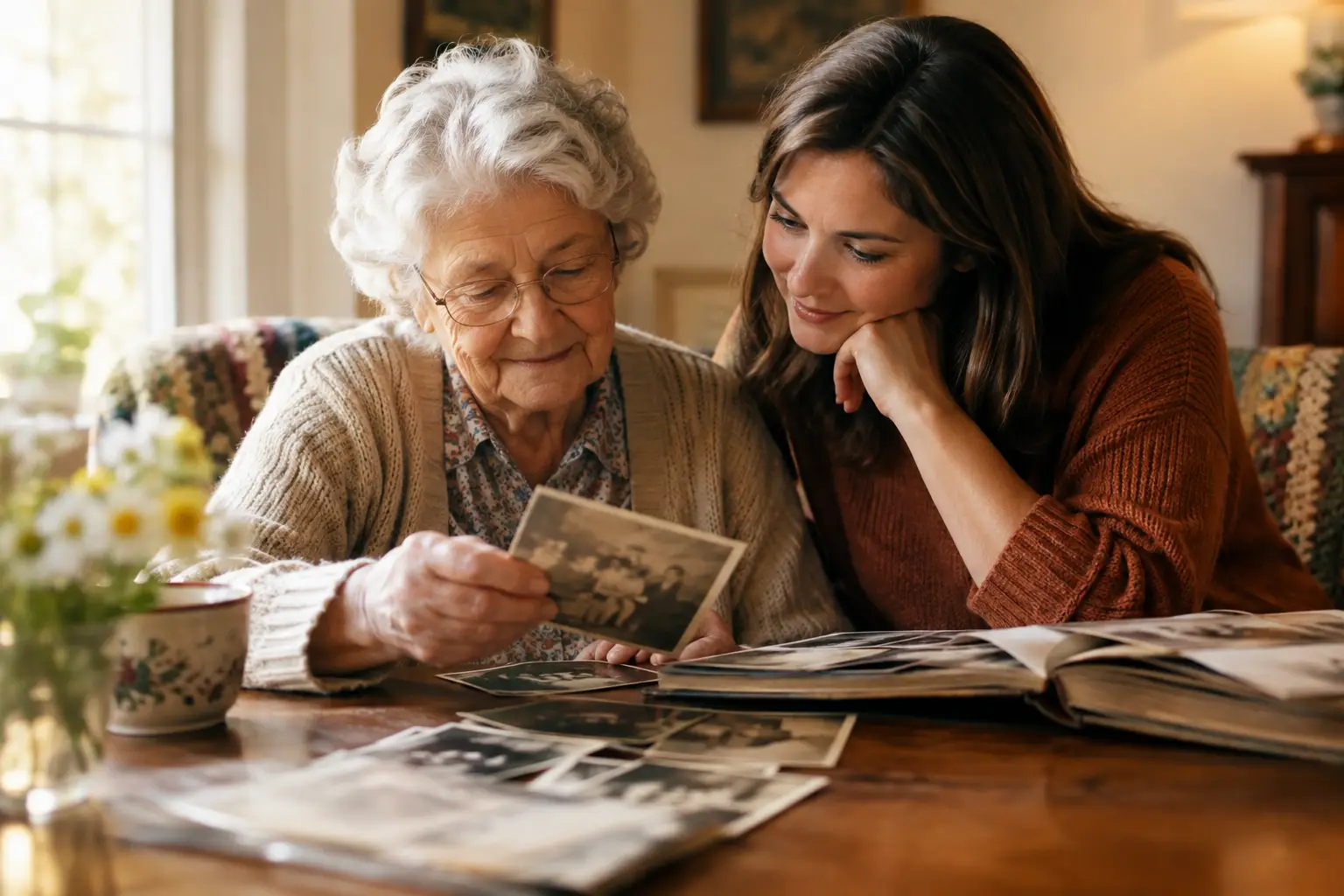
A familiar phrase, a laugh that fills the room, the way your father tells the story of his first job - these are parts of a person that photographs cannot fully hold. Learning how to interview aging relatives gives your family a chance to preserve the memories, values, and voice behind the names in the family tree. It is not an interrogation or a final accounting. It is time set aside to say: your life matters, and we want to hear it in your own words.
Begin With an Invitation, Not an Agenda
Many older adults have rich stories but may not see themselves as storytellers. They might say their life was ordinary, worry they will not remember enough, or feel uneasy about being recorded. A gentle invitation makes all the difference.
Try something simple: “I’ve been thinking about the stories I want my children to know about you. Would you be willing to spend some time telling me about your life?” Let them know there are no right answers and no pressure to cover everything at once. A meaningful interview can unfold across several short visits or calls.
Give your relative a choice about the setting, too. Some people speak most freely at the kitchen table with coffee nearby. Others may prefer a quiet afternoon on the porch, a phone conversation, or a visit after a family meal. Familiar surroundings can bring memories to the surface and make the experience feel less formal.
Prepare for the Conversation Without Over-Preparing
A little preparation helps you listen more closely. Ask other family members for names, dates, old photographs, recipes, letters, or meaningful objects that may prompt a memory. Review the basic outline of your relative’s life, but leave room for surprises. The story that matters most may be one no one else has heard before.
Before you begin, decide whether you will take notes, make an audio recording, or both. Audio is especially precious because it keeps the cadence of a voice, the pauses before a difficult answer, and the laughter that often comes with a favorite memory. Always ask permission before recording, and explain who may be able to hear it later.
It helps to test your phone or recording device beforehand. Place it close enough to capture their voice clearly, silence notifications, and choose a time when neither of you will need to rush. If hearing, memory, or fatigue is a concern, plan for twenty or thirty minutes rather than a long session. You can always return another day.
How to Interview Aging Relatives With Meaningful Questions
The best questions are open enough to invite a story but specific enough to give someone a place to begin. “Tell me about your childhood” can feel overwhelming. “What did your home smell like when you were growing up?” may open an entire world.
Start with easy, concrete memories. Ask what their neighborhood was like, how they got to school, what games they played, or who made them feel safe as a child. As the conversation warms, you can move toward work, friendships, love, parenthood, faith, military service, community, and the moments that changed the direction of their life.
You might ask:
- What is one small memory from childhood that still makes you smile?
- Who taught you something you still carry with you?
- What was your first job, and what did it teach you?
- How did you meet the people who became most important to you?
- What was a difficult season, and how did you get through it?
- What family tradition would you hope continues after you?
- What do you want your children, grandchildren, or future relatives to know about you?
Questions about advice can be particularly moving, but do not force them too early. After someone has shared the texture of their life, they may feel more comfortable speaking about what they have learned. Ask, “What do you wish you had known when you were younger?” or “What has love taught you?”
Let the Story Lead
A prepared list is useful, but it should not become a script. If your grandmother pauses on the subject of a childhood friend, stay there. Ask what that person was like. If your uncle mentions a cross-country move, ask what he remembers packing, leaving behind, or seeing for the first time. Follow-up questions are often where the most personal details appear.
Resist the urge to correct dates, fill in names, or compare their memory to someone else’s version of events. Memories are not court transcripts. They reflect how a person experienced a life, and that perspective is part of the legacy you are preserving.
Silence has a place, too. Give your loved one a moment to think. A quiet pause can feel uncomfortable when you are recording, but it may be the space they need to find the story beneath the first answer. Listen without trying to rescue every silence.
Handle Tender Subjects With Respect
Every life includes grief, conflict, regret, and change. These subjects may arise naturally, especially when an older relative is reflecting on the past. You do not need to avoid them completely, but you do need to let your loved one set the boundary.
Use questions that offer an opening rather than a demand. Instead of asking, “Why did you and your brother stop speaking?” try, “Were there relationships in your life that changed over time?” If they decline to answer or seem uncomfortable, accept that immediately. Say, “We can leave that there,” and move on.
Cognitive changes can also affect an interview. If a loved one repeats a story, listen to it again with kindness. If they lose the thread, offer a gentle prompt or take a break. The purpose is not to create a perfect timeline. It is to honor the person in front of you and gather what they are able and willing to share.
Make It a Conversation, Not a Performance
Your relative may relax if you share a little of yourself, too. A brief response such as, “I never knew that about you,” or “That explains why you always made that dish for us,” shows that you are present. The balance matters. Your role is to encourage, not to take over.
Photographs and keepsakes can help when words are slow to come. Hold up an old wedding picture and ask what happened just before it was taken. Put a familiar song on quietly and ask where it takes them. A recipe card, a military medal, a school yearbook, or an old address book can reveal stories that a general question never would.
Do not worry if the conversation wanders. A story about a wartime ration book may lead to a favorite pie, which may lead to the neighbor who taught them to bake. That is not a distraction. It is often how memory works.
Preserve What You Gather While It Is Fresh
After each conversation, label the recording with the person’s name, date, and broad topic. Add a few notes about names mentioned, places, photographs discussed, or questions to return to later. This small act of organization will make the collection far more meaningful for the family members who listen years from now.
If other relatives live far away, invite them to contribute questions or record a short message of their own. This can turn one interview into a shared family project without placing all the responsibility on one person. Be thoughtful about privacy, though. Agree on who can access recordings and whether certain stories should remain private for now.
A lasting archive should be easy for loved ones to find and hear. VoiceForEternity can help families preserve recordings, organize stories, and create a permanent memorial space where a loved one’s voice remains available across generations. The technology matters because it protects the human connection within it.
Leave Room for Another Conversation
You do not have to capture a whole life in one afternoon. In fact, trying to do so can make the experience feel exhausting for everyone. End while the conversation is still comfortable, thank your relative sincerely, and tell them what stayed with you.
Then return. Ask about the story they mentioned but did not finish. Bring a photograph from a different decade. Invite them to record a message for a grandchild’s future birthday, wedding, or difficult day. The most enduring gift is often not a single perfect interview, but the repeated reassurance that their voice is wanted, their memories are safe, and their place in the family will be heard.