Audio Memorial vs Written Obituary Compared
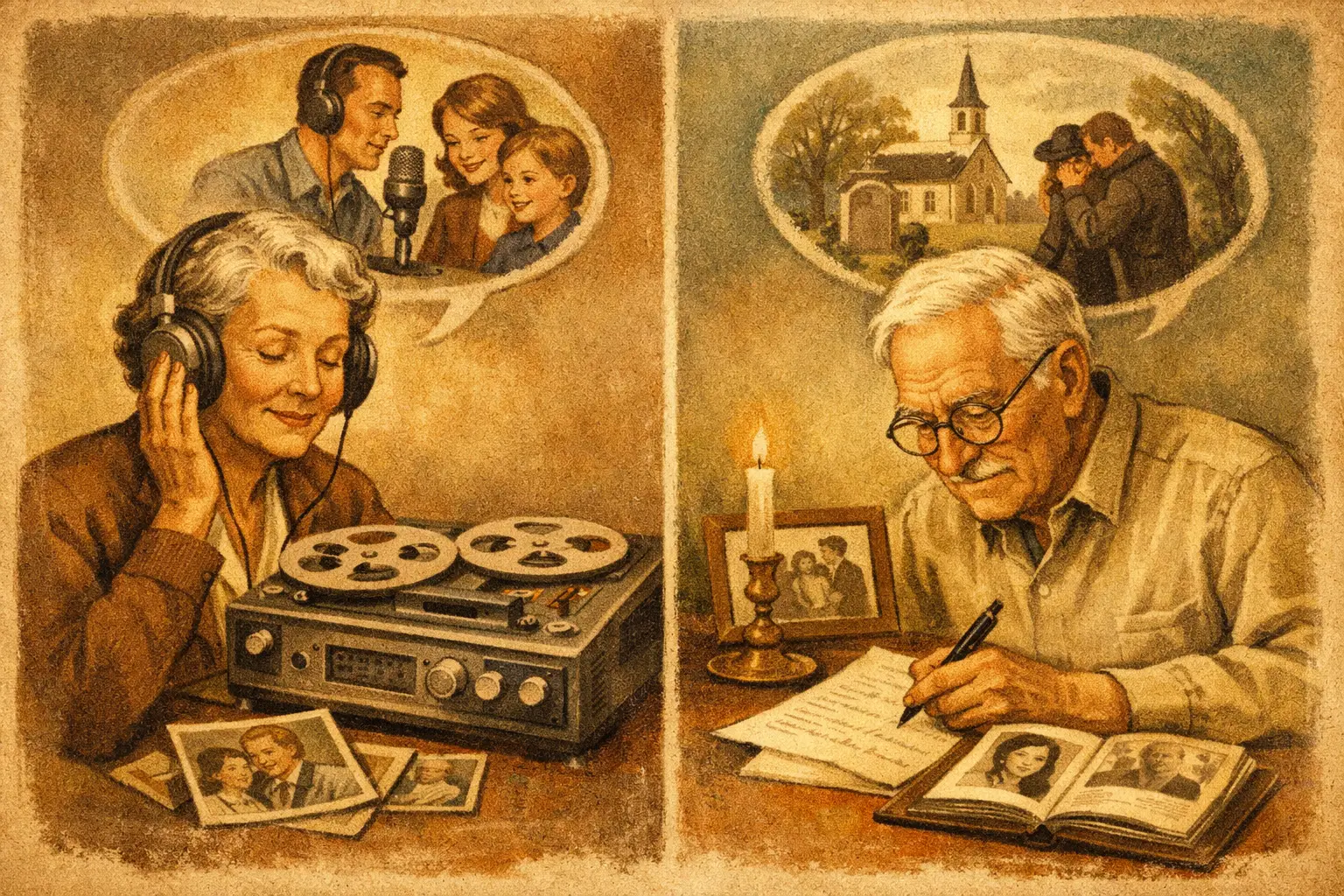
A written obituary may tell people that someone was loved. An audio memorial can let them hear the laughter behind that love, the familiar pause before a favorite saying, or a message recorded in their own voice. When families consider an audio memorial vs written obituary, the choice is rarely about replacing one with the other. It is about deciding how fully they want a life to be remembered.
Both forms of remembrance have a place. One offers a clear public record of a life and its milestones. The other preserves something that cannot be captured on a page: the sound of the person at the center of the story.
What a written obituary does best
An obituary gives family, friends, and community a shared announcement at a difficult time. It typically includes a person's name, age, dates of birth and death, immediate family members, meaningful accomplishments, service details, and charitable wishes. It is practical, familiar, and easy to share with people who need information quickly.
For many families, writing an obituary is also an act of care. Choosing the right details can be a way to honor a parent's devotion, a spouse's character, a grandparent's traditions, or a friend's generosity. The finished piece becomes part of the historical record, often saved in newspapers, funeral programs, family files, and online memorial spaces.
Yet an obituary has limits by design. Space, timing, and emotional exhaustion can make it hard to include the small details that made someone unmistakably themselves. A few paragraphs may describe that Dad loved fishing, but they cannot preserve the way he told the same lake story every summer. They may say Grandma had a warm sense of humor, but they cannot let a great-grandchild hear it.
What an audio memorial preserves
An audio memorial holds voice recordings, spoken stories, memories from family members, and personal messages. It can include a loved one describing their childhood, offering advice to future generations, reading a favorite poem, or simply saying hello in the voice people miss.
Voice carries identity in a way text cannot. Accent, rhythm, humor, tenderness, and even a familiar phrase can bring someone close for a moment. For a child or grandchild who may not remember much, a recording can become an irreplaceable connection to the person behind the family photographs.
Audio also makes room for more than one perspective. Siblings in different states can contribute stories. Friends can record a memory from work, school, military service, or a neighborhood gathering. Instead of asking one person to summarize an entire life under pressure, a family can build a living collection of voices over time.
This does not mean audio must be polished. Often, the most meaningful recordings are ordinary ones: a voicemail kept for years, a parent telling a recipe from memory, an uncle laughing at his own joke, or a short answer to a thoughtful question. The emotional value is in the person, not in perfect production.
Audio memorial vs written obituary: the meaningful differences
The strongest difference is purpose. A written obituary communicates. An audio memorial connects.
An obituary is generally created around the time of death and shared publicly. It helps a community understand what has happened and how to offer support. An audio memorial can be made after a loss, but it can also be created while someone is living. That makes it especially meaningful for families who want to preserve stories before illness, distance, or time makes the opportunity harder.
There is also a difference in depth. A written obituary is usually concise because readers need a clear account of a life and service arrangements. Audio can be brief too, but it has room to grow. A family might begin with one recording and later add stories, reflections, and messages from multiple generations.
Accessibility matters as well. Text is easy to scan, print, and share in a funeral program. Audio asks people to pause and listen, which can be more intimate but may not be right for every setting. The best memorial plans recognize this difference rather than treating one format as superior in every circumstance.
Finally, consider permanence and stewardship. Printed obituaries can be clipped, misplaced, or difficult for younger relatives to find. Digital obituaries may depend on a publisher or platform. Audio deserves the same thoughtful care. Families should understand where recordings are stored, who can access them, how they can be organized, and whether there are ongoing fees that could affect long-term availability.
When a written obituary may be enough
A written obituary may be the right primary choice when the family needs a simple public notice, has limited time, or knows the loved one would have preferred privacy. Not every person wanted to be recorded, and honoring that preference is part of honoring their life.
It can also be enough when there are no existing recordings and gathering contributions would feel overwhelming in the first days of grief. Families do not need to turn every loss into a large project. A sincere obituary, written with care, can be a beautiful and complete tribute.
Still, “enough” does not have to mean “all there is.” A family can publish an obituary now and return to voice memories months later, when the immediate responsibilities have eased. Grief does not follow a deadline, and remembrance does not have to either.
When an audio memorial adds something irreplaceable
Audio is especially powerful when someone has a distinctive voice, a gift for storytelling, a beloved prayer or song, or messages they want future family members to hear. It is also valuable when a loved one is still living and willing to share memories in their own words.
For adult children of aging parents, the question is often not whether they have enough photos. It is whether they have heard the stories behind those photos. Who were the people in the old wedding picture? Why did the family move across the country? What did a grandparent hope their grandchildren would remember?
A guided recording process can make these conversations feel less intimidating. Begin with a few natural prompts: What did home feel like when you were growing up? What lesson took you the longest to learn? What do you want your family to know about you? One honest answer can lead to stories no one knew to ask for.
After a death, an audio memorial can offer another kind of comfort. Relatives may record their own memories when they are ready, creating a fuller portrait over time. A permanent QR-linked memorial page and engraved plaque can also give visitors at a gravesite, urn, garden, or niche a respectful way to hear those memories from anywhere.
Choosing both can be the most thoughtful answer
For many families, this is not an either-or decision. The obituary can provide the facts, acknowledge the people who mattered, and guide the community to a service. The audio memorial can carry the voice, stories, and intimate details that do not fit into a formal notice.
Together, they serve different generations. A friend reading the obituary learns what happened and how to pay respects. A granddaughter years later can hear her grandfather describe his first job. A relative who could not attend the service can contribute a memory from afar. The record of a life becomes more human, not less formal.
VoiceForEternity was created around that simple belief: a voice is not just a file to store. It is a presence to preserve with care, so the stories and messages a family treasures remain available without the uncertainty of a subscription.
A gentle way to begin
If your loved one is living, do not wait for the perfect interview or a special occasion. Sit together with a phone, ask one question, and let the conversation go where it goes. If your family is grieving, start with the recording already in your possession or invite one relative to share a two-minute memory.
The words written about a person matter. But for those who loved them, hearing their voice again can matter in a different, lasting way. Preserve what can be written, and make room for what can only be heard.