Guide to Legacy Interview Prompts That Matter
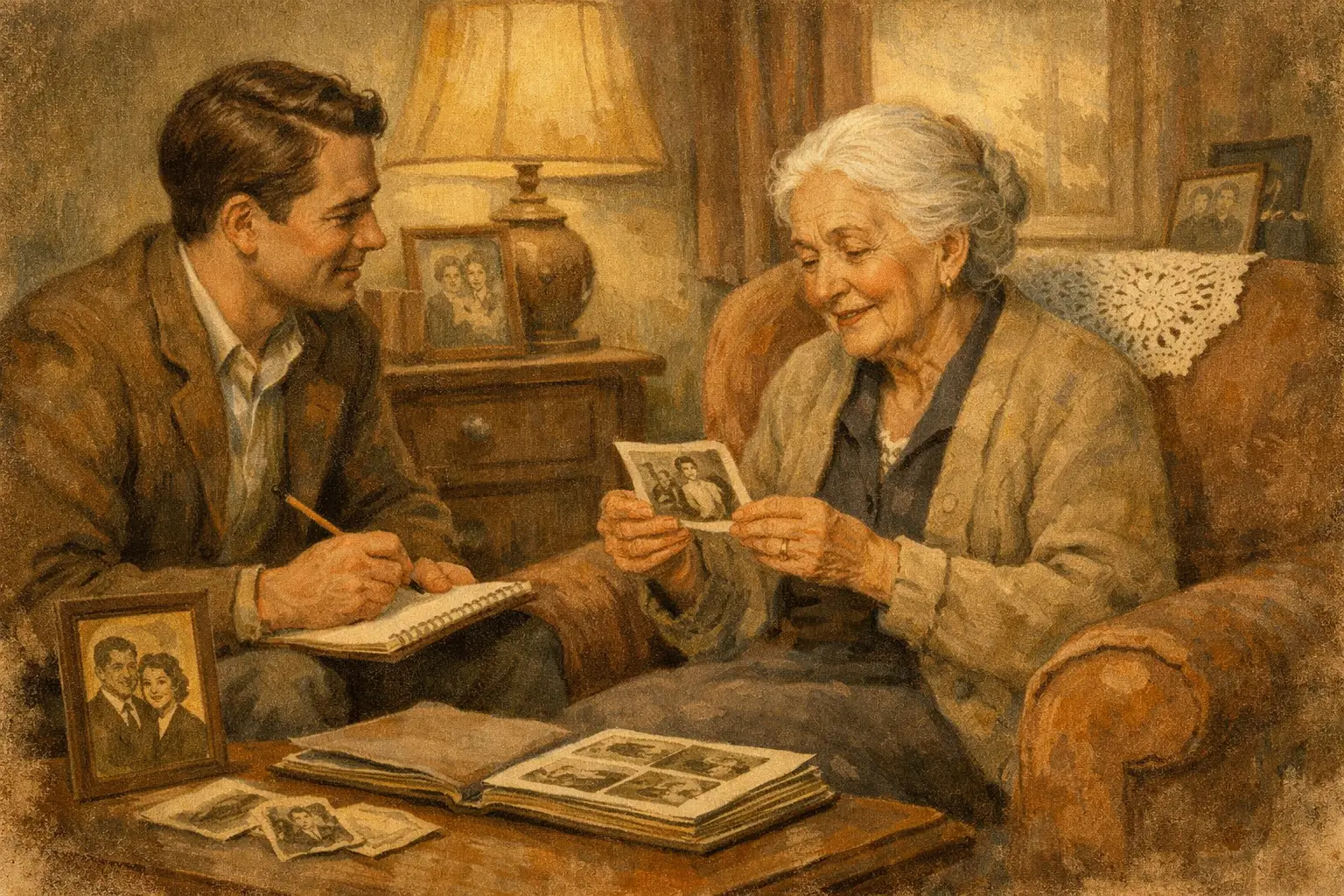
A voice can carry a whole lifetime in a few familiar words: the way Dad tells the same childhood story, Grandma’s laugh before a punchline, the pause a spouse takes before offering hard-won advice. A guide to legacy interview prompts gives families a gentle place to begin preserving those moments before they become memories we wish we had recorded.
The goal is not to conduct a perfect interview or create a formal biography. It is to make room for someone to speak in their own way, about the people, places, choices, and beliefs that shaped them. The stories that may seem ordinary today often become the ones a family treasures most.
Why legacy interviews are worth the time
Photos show us who someone was. Their voice tells us how it felt to be with them. A recorded answer can preserve humor, affection, regional expressions, quiet confidence, and the small details that written memories often miss.
Legacy interviews can also bring comfort while a loved one is still here. They offer a reason to sit together without rushing toward practical tasks or difficult decisions. For an aging parent, grandparent, spouse, or close friend, being asked to share their life can be a meaningful reminder that their experiences matter.
There is no single right time to begin. Some families record stories as a birthday gift, during a reunion, after a retirement, or while organizing family history. Others begin during illness or end-of-life planning. The emotional setting is different, but the purpose remains the same: to preserve a real person’s voice for the people who love them.
How to use this guide to legacy interview prompts
Start smaller than you think you need to. A meaningful recording does not require an afternoon of questions. Twenty calm minutes and three thoughtful prompts can create something lasting.
Choose a time when your loved one is comfortable and not fatigued. Let them know there are no wrong answers and no pressure to remember every date correctly. If a story wanders, let it wander. A detour may lead to a memory you would never have thought to ask about.
Phone audio is often enough, especially if the room is quiet. Sit close, reduce background noise, and allow a few seconds of silence after each answer. Those pauses give someone time to gather a thought and often lead to a fuller response. If they prefer not to be recorded at first, begin with a simple conversation. Comfort matters more than efficiency.
It also helps to accept that a legacy interview may unfold across several sessions. Some people are ready to speak freely. Others need time, a familiar photograph, a favorite song, or a cup of coffee before the memories begin to surface. Follow their pace.
Begin with stories that feel familiar
Early prompts should be easy to answer and rooted in everyday life. They help a person settle into the conversation without feeling as though they are being tested.
- What was the home you grew up in like, and what do you remember most about it?
- Who made you feel safe or understood when you were young?
- What did your family do for fun when you were a child?
- Tell me about a meal, holiday, or tradition you still remember clearly.
- What was your first job, and what did it teach you?
- What place from your early life would you like us to see through your eyes?
Ask follow-up questions with curiosity rather than an agenda. If they mention a sibling, ask what that sibling was like. If they mention a kitchen, ask what it smelled like on Sunday mornings. Specific sensory details make a recording feel alive.
Ask about choices, change, and resilience
A life story is more than a timeline. The moments that shaped a person’s direction often reveal their character, even when they would not describe themselves as remarkable.
You might ask, “What decision changed the course of your life?” or “What was a hard season that taught you something lasting?” Questions like these should be offered gently. If someone does not want to revisit a painful chapter, let it go without explanation or disappointment.
Other thoughtful prompts include:
- When did you feel most proud of yourself?
- What risk are you glad you took?
- What did you learn from a mistake that stayed with you?
- Who believed in you at a time when you needed it?
- What do you wish people understood about the life you lived?
Not every answer needs to be inspirational. Honest memories can include uncertainty, regret, grief, and humor. A legacy recording is not meant to polish a life into perfection. It is meant to honor it truthfully.
Make room for love and family history
Many people find it easiest to speak when the questions are about someone they loved. These answers can preserve family relationships in a way names and dates never can.
Ask about how they met a spouse or partner, what they admired in their parents, or the moment they first held a child or grandchild. Invite stories about family sayings, nicknames, celebrations, and disagreements that became funny with time.
Try questions such as, “What do you hope your grandchildren know about our family?” “Which family tradition would you want us to carry forward?” and “What is something you loved about the people who came before you?” These prompts connect generations without making the conversation feel like a history lesson.
Preserve the wisdom only they can give
Advice is often one of the most cherished parts of a legacy recording, particularly when it is spoken in a loved one’s own voice. Still, broad questions like “What is your advice for life?” can feel intimidating. A more specific question usually invites a warmer, more natural answer.
Ask what they would tell their younger self about love, work, parenting, friendship, money, faith, or finding joy. Ask what helped them through difficult days. Ask what they hope their family will remember when they are not in the room to say it themselves.
A few direct prompts can be especially powerful:
- What do you want each person in this family to know about how much you love them?
- What values do you hope we keep alive?
- What does a good life mean to you?
- Is there a lesson you learned late that you wish you had known sooner?
- What would you like to say to future generations of our family?
These are not easy questions for everyone. Give your loved one permission to skip them, return to them later, or answer simply. A few sincere sentences can carry more meaning than a long speech.
When the conversation is tender
If illness, grief, or memory changes are part of the moment, keep your expectations light. The purpose is connection, not completion. Someone living with dementia, for example, may remember childhood more clearly than recent years. Meet them in the memories available to them rather than correcting details or asking them to perform.
Avoid framing the interview as a final conversation unless your loved one chooses that language. Instead, you might say, “I would love to hear this in your voice,” or “I want the kids to know this story the way you tell it.” That small shift can feel less overwhelming.
If tears come, pause. If laughter comes, let it stay. The recording does not need to be edited into a flawless version of family life. Its value is in its humanity.
Turn recordings into a legacy your family can revisit
Recording is only the first act of care. Files saved on one person’s phone can be hard to find, hard to share, and vulnerable to loss over time. Organize each recording with a simple title, the speaker’s name, date, and a short note about the story. If other relatives have recordings or questions to contribute, invite them in while the project is underway.
For families who want a more lasting, shared home for these memories, VoiceForEternity can preserve recordings on a memorial page connected to a physical engraved QR plaque. Loved ones can listen from wherever they are, whether they are gathered at a gravesite, visiting an urn or garden memorial, or remembering from across the country. The focus remains beautifully simple: their voice, forever.
You do not need the perfect prompt, the perfect equipment, or the perfect day. Begin with one question you have always wanted to ask, then listen without hurrying. A familiar voice answering it may become one of the most precious things your family keeps.