Memorial Recorder Review: What Families Should Look For
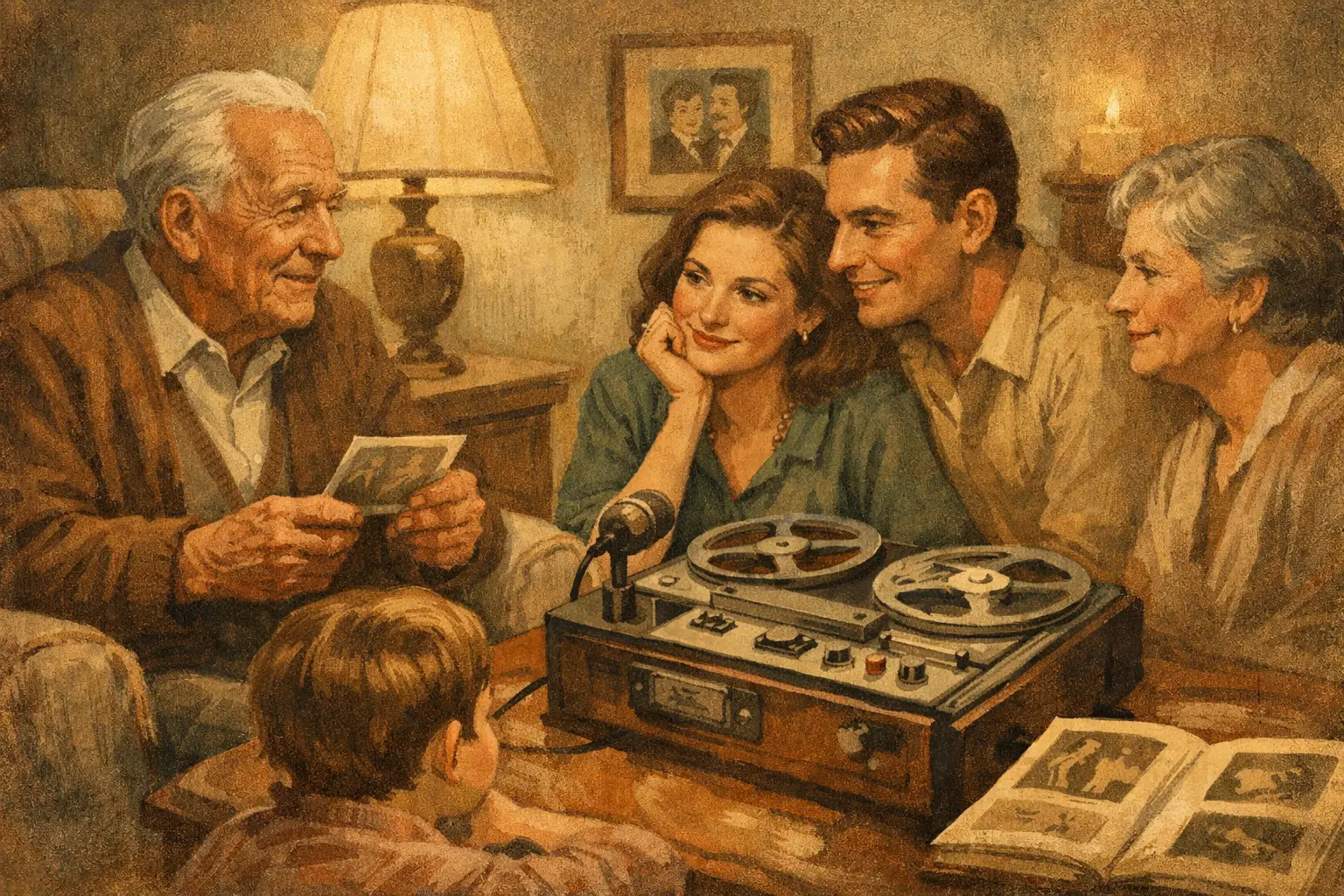
A familiar voice saying your name can bring someone close in a way a photograph cannot. That is why a memorial recorder review should look beyond recording quality alone. For families preserving a parent’s stories, a spouse’s messages, or a grandparent’s laughter, the real question is whether the recording will remain personal, protected, and easy to revisit when it matters most.
A memorial recorder is not simply an app or a microphone. At its best, it becomes a place where a person’s voice, memories, and character can live on for the people who love them. Choosing one deserves the same care you would give to selecting words for a headstone or photographs for a memorial table.
What a Memorial Recorder Should Preserve
The most meaningful recordings are rarely polished speeches. They are ordinary, unmistakably personal moments: a father explaining how he met your mother, a grandmother sharing a family recipe, a partner leaving a message for future birthdays, or a loved one telling a story only they can tell.
A good memorial recording service should make room for all of this. Look for a format that supports both short voice messages and longer conversations. Short recordings can capture blessings, greetings, and simple words of encouragement. Longer sessions give someone time to tell childhood stories, reflect on defining moments, or answer questions their family may not think to ask until later.
Ease matters here. If recording feels technical, intimidating, or overly formal, people often put it off. The best experience allows a loved one to record from a phone or browser without special equipment, while giving family members enough structure to begin a meaningful conversation.
Guided questions make the first step easier
Many families want to preserve stories but do not know where to start. “Tell me about your life” can feel too broad, especially during illness, grief, or a busy family gathering. Thoughtful prompts create a gentler path forward.
Useful questions might invite someone to describe their earliest home, their proudest work, a favorite holiday, advice for grandchildren, or a lesson they learned the hard way. The point is not to produce a perfect life history. It is to create an opening for the details, humor, values, and expressions that make a voice feel like home.
Memorial Recorder Review: The Features That Matter Most
When comparing services, it helps to separate meaningful features from unnecessary complexity. A recorder may offer editing tools, effects, and large amounts of storage, but those details are secondary if the family cannot confidently preserve and find the recordings years from now.
Start with recording access. Can a loved one speak directly into a phone? Can an adult child record an interview from another state? Can multiple relatives contribute their own memories? Families are often spread across cities and time zones, so collaboration should feel natural rather than restricted to one account holder.
Organization is equally important. A collection of unlabeled audio files can quickly become difficult to navigate. Recordings should be easy to name, group, and revisit by topic, person, or occasion. A clear memorial page can bring voice recordings together with photos, written memories, and important biographical details without reducing the person to a timeline.
Privacy deserves close attention as well. Families should understand who can listen, who can contribute, and how access can be managed. Some memories are meant for the public. Others are intended only for children, grandchildren, or a small circle of relatives. A thoughtful service respects both choices.
Finally, consider whether the recordings can become part of a physical place of remembrance. A permanent QR-linked plaque can connect a headstone, urn, garden marker, or columbarium niche to the person’s voice and stories. When someone visits, they are not limited to reading dates and inscriptions. With permission from the family, they can listen and remember.
Permanence Is More Than a Marketing Word
Families often choose a memorial recorder during a vulnerable time. The last thing they should have to worry about is whether a subscription will expire, a login will be lost, or a meaningful collection will become inaccessible after a few years.
Ask direct questions about long-term access. Is there a recurring payment required to keep recordings available? What happens if the original account owner passes away? Can family members be added as collaborators or future caretakers? Is there a clear plan for preserving the memorial page over time?
There are trade-offs. Free recording tools can be helpful for capturing a voice quickly, particularly when time is short. But they may leave families responsible for storage, file organization, passwords, and sharing. A general cloud folder can hold audio, yet it does not necessarily create a dignified place for remembrance or offer an easy way for future generations to understand what they are hearing.
A purpose-built memorial platform should address both the emotional and practical sides of permanence. One-time pricing can be especially reassuring because it avoids tying a loved one’s memorial to an ongoing monthly decision. Still, families should read the provider’s terms carefully and choose a company that explains its preservation approach in plain language.
The Difference Between Saving Audio and Creating a Legacy
Saving a voice recording is valuable. Creating a legacy experience goes further.
An audio file titled “Mom voicemail 3” may be precious, but it can lose context over time. Who recorded it? When was it made? What was happening in her life? What did she mean to the people around her? A memorial recorder becomes more meaningful when it helps preserve the story around the voice as well.
This is where written reflections, photographs, dates, and family contributions have a purpose. They should support the voice, not replace it. The sound of someone pausing before a favorite story, laughing at their own joke, or saying “I love you” in their particular way carries an emotional truth that text cannot fully reproduce.
Some services also help organize recorded conversations into story summaries. This can be useful for relatives who want an overview before listening to a longer interview, or for younger family members learning about someone they never had the chance to meet. The summary should be treated as a guide, though, not the memorial itself. The original voice remains the irreplaceable part.
VoiceForEternity is built around this idea: that a memorial can hold more than a name and a date. It can preserve a person’s voice, their stories, and their messages in a place designed for family remembrance, with the option to connect that experience to an engraved physical plaque.
How to Choose Without Waiting for the Perfect Moment
Many families begin looking for a recorder after a loss, when every existing voicemail and video feels suddenly precious. Yet voice preservation can also be a meaningful act of love while someone is here to participate in it.
If a parent or grandparent is willing, begin small. Record one story over Sunday dinner. Ask for a message to a child leaving for college. Invite siblings to contribute one memory each. A ten-minute conversation can become one of the most treasured things a family owns.
Do not wait for a perfectly quiet room, the right questions, or a flawless performance. A little background noise from a kitchen or a familiar laugh from someone off camera may someday make the recording feel even more real. What matters is that the voice is captured with care and saved somewhere the family can return to.
When comparing options, choose the one that gives your family confidence rather than more work. It should be simple enough to use now, thoughtful enough to honor the person being remembered, and dependable enough to carry their voice forward.
Years from now, a family member may scan a plaque, open a memorial page, or press play on a saved story. In that quiet moment, they will not be thinking about recording features. They will be hearing someone they love.