Memorial Page Builder Review for Families
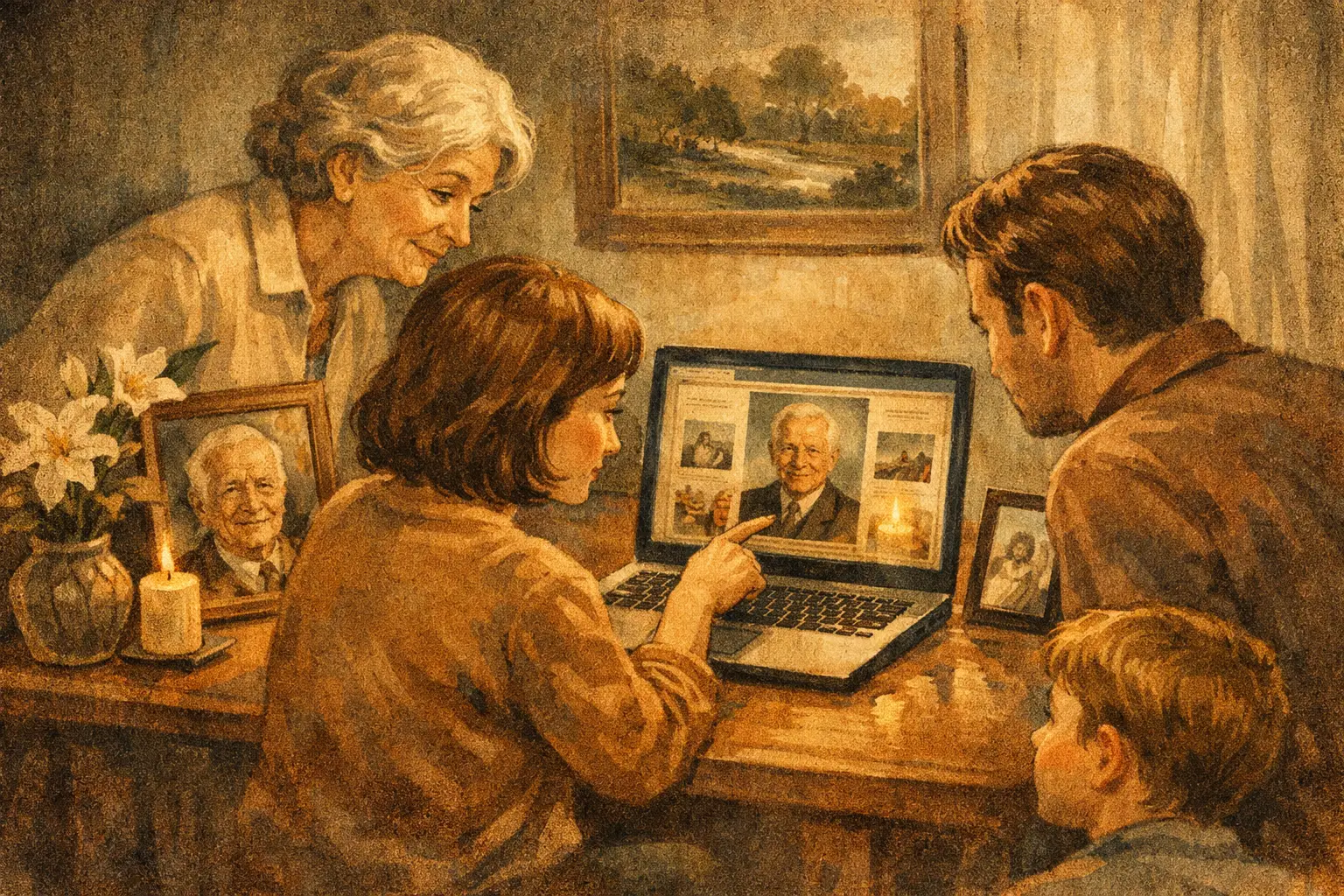
A memorial page is often created when a family has the least time and emotional energy to make decisions. That is why a thoughtful memorial page builder review should look beyond attractive templates. The real question is whether a platform helps preserve the person behind the dates: the familiar voice, the stories only they could tell, and the messages a family may want to hear again.
For some families, a simple online obituary is enough. For others, especially those who want to preserve a parent’s life stories before a loss, a memorial page becomes something more lasting: a place where grandchildren can hear a laugh, relatives can contribute memories from across the country, and a visit to a grave can lead to a living memory rather than a line of text.
What a Memorial Page Builder Should Actually Do
Most memorial page builders offer a place for photographs, written tributes, biographical details, and condolences. Those features matter. They give a family a shared space when people cannot gather in the same room, and they can make it easier to collect memories that might otherwise remain scattered in phones, emails, and old photo boxes.
But a page with a beautiful design is not automatically a meaningful memorial. Families should consider how the builder handles five practical and personal needs: ease of creation, media preservation, family participation, visitor access, and long-term confidence.
The best experience should not require a family member to become a web designer while planning a service or navigating grief. It should provide clear prompts, an orderly place to add content, and enough flexibility to tell a life honestly. A veteran’s service, a grandmother’s recipes, a brother’s favorite sayings, and a child’s school memories may all deserve a place, but the page should never feel crowded or difficult to manage.
Memorial Page Builder Review: The Features That Matter Most
Voice and video create a different kind of connection
Photos preserve a face. Written memories preserve facts and impressions. A recorded voice preserves presence.
Hearing someone say, “I love you,” tell the story of how they met their spouse, or offer advice to a future grandchild can be profoundly comforting. It also gives younger family members a connection that an obituary cannot provide. For families preserving memories proactively, audio may be the most valuable part of the process because it captures personality before it is too late to ask another question.
Not every memorial page builder is designed around this need. Some allow video uploads but make recordings feel like an extra attachment rather than the heart of the memorial. A stronger option makes it simple to record from a phone or browser, organize clips by topic, and play them without asking visitors to download an app or create an account.
Video can be meaningful as well, particularly for a favorite toast, a holiday gathering, or an interview. Still, it comes with trade-offs. Video files are often larger, harder to record comfortably, and more intimidating for an older relative. Audio is simpler. A loved one can speak from home, take a pause, and begin again. The result can feel less produced and more like them.
Guided questions reduce the pressure
One of the quietest barriers to legacy preservation is not technology. It is knowing what to ask.
Families often sit down with a parent or grandparent and realize they have no idea where to begin. “Tell me about your life” is a large question. A thoughtful memorial builder should make room for smaller, gentler prompts: What did your childhood home smell like? What was your first job? What do you want your family to remember? What lesson took you the longest to learn?
Guided recording prompts turn a difficult conversation into a series of manageable moments. They also help preserve details that may not appear important today but become precious later. A story about a first car, a favorite neighborhood diner, or a hard-earned family tradition can carry more emotional weight than a formal timeline.
Collaboration should feel respectful, not chaotic
Memorials are rarely created by one person alone. Siblings, cousins, friends, and adult children may each hold a different piece of the story. A useful platform lets designated family members contribute without giving every visitor the ability to alter the page.
Look for clear roles and privacy controls. The person managing the memorial should be able to decide who can add a photo, upload a recording, approve a tribute, or simply view the page. This is particularly important when families are large, relationships are complicated, or a memorial includes stories intended only for close relatives.
Collaboration also has a practical benefit. It reduces the burden on the one person who is often doing everything else. Instead of texting photos back and forth, relatives can contribute directly to a shared remembrance space.
QR access can connect a physical memorial to a living story
A permanent memorial plaque, headstone, urn, garden stone, or columbarium niche is a place people visit with intention. A QR code can extend that moment, allowing visitors to access the person’s page from a phone.
This feature needs to be handled with care. The QR code should be clearly engraved or printed in a durable format, easy to scan, and connected to a page that is simple for visitors to open. It should not feel like a novelty placed on a grave. When done well, it creates a quiet bridge between a physical place of remembrance and the voice, stories, and photographs that continue to hold a person close.
Consider who will use it. A public-facing page may be appropriate for a widely loved community member. A private page may be better for a family who wants control over sensitive stories and recordings. The right builder should support both choices.
Questions to Ask Before You Choose
Before committing to any service, ask how long the page will remain available and what happens if the company changes its plans. A memorial is not a social media post. Families need clear answers about ownership, access, storage, and whether recurring payments could affect availability.
It is also wise to ask whether visitors need an account, whether recordings can be made on a phone, and whether the page can grow over time. A memorial created after a funeral may later include a new grandchild’s tribute, digitized letters, or an anniversary recording. The page should have room for that continuing relationship.
Cost deserves a direct conversation, too. Subscription pricing may suit a family that wants a short-term event page, but it can create uncertainty for a memorial intended to remain available for decades. One-time pricing can be more reassuring when it is paired with a clear commitment to lasting access. The better choice depends on your family’s needs, but no one should have to guess what continued remembrance will cost.
Where VoiceForEternity Fits
VoiceForEternity is built for families who want remembrance to be heard as well as seen. Its approach centers on recording and organizing a loved one’s voice, stories, and personal messages, then sharing them through a QR-linked memorial page. Family collaboration, browser and phone recording, AI-generated story summaries, and engraved plaque options are designed to make the process approachable rather than technical.
Its one-time pricing model is especially meaningful for families concerned about long-term access. That does not mean every family needs every feature. Someone seeking only a short obituary page may prefer a simpler format. But for those preserving the stories of an aging parent, honoring a spouse, or creating a memorial that future generations can return to, voice-first remembrance offers something a static page cannot.
A Memorial Is More Than a Record
A good memorial page builder does not replace a funeral, a family album, or the private ways people grieve. It gives those memories a home that can be revisited and added to with care.
If you are beginning this process with someone you love, do not wait for the perfect recording session or the perfect question. Start with one small story. Ask them about a place they loved, a person who shaped them, or a moment that still makes them laugh. Their voice may become one of the most meaningful gifts your family keeps.