How to Record Parents Life Story Well
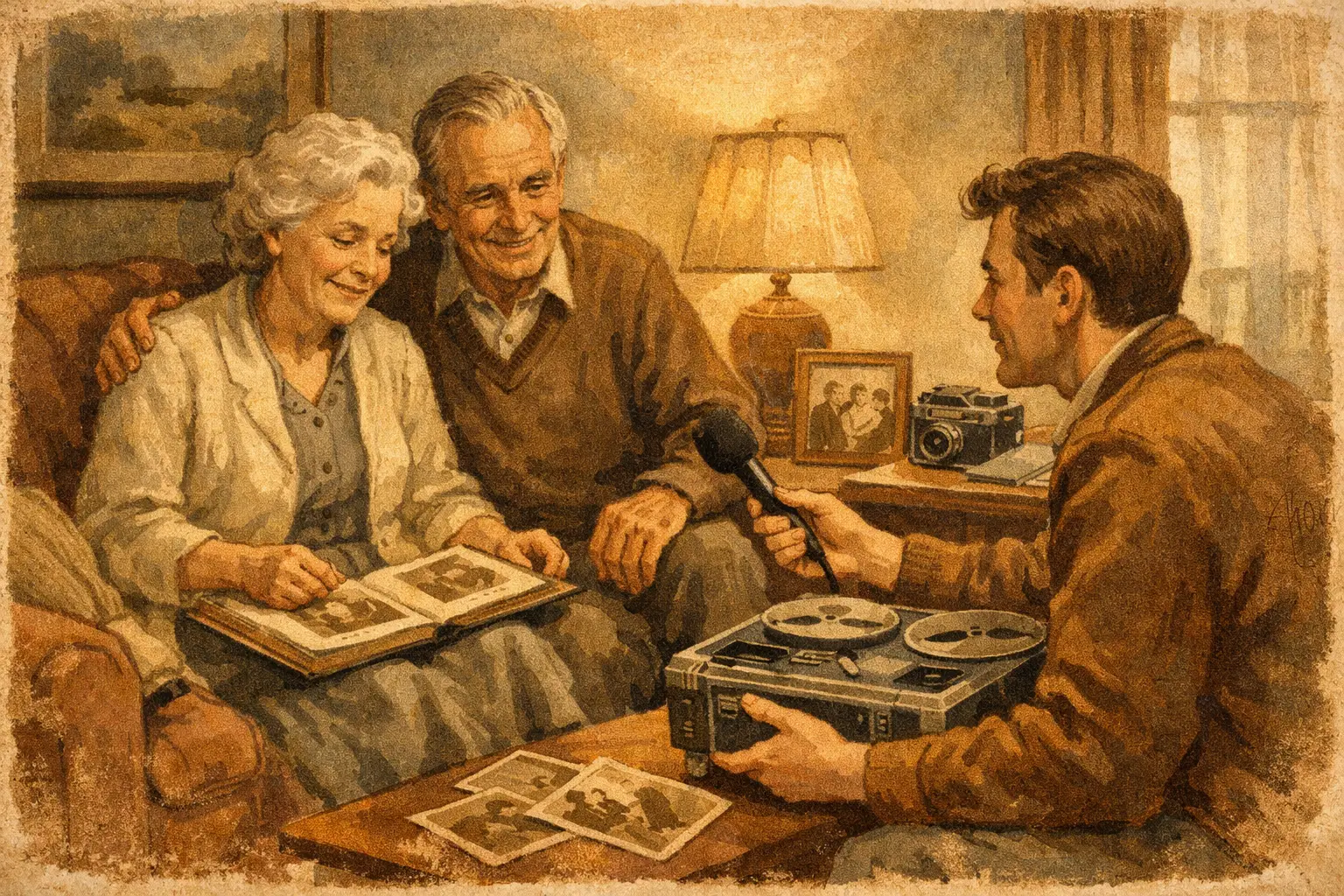
A lot of families wait for the "right time" to sit down and record parents life story. Then a health change happens, energy shifts, or details that once felt permanent begin to fade. What most people regret is not that they asked too early. It is that they asked too late.
The good news is that this does not need to be formal, polished, or emotionally heavy to matter. A meaningful life story can begin with one quiet conversation at the kitchen table, one phone call saved, or one memory told in a familiar voice. What you preserve is not just information. It is personality, cadence, humor, faith, grit, and love.
Why record parents life story now
Many adult children assume they will get to this eventually. But family history is fragile in a way that photos are not. A picture can survive in a drawer for decades. A voice, a personal story, and the little details behind a marriage, a migration, a military service, or a hard year can disappear much faster.
Recording a parent's story is also different from writing down a timeline. When someone speaks, you hear what mattered to them. You hear where they pause, what still makes them laugh, and which moments carry weight after all these years. That emotional texture becomes part of the legacy.
There is also a practical side. If siblings live in different states, if grandchildren are still young, or if a loved one has begun to repeat stories less clearly, starting now makes the process gentler. You do not need to capture everything at once. You only need to begin while they can still tell it in their own words.
Start with the voice, not the perfect plan
One reason families put this off is that they think they need a full interview guide, recording equipment, and a beautifully organized archive before the first question is asked. In reality, perfection is what prevents preservation.
The best first session is often simple. Ask about childhood. Ask about the house they grew up in, what their parents were like, what work looked like, what they feared, what they believed, and what they want future generations to understand. Let one answer lead naturally to the next.
If your parent is hesitant, do not frame it like a project. Frame it like time together. Many people are more willing to talk when they feel they are being heard, not documented. That distinction matters.
What to ask when you are not sure where to begin
Good questions are open enough to invite memory, but specific enough to avoid one-word answers. "Tell me about your childhood" can work, but "What did your home smell like when you were a child?" often works better. Specific prompts help people step back into a memory rather than summarize a whole decade.
You might ask about first jobs, friendships, courtship, faith, parenting, military service, moments of loss, turning points, and lessons they learned the hard way. It also helps to ask sensory questions. What music was always playing? What did holidays feel like? What did their mother or father say over and over?
Do not be afraid of repeated stories. Repetition usually means the memory carries emotional meaning. Sometimes the story your parent has told a hundred times is exactly the one your family will treasure most later.
How to record parents life story without making it stressful
The emotional tone of the recording matters as much as the content. If the process feels like a performance, many parents become self-conscious. If it feels natural, they usually relax.
Choose a time of day when they have the most energy. For some people that is morning. For others it is after dinner when conversation comes more easily. Keep early sessions short. Twenty to thirty minutes is often enough, especially if the topic is personal or your parent tires easily.
Background noise matters, but not more than comfort. A perfectly quiet room is helpful, yet a familiar armchair at home may produce a better conversation than a sterile setting. If you can reduce television noise, clattering dishes, or a loud fan, do that. Then let the conversation breathe.
It also helps to tell them there are no wrong answers. They do not need to remember every date correctly. Family storytelling is not a legal deposition. Accuracy matters, but emotional truth matters too. If you want, you can always add names and dates later in written notes.
Audio or video?
It depends on your family and your parent's comfort level. Video can be powerful because it preserves expression, gesture, and presence. But some people become more guarded when they see a camera pointed at them.
Audio is often easier. A voice carries extraordinary intimacy. It captures tenderness, wit, vulnerability, and those familiar speech patterns that text can never hold. For many families, audio feels less intrusive and more sustainable over time.
That is one reason voice-centered preservation can be so meaningful. Hearing someone tell their own story, in their own rhythm, often becomes the part loved ones return to most.
Let the story unfold in chapters
Trying to cover an entire life in one sitting usually leads to fatigue and missed memories. A better approach is to think in chapters. Childhood, family roots, school years, work, marriage, military service, parenthood, hardship, joy, faith, values, and messages for future generations can each become their own conversation.
This approach also creates room for reflection. A parent may remember something important after the recording ends. By spacing sessions out, you give memory time to surface. Often the richest stories arrive later, after trust has deepened and the first awkwardness has passed.
If siblings want to help, assign gentle roles. One person can ask questions, another can take notes, and another can help identify old photos or names. Too many voices in the room can become overwhelming, so keep the setting calm.
What if the story is painful or complicated?
Every family carries some mix of pride, silence, resilience, and unfinished grief. Recording a life story is not about forcing confession or polishing away difficult truth. It is about creating space for honesty with dignity.
Some parents will speak openly about regret. Others will stay close to the facts and leave emotion at the edges. Both are valid. You are not trying to produce a perfect memoir. You are preserving what they are ready to share.
If a topic becomes too painful, pause. Move to a different memory. You can always return later, or not return at all. Consent matters. Respect matters. The goal is not to extract every story. The goal is to preserve the person.
Preserve more than the interview itself
A life story grows stronger when the recording is organized and easy for family to revisit. Label files clearly with names, dates, and topics. Save copies in more than one place. If multiple relatives are involved, decide who will maintain the archive so recordings do not end up scattered across phones and laptops.
It can also help to pair recordings with short summaries, names of people mentioned, and any related photos. This makes the stories more accessible to children and grandchildren who may listen years from now and need a little context.
For families who want something more lasting than loose files, a dedicated legacy or memorial platform can make a real difference. VoiceForEternity was built for this exact purpose, helping families record, organize, preserve, and share a loved one's voice and stories in a permanent, accessible way. That kind of permanence matters when what you are saving cannot be replaced.
The most meaningful question may be the simplest one
Families often search for clever prompts, but the question that opens everything is sometimes the most direct: "What do you want us to remember?"
That question invites more than biography. It invites values. It gives parents the chance to say what mattered, what they hope endures, and what they want their children and grandchildren to carry forward. Sometimes the answer is practical. Sometimes it is deeply emotional. Often it becomes the part the family treasures most.
You do not need a perfect script, a polished setting, or a special occasion to begin. You need willingness, a little time, and the courage to ask while the voice you love can still answer. One conversation can become a family keepsake. A few honest recordings can become a legacy your children will one day be grateful you protected.
Start with one memory, one question, one afternoon. Their story does not need to be finished to be worth preserving.