Legacy Storage Comparison: What Families Need
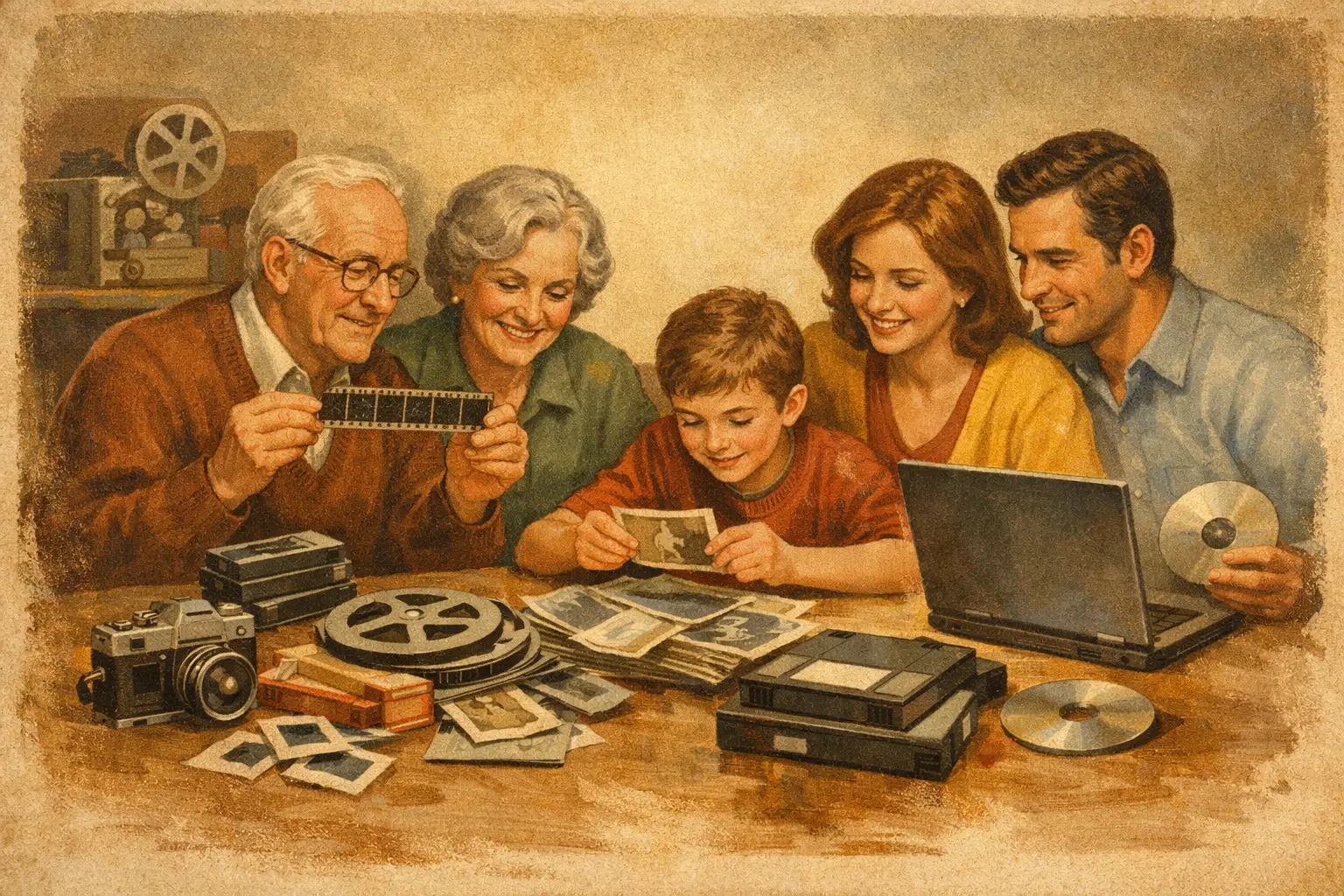
A legacy storage comparison is not really about choosing where files will live. It is about deciding how a family will keep someone present after a voice can no longer answer the phone, a familiar story can no longer be retold at the table, or a child begins asking questions years later. The right choice protects more than information. It protects connection.
A handwritten letter in a drawer, a folder of photos on a laptop, and a social media account can all hold meaningful pieces of a life. But they serve different purposes, carry different risks, and ask different things of the people left behind. Understanding those differences can help a family preserve memories with greater care.
Legacy Storage Comparison: Start With What You Want to Preserve
Before comparing platforms, devices, or physical archives, consider the form of the memory itself. A photograph preserves an expression. A document may preserve dates, achievements, and family history. Audio preserves something neither can fully carry: cadence, laughter, an accent, a pause before an answer, and the warmth behind familiar words.
For many families, the most irreplaceable records are not polished life histories. They are small, ordinary moments. A grandmother explaining her favorite recipe. A father recalling his first job. A spouse leaving a message for an anniversary yet to come. These memories need storage that makes them easy to find, meaningful to revisit, and appropriate to share.
The best option depends on whether your priority is private safekeeping, family collaboration, public remembrance, or a memorial experience connected to a physical place. Often, families need more than one of these things.
Paper Archives and Memory Boxes
Letters, journals, recipe cards, photo albums, and memory boxes remain deeply valuable. They are tangible, personal, and often become treasured family objects. Holding a note in someone’s handwriting can create an immediate sense of closeness.
Their limitation is access. A box may sit safely in one relative’s home while siblings, grandchildren, and relatives across the country never see what is inside. Paper is also vulnerable to water, fire, fading, accidental disposal, and the simple confusion that can follow a move or estate transition.
Physical keepsakes work especially well alongside a digital record. A family can preserve the original letter while recording the story behind it: who wrote it, when it arrived, why it mattered, and what it meant to the person who kept it. The object remains precious, while the context has a better chance of traveling across generations.
Phones, Computers, and External Drives
Many families already have a large legacy archive without realizing it. It may be spread across old phones, voicemail recordings, laptops, USB drives, and external hard drives. This is often where the most authentic material lives because it was captured naturally, without a plan.
The advantage is familiarity. Recording a loved one on a phone can feel simple and immediate. The concern is that personal devices are built for everyday use, not long-term memorial stewardship. Passwords are forgotten. Phones are replaced. Files become scattered across accounts. A hard drive in a desk drawer may be perfectly intact but impossible for anyone else to locate or open.
If you use devices as part of your plan, create clear labels and instructions for the family. Keep duplicate copies in more than one place, and organize files with names, dates, and short descriptions. A recording called “Audio 2019 Final 2” may survive, but it does not help a grandchild understand who is speaking or why the moment matters.
General Cloud Storage
Cloud folders can make it easier to preserve and share photos, recordings, and documents among family members who live apart. They offer useful capacity, familiar file management, and an easy way to keep backup copies outside the home.
Still, general cloud storage is a filing system, not a memorial. It usually requires someone to manage invitations, passwords, payment details, account changes, and file organization over time. If the account holder dies or stops maintaining the account, access can become difficult. Families may also find that a folder full of files feels emotionally distant, especially during a memorial service or visit to a gravesite.
Cloud storage is often a sensible backup layer. It is less ideal as the only place where a family expects stories to be found, understood, and experienced. For a lasting legacy, the question is not only, “Can we save this file?” It is also, “Will someone know how to return to it?”
Social Media and Public Memorial Pages
Social platforms can bring people together quickly after a death. Friends share photographs, write tributes, and tell stories that immediate family may never have heard. These spaces can be comforting during the first days and months of grief.
They also come with trade-offs. The platform controls the experience, its rules can change, and the content may be mixed with unrelated notifications, advertising, or public comments. Privacy is another consideration. Some families want a public tribute; others need a quieter space where personal messages can be shared only with invited relatives.
A public memorial page may be appropriate for announcements and community remembrance. It should not be assumed to be a complete or permanent family archive. The stories that matter most may be too intimate for a public feed, and a voice recording deserves more care than being buried among years of posts.
Purpose-Built Legacy and Memorial Storage
A dedicated legacy-preservation service is designed around a different question: how can a family preserve a person’s identity in a way that is organized, accessible, and fitting for remembrance?
Rather than asking relatives to search through folders, a purpose-built memorial can gather voice recordings, stories, photographs, messages, and family contributions in one place. Guided prompts can ease the pressure of knowing what to ask. This matters when time feels limited or a loved one is tired, ill, or hesitant to “tell their whole life story.” One thoughtful question at a time is enough.
The strongest memorial options also connect the digital record to the physical places where families remember. A QR-linked plaque at a headstone, urn, garden, or columbarium niche can give visitors a simple way to hear a voice, learn a story, and feel closer to the person being honored. That changes a memorial from a record of a life into an encounter with it.
VoiceForEternity centers this experience around the human voice, with family collaboration, organized memorial pages, and engraved plaques created for meaningful places of remembrance. Its one-time pricing model can also provide reassurance to families who do not want a loved one’s legacy tied to an ongoing subscription.
Questions That Matter More Than Storage Size
When comparing legacy storage options, capacity is rarely the deciding factor. A service can hold thousands of files and still leave a family unsure of who has access, who is responsible for the account, or how the memories will be discovered years from now.
Ask who owns the content and who can manage it if the original organizer is no longer able to do so. Ask how family members are invited to contribute, whether recordings and stories can be organized by topic, and how private or public the memorial can be. Ask what happens if you want to add memories later, or if relatives live in different states and need simple access from their own phones.
It is also wise to consider the emotional experience. Does the storage method feel like a technical archive, or does it help people remember? A good legacy system makes room for both. It protects the files while making the person within them easier to know.
Choose a Plan That Can Hold Real Family Life
No single format has to carry every memory. Keep the handwritten cards. Scan the photographs. Save important recordings in more than one place. Use a dedicated memorial space for the voice, stories, and messages your family wants to return to together.
What matters is making the choice while stories can still be asked for, voices can still be recorded, and a loved one can still say, in their own words, what they hope their family will remember. A few minutes of listening today can become a gift that stays close for generations.