How to Archive Family Audio That Feels Personal
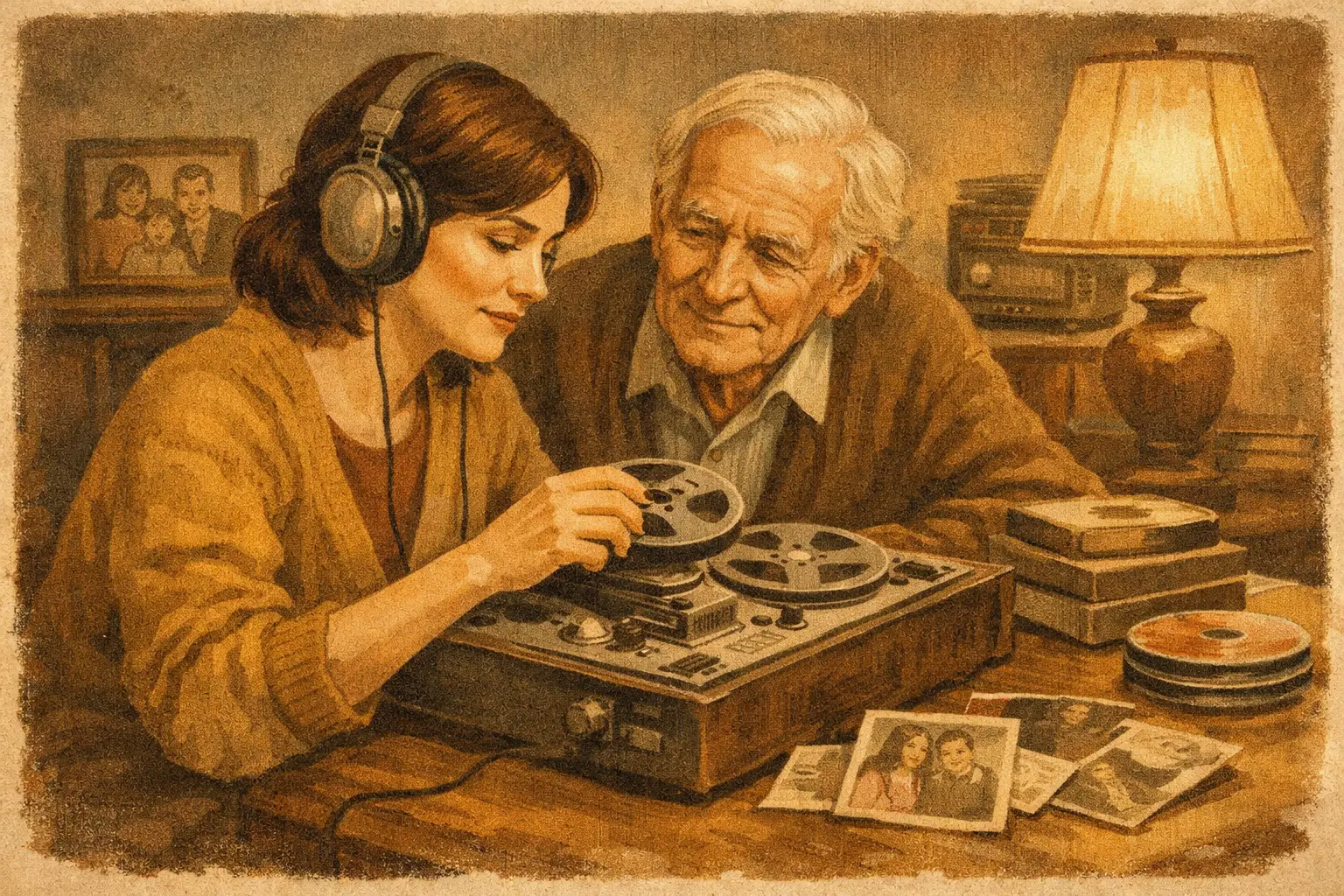
The recordings families miss most are often the ordinary ones: a grandfather saying a familiar nickname, a mother laughing before she finishes a story, a spouse offering the advice they always gave. To archive family audio is to preserve more than information. It is to keep the cadence, warmth, humor, and humanity that photographs and written memories cannot fully hold.
This does not need to become a complicated production. A phone, a few thoughtful questions, and a clear plan for preserving files can create a family record that remains deeply personal for decades. The best time to begin is while someone can still speak in their own words, but meaningful audio can also be gathered from relatives after a loss.
Why family audio matters differently
A photograph lets us remember a face. An audio recording brings back a presence. Hearing someone say, “I’m proud of you,” or retell the story of how they met their partner can make a memory feel immediate in a way few other keepsakes can.
Voice also carries details that tend to disappear from family history. An accent may soften across generations. A favorite expression may never make it into an obituary. The pauses before a difficult answer, the playful teasing between siblings, and the background sounds of a kitchen or porch all become part of the record.
For children and grandchildren, these recordings can offer a relationship that reaches beyond dates and facts. They can hear who their loved one was, not simply read about what they did. That difference is especially meaningful when a child is too young to remember a grandparent clearly or is born after a loved one has died.
How to archive family audio with care
The most successful audio archives are not necessarily the most polished. They are the ones people can return to easily, understand clearly, and share with the family members who need them. Begin with what feels manageable, then build from there.
Start with the voice you have today
Waiting for a holiday, a better microphone, or the perfect set of questions can quietly turn a good intention into a missed opportunity. Record a short conversation now. Five calm minutes can become priceless.
Ask permission before recording, especially if the topic is personal. Some people will welcome the chance to tell their stories; others may feel nervous or self-conscious at first. Let them know there is no need to perform. This is not an interview for strangers. It is a conversation for the people who love them.
A quiet room is helpful, but do not reject a recording simply because a refrigerator hums or a dog barks in the background. Clear speech matters more than studio-quality sound. Hold a phone within a few feet of the speaker, silence notifications, and make a short test recording before you begin.
Ask questions that invite real stories
Questions with simple factual answers are useful, but open questions often lead to the moments a family will treasure most. Instead of asking only where someone grew up, ask what their childhood home smelled like after dinner or who made them laugh the hardest.
You might ask about the first job they loved, a mistake that taught them something, the music they played when no one else was home, or what they want future generations to understand about the family. Invite them to tell the story behind a cherished photograph, recipe, object, or tradition.
Personal messages deserve their own recording. A parent might share encouragement for a child’s graduation, wedding, or first difficult season of adulthood. A grandparent may want to leave a blessing, a favorite saying, or a simple reminder of their love. These short recordings often become the ones played most often.
Let silence do some work. When a loved one pauses, resist the urge to fill the space. A gentle, “What happened next?” is often enough to bring forward a story they did not realize they were ready to tell.
Preserve everyday moments, not only life stories
A family audio archive should include formal conversations, but it should not be limited to them. Save a birthday voicemail, a holiday toast, a child reading aloud, a sibling telling a familiar joke, or the sound of an older relative singing a song they have always sung.
These pieces may seem small at the time. Later, they can become the most vivid reminders of a person’s place in daily family life. A complete archive has room for both the major life story and the little moments that made someone unmistakably themselves.
Organize recordings while the details are fresh
An unnamed audio file is easy to lose, even when it sits safely in storage. Give each recording a clear title that includes the person’s name, the date, and the topic. For example: “Maria Lopez - June 2026 - How she met Daniel.”
Add a short note describing who is speaking, where the recording took place, and any names or events mentioned. This context helps future listeners who may not recognize every voice or understand every family reference.
It also helps to group recordings into a few intuitive categories, such as life stories, family traditions, advice and messages, celebrations, and favorite memories. Do not over-organize at the beginning. A simple structure you will maintain is better than a detailed system that becomes another unfinished task.
Choose storage with the future in mind
Keeping one copy on a phone or laptop is not enough. Devices fail, accounts change, and families can lose access when passwords are unknown. Save original recordings in more than one place, and make sure a trusted family member knows where they are kept.
Cloud storage can be convenient for sharing, while an external drive offers a useful additional copy. The trade-off is that both approaches require ongoing attention. Files may need to be moved as technology changes, accounts may have recurring costs, and access can become confusing after a death.
For families who want audio to become part of a memorial, a dedicated legacy platform can provide a more intentional home. VoiceForEternity allows families to record and organize voices and stories on a lasting memorial page, with a QR-linked plaque that can be placed at a gravesite, urn, garden, or columbarium niche. A visitor can scan the code and hear the person behind the name.
Before choosing any service, ask practical questions. Who owns the recordings? Can family members contribute from different locations? What happens if the primary account holder dies? Is the pricing structured to support long-term access without creating uncertainty year after year? Clear answers matter because a legacy archive is meant to outlast changing devices and busy seasons of life.
Share thoughtfully with the people who belong in the story
Not every recording needs to be public. A loving message for a spouse, a vulnerable story about illness, or a child’s private memory may be best shared only with selected relatives. Decide together what belongs in a private family archive, what can be shared with a broader circle, and what might be appropriate on a memorial page.
Family collaboration can make the archive richer. A daughter may record her father’s military stories, while a cousin adds recordings from childhood reunions and a grandchild asks about favorite family traditions. When relatives live far apart, audio gives everyone a meaningful way to contribute without needing to gather in the same room.
If disagreement arises, choose care over urgency. You do not have to publish everything at once. Preserve the recording first, then give the family time to decide how it should be shared. The voice itself is irreplaceable; the sharing decision can be revisited.
When you are recording after a loss
It is still possible to build a beautiful audio legacy when a loved one is no longer here. Gather voicemail messages, saved videos, old answering-machine recordings, speeches, and audio clips from family phones. Ask relatives to record their own memories in response: what did this person say often, what did their laugh sound like, and what did they teach without realizing it?
Be careful with old recordings. Keep the original file untouched, then make copies for editing or sharing. If the sound is faint, it may be tempting to remove every bit of background noise, but excessive editing can make a voice sound unfamiliar. Aim for clarity while preserving its natural character.
Even one authentic clip can become a center point for remembrance. Paired with stories from the people who knew them, it can help a memorial feel less like a record of loss and more like an encounter with a life that continues to matter.
There is no perfect first recording and no perfect question. Sit down with someone you love, press record, and ask them to tell you something you have never heard before. Years from now, the sound of their answer may be one of the most meaningful gifts your family has.