45 Questions to Record Family Stories
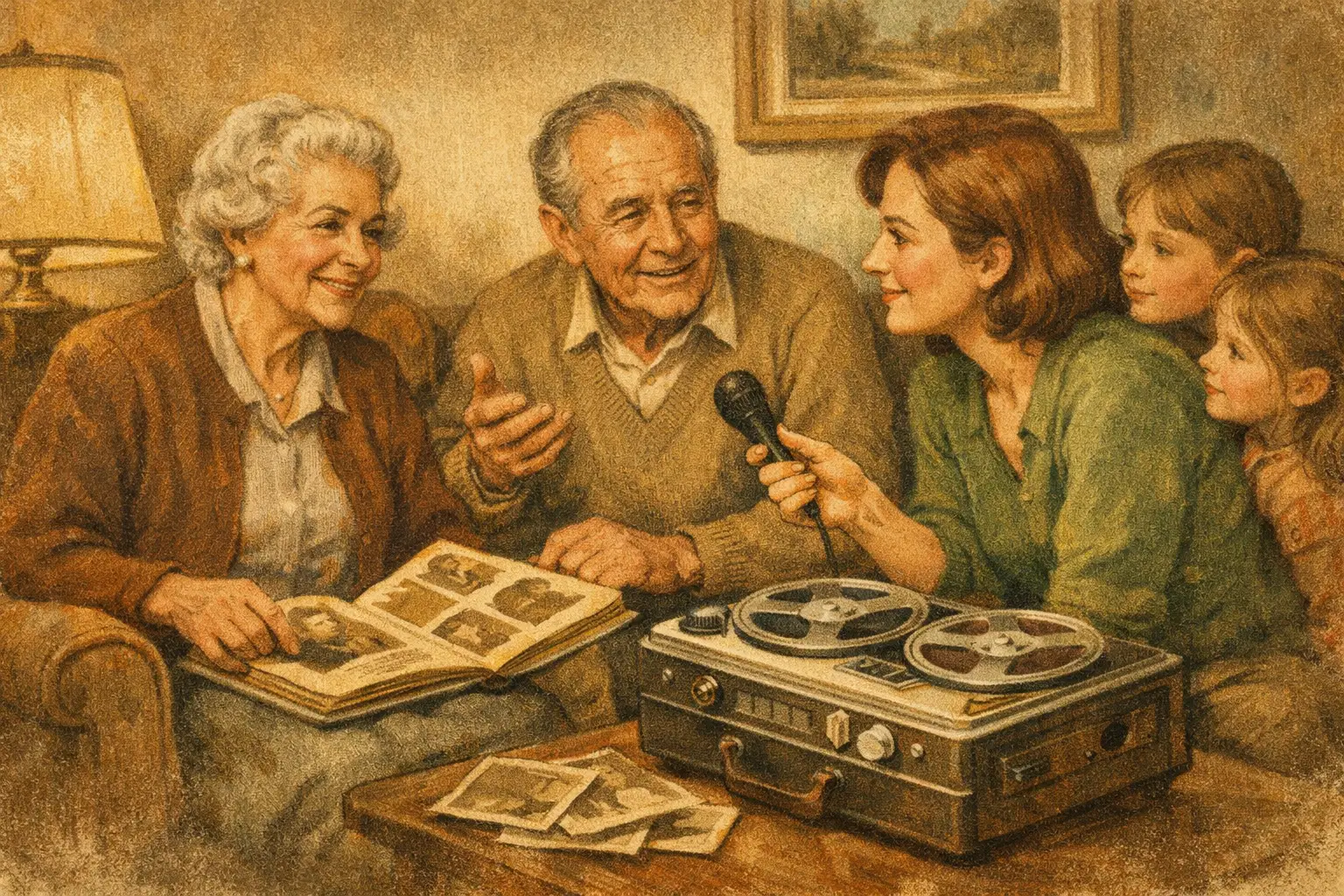
A quiet room, a phone on the table, and a parent saying, “I’m not sure where to start.” That is often the hardest part. The right questions to record family stories can turn hesitation into conversation and a simple recording into something your family will return to for years.
What matters most is not getting a perfect performance. It is creating enough comfort for real memories to surface - the kind that carry personality, humor, values, and the sound of someone’s voice exactly as your family knows it. A good question does more than gather facts. It helps someone remember how life felt.
Why the right questions matter when you record family stories
Many families begin with the basics - where were you born, what did you do for work, when did you get married. Those details matter, but they rarely capture the whole person on their own. The stories people treasure most usually live one layer deeper.
That is why thoughtful questions to record family stories should invite reflection, not just biography. Instead of asking only for dates and milestones, ask about fears, favorite traditions, turning points, friendships, mistakes, and moments of pride. You are not simply building a timeline. You are preserving identity.
It also helps to remember that memory is uneven. Some people recall childhood vividly but struggle with recent years. Others light up when talking about music, recipes, military service, work, faith, or raising children. There is no single script that fits every family. The best approach is gentle, flexible, and patient.
Questions to record family stories that lead to richer memories
A strong conversation usually moves from easy topics into more personal ones. Starting with familiar ground helps your loved one relax and find a natural rhythm.
Childhood and early life
Begin with simple prompts that help them step back into place and time. Ask what their home looked like, what neighborhood sounds they remember, who made them feel safe, and what a normal school day was like. You might ask what games they played, what trouble they got into, or what family rule they still remember.
Questions like these often work well:
- What is one of your earliest memories?
- What did your childhood home feel like?
- Who influenced you most when you were young?
- What did your parents or grandparents teach you without realizing it?
- What do you remember about family dinners, holidays, or weekends?
These questions do not just collect facts. They bring back voices, routines, and emotions.
Love, marriage, and family life
This part of the conversation often becomes especially meaningful for children and grandchildren listening later. Ask how they met a spouse or partner, what first attracted them, what early married life was really like, and what changed once children arrived.
You can also ask what they were most worried about as a young parent, what they hoped their children would learn from them, and what family traditions mattered enough to keep year after year. A question like “What did love look like in your home?” can reveal more than a list of anniversaries ever could.
Work, sacrifice, and resilience
Work stories are rarely just about jobs. They are often about responsibility, risk, pride, and the kind of pressure someone carried quietly.
Ask what their first job taught them, what challenge shaped them most, when they felt underestimated, and what they had to sacrifice to provide for family. If they served in the military, cared for relatives, immigrated, changed careers, or lived through financial hardship, give those experiences room. These are often the stories people hesitate to volunteer but want remembered once someone asks with care.
Joy, personality, and the small details
Some of the most cherished recordings come from questions that seem almost ordinary. Ask what song always takes them back, what meal reminds them of home, what made them laugh hardest, or what habit family members still tease them about.
These details carry presence. They remind future listeners not just what a person did, but who they were when they walked into a room.
How to ask questions without making it feel like an interview
A family story recording should feel like a conversation, not a test. That means your tone matters as much as the question itself.
Keep one question at a time. Let silence do some work. If a memory appears slowly, resist the urge to fill every pause. Often the most meaningful answer comes a few seconds after someone says, “Let me think.”
It also helps to follow the energy of the moment. If your loved one lights up over one topic, stay there. A prepared list is useful, but listening well is more valuable than checking off every prompt. One answer about a first apartment or a favorite sibling can open three more stories you would never have thought to ask for directly.
If emotions rise, that is not a failure. Some stories carry grief, regret, or longing alongside joy. You do not need to fix the feeling. Simply make space for it. A gentle “Tell me more” or “What do you remember most about that?” is often enough.
Questions to record family stories by theme
When families feel overwhelmed, grouping questions by theme makes the process easier. You do not need to ask everything in one sitting.
Here are 45 strong prompts to use over time:
- What is one of your earliest memories?
- What did your childhood home look and sound like?
- Who made you feel most loved when you were young?
- What family tradition do you remember most clearly?
- What was school like for you?
- What trouble did you get into as a child?
- What did you want to be when you grew up?
- What was your relationship like with your siblings?
- What did your parents teach you that stayed with you?
- What did you learn from your grandparents?
- What was your first job?
- What did work mean to you at different times in life?
- What was the hardest season you lived through?
- When did you have to be braver than you felt?
- What sacrifice are you glad you made?
- What accomplishment are you proudest of?
- What do you wish people understood about your generation?
- How did you meet the love of your life?
- What do you remember about falling in love?
- What was your wedding day or early marriage like?
- What was hardest about becoming a parent?
- What brought you the most joy in raising a family?
- What kind of home did you hope to create?
- What family recipe or meal means the most to you?
- What holidays felt especially important in your home?
- What songs take you back instantly?
- What places shaped you most?
- What friendship changed your life?
- Who believed in you when you needed it?
- What loss changed you?
- What mistake taught you something valuable?
- What did faith, hope, or prayer mean in your life?
- What made you laugh the most over the years?
- What are some small things people always associate with you?
- What moment made you feel most alive?
- What do you miss about earlier times?
- What do you not miss at all?
- What values mattered most in this family?
- What do you hope your children and grandchildren carry forward?
- What do you want to be remembered for?
- What advice would you give your younger self?
- What advice would you give future generations of this family?
- What are you still learning about life?
- What are you most grateful for?
- Is there anything you have always wanted your family to know?
A few practical ways to make recording easier
Choose a time of day when your loved one has the most energy. For many older adults, that is earlier in the day rather than late afternoon or evening. Keep the first session short enough that it ends while they still feel good.
Bring context into the room if it helps. A recipe card, wedding photo, military keepsake, yearbook, or old song can unlock memory faster than another direct question. If a person has memory loss, sensory prompts may work better than broad requests like “Tell me your life story.”
It is also wise to record sooner than you think you need to. Families often wait for a better time, a calmer season, or a holiday gathering. Then illness, fatigue, or loss changes what is possible. Even one honest recording is worth having.
For families spread across different states, technology can make this much more manageable. What matters is preserving the voice itself - the pacing, inflection, warmth, and emotion that no written transcript can fully hold. That is where a service like VoiceForEternity can feel especially meaningful, because it helps families keep stories organized, accessible, and rooted in the voice that made them personal in the first place.
You do not need the perfect question, the perfect setting, or the perfect answer. You only need a beginning, a little patience, and the willingness to ask one more gentle question while the voice you love can still answer.