How to Capture Final Wishes With Heart and Clarity
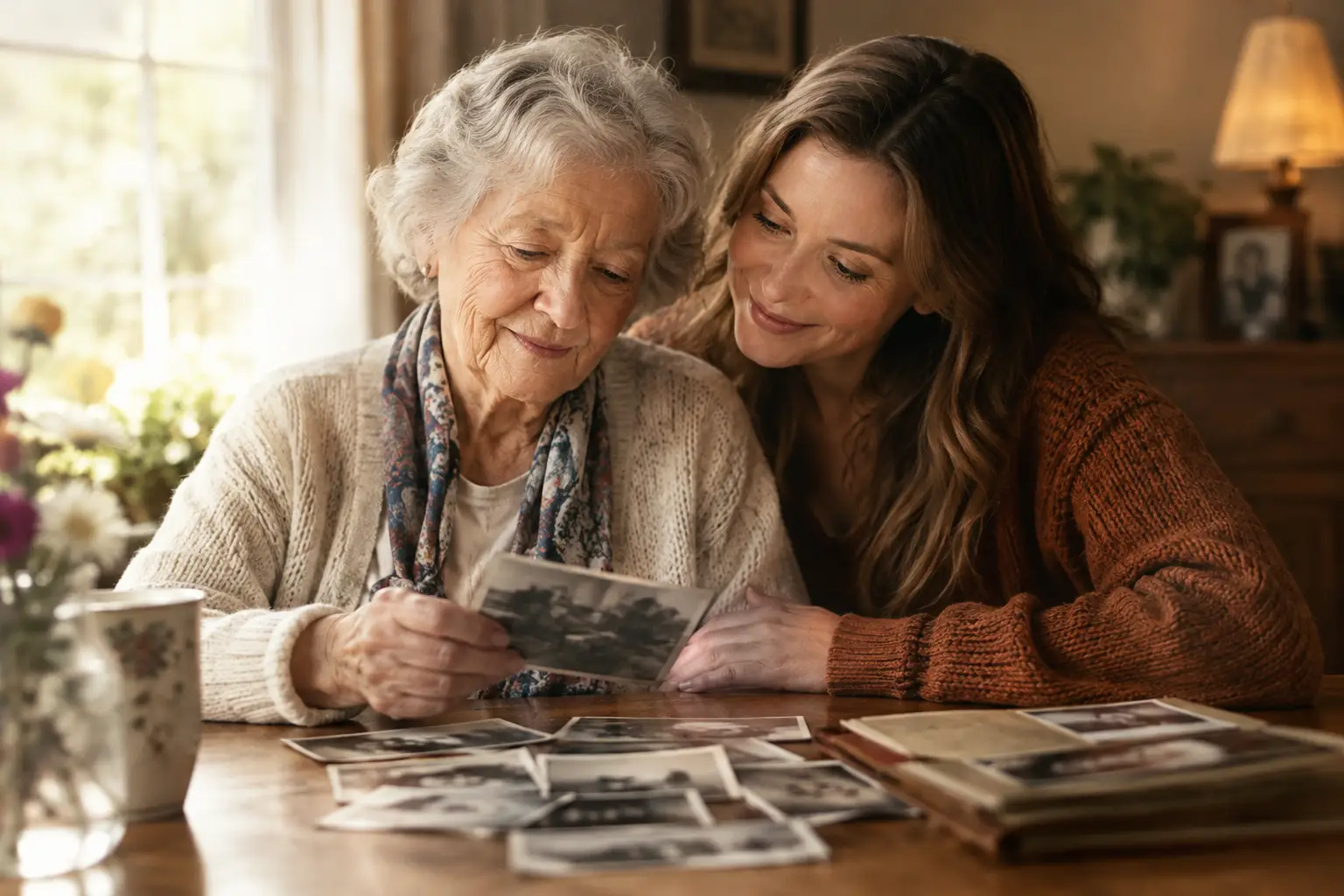
To capture final wishes, ask permission first, then talk gently about practical choices and personal messages, and record the conversation with a phone or computer in a quiet room. Keep sessions short. A recording adds valuable context, but it does not replace legally valid documents, such as an advance directive or health care proxy.
A family can spend years remembering what someone loved, yet still be left wondering what they truly wanted at the end. Learning how to capture final wishes is not about anticipating loss or making a difficult moment feel clinical. It is a way to give someone the comfort of being heard - and give the people who love them clearer footing when emotions are high.
The most meaningful conversations often begin before there is an urgent need for them. A quiet afternoon, a birthday visit, or a phone call with an aging parent can become an opportunity to preserve the words, values, and choices that may one day matter deeply.
Begin With Permission, Not a Checklist
Final wishes are personal. Some people have thought about them for years and are ready to talk. Others may feel nervous, private, or worried that the conversation means something is wrong. The right approach is gentle, direct, and led by their comfort.
You might say, “I want to make sure I understand what matters to you and can honor it someday.” This keeps the focus where it belongs: on their voice and their peace of mind, not on paperwork or fear.
Do not try to cover every subject in one sitting. A conversation may naturally move from favorite family traditions to practical preferences, or it may pause after only a few questions. Both are enough. Capturing final wishes is a process, not a single interview.
If your loved one does not want to speak yet, respect that answer. Let them know the invitation remains open. Often, knowing they will not be pressured makes a later conversation easier.
What Can “Final Wishes” Include?
People use this phrase to mean different things. For some, it refers to medical care and end-of-life decisions. For others, it means funeral music, a favorite reading, who should receive a keepsake, or the story they want grandchildren to remember.
Separating wishes into a few broad areas helps. This creates clarity without making the conversation feel like an interrogation.
Personal values and comfort
Ask what helps them feel safe, comforted, and themselves. They may want familiar music playing, a beloved pet nearby, a certain person present, or a peaceful setting with minimal visitors. These details can seem small, but they often become the things families are most grateful to know.
Questions such as “What does a good day look like for you?” and “What would you want us to remember if decisions ever become hard?” can reveal values more naturally than a formal question about end-of-life care.
Medical and care preferences
A loved one may have clear thoughts about who should speak for them if they cannot communicate, where they hope to receive care, or what treatments they would or would not want. These choices should be documented through the appropriate legal and medical forms for their state, such as an advance directive or health care proxy.
A recorded conversation can provide valuable context, but it does not replace legally valid documents. Encourage your loved one to speak with their doctor, attorney, or a qualified local professional when formal decisions are involved. Keep copies of completed documents where the designated decision-maker can find them.
Memorial and funeral preferences
Memorial and funeral preferences are often the most approachable place to begin. Ask whether they prefer burial, cremation, a traditional service, a gathering at home, a religious ceremony, or no formal event at all. Ask about songs, readings, flowers, photos, military honors, charitable gifts, clothing, and the people they hope will be included.
There is no need to force certainty. “I’m not sure” is an honest answer, and preferences can change. What matters is creating a record of what they know now.
Messages, stories, and family legacy
A final wish can also be a message: an apology, a blessing, a favorite memory, advice for a future milestone, or a simple “I love you.” These are the pieces no legal document can hold.
Invite stories about childhood, first jobs, family traditions, places they loved, and lessons they learned the hard way. Their memories may not sound like final wishes at first, but they can become a lasting guide to who they were and what they hoped to pass on.
How Do You Capture Final Wishes in Their Own Voice?
Writing down a loved one’s preferences is useful. Hearing them say those words can be something else entirely. Their laugh before a story, the pause before a heartfelt message, and the familiar rhythm of their voice carry a presence that text cannot replace.
Choose a simple recording method they can manage comfortably. A phone, computer, or recorded call can work well. Find a quiet room, silence notifications, and test the sound first. If travel or illness makes gathering difficult, record short conversations over time rather than waiting for one perfect session.
Start with easy questions. Ask, “What are you proudest of?” or “What do you want your family to keep doing?” Once the conversation feels natural, you can gently ask about memorial preferences or messages for specific people.
Keep recordings short enough that they do not become tiring. Ten meaningful minutes may be more valuable than an hour that leaves someone exhausted. Let your loved one stop, correct themselves, or skip any question without explanation.
A service such as VoiceForEternity can help families organize these recordings, written memories, and messages in one lasting place, with a QR-linked memorial page that can be shared across generations. The technology should stay in the background. The person’s voice should remain at the center.
Record the Details Clearly and Share Them Carefully
After each conversation, make a clear written note of what was said, including the date. Label audio files with the speaker’s name and the topic, such as “Dad - memorial music” or “Grandma - message for the grandchildren.” Avoid vague file names that will be difficult to sort through later.
For practical wishes, write down who was present and whether the preference was firm or still under consideration. If someone says, “I think I would prefer cremation,” do not turn that into a fixed instruction without checking. A simple follow-up like, “Would you like us to treat that as your plan for now?” prevents misunderstandings.
Decide together who should have access. The person named to make health decisions should know where legal documents are stored. The family member planning a memorial should know about funeral preferences. Not every private recording needs to be shared immediately, especially if it contains messages intended for a specific person or future occasion.
Telling close family members that a conversation has happened can also help. You do not have to reveal every detail. Simply saying, “Mom has shared some wishes, and they are safely recorded,” can reduce conflict and reassure everyone that her perspective will guide the decisions.
Make Room for Change
Final wishes are not a contract with the past. Health changes, relationships change, and people sometimes discover that what they once wanted no longer feels right. Review practical wishes after a major diagnosis, a move, the death of a spouse, or any meaningful life transition.
Treat updates as an act of care, not as an inconvenience. Replace outdated documents, add a new recording, and make sure the right people know what has changed. Preserving an earlier message can still be meaningful, but current medical and funeral instructions should be easy to identify.
When the Conversation Feels Too Hard
Some families avoid these talks because they fear tears, disagreement, or saying the wrong thing. Tears are not a sign that the conversation has failed. They often mean the conversation is honest.
If direct questions feel too heavy, begin with legacy instead of loss. Ask your loved one to tell the story behind their wedding photo, explain a family recipe, or record a message for a child’s future graduation. As trust grows, practical wishes may feel less daunting to discuss.
And if a loved one is seriously ill or time is limited, do not wait for perfect wording. Sit beside them. Ask one question. Record one story. Write down one preference. Small acts of listening can become an extraordinary gift.
The goal is not to capture every answer. It is to make sure the person you love has been given the dignity of being heard - in their choices, their stories, and, whenever possible, their own voice.
Sources: National Institute on Aging, Advance Care Planning: Advance Directives for Health Care
Drafted with AI assistance and reviewed by Steve. Learn more