How to Capture End-of-Life Messages with Care
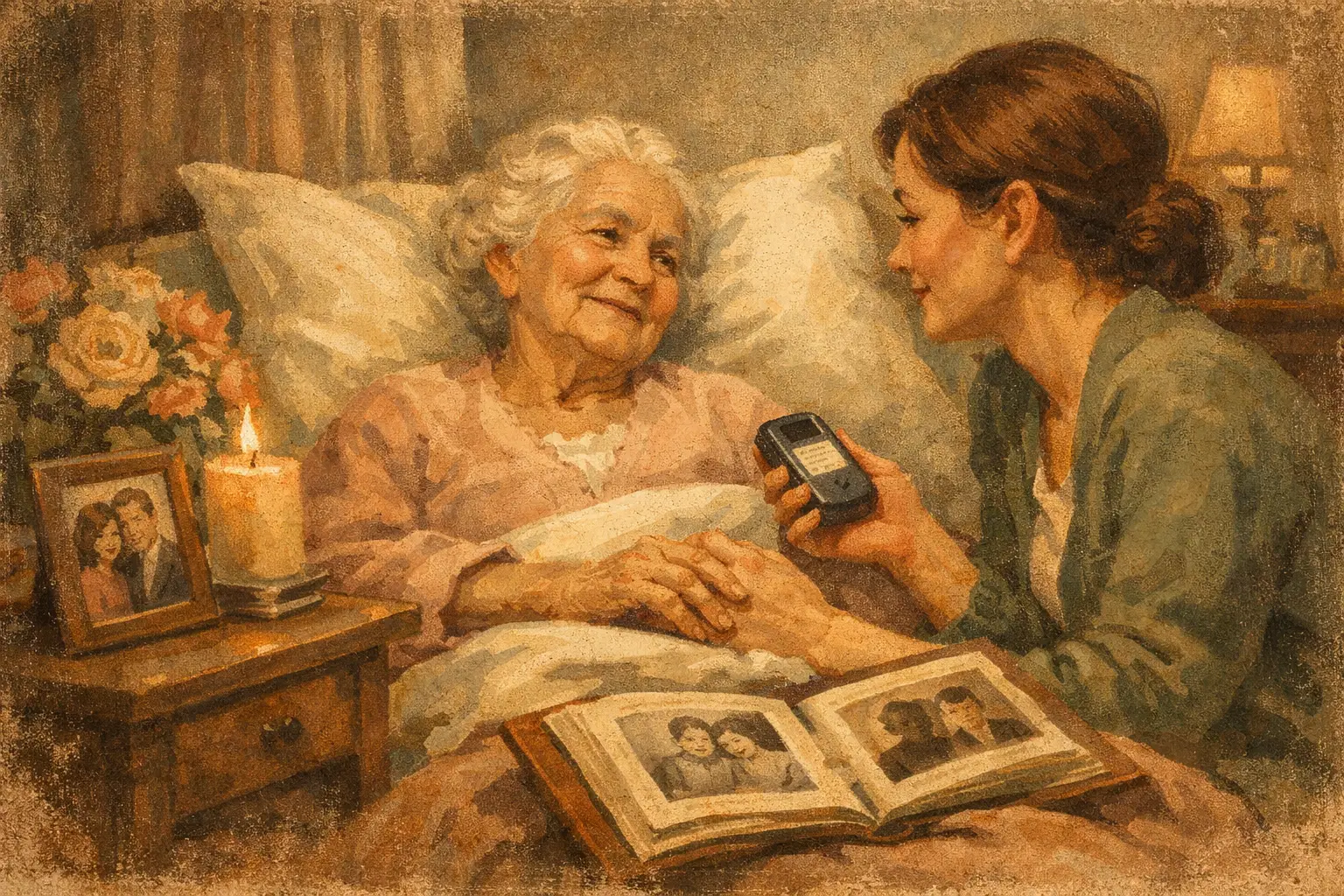
A familiar voice can carry more than a lifetime of photographs. It holds a laugh between sentences, the way someone says your childhood nickname, the pause before a hard-earned piece of advice. Learning how to capture end-of-life messages gives families a way to preserve those details while they can still be shared in the speaker’s own words.
This can feel like a tender subject to raise. It may also feel urgent, particularly when illness, aging, or a major transition has changed the rhythm of family life. The goal is not to create a perfect final statement. It is to make room for a loved one to be heard, at their pace, in a way that feels like them.
Begin with permission, not a recording device
A microphone should not be the first thing someone sees. Begin with a conversation about why their voice matters to you. You might say, “I love hearing you tell that story,” or “I want the grandchildren to know your voice and your sense of humor.” This frames the recording as an act of love, not an obligation or an interview about dying.
Ask whether they would like to participate and how they would prefer to do it. Some people are comfortable speaking freely into a phone. Others would rather have a familiar person ask questions over coffee. A loved one with fatigue may do best with five-minute recordings on several different days. Consent, comfort, and control matter at every step.
If they decline, let the subject rest. You can return to it later, but avoid turning a meaningful opportunity into pressure. Sometimes a person may prefer to leave a message for one individual, share a favorite story, or record a blessing rather than discuss their life broadly. That is enough.
Choose the right moment and setting
The most moving messages rarely happen in a formal setup. They happen when a person feels safe and unhurried. Choose a quiet place with limited background noise, comfortable seating, water nearby, and enough time that nobody is watching the clock.
A phone recording is often the easiest place to start. Place it close enough to pick up a clear voice, but not so close that it feels intrusive. Turn off television, music, and noisy appliances. If family members are in different places, a phone call or video call can still preserve a meaningful voice message, though a direct recording will usually sound clearer.
There is no requirement to record during a crisis. In fact, capturing messages earlier often gives everyone more ease. A parent may be more willing to tell stories after a birthday dinner, while looking through old photographs, or during a visit to a meaningful place. End-of-life messages do not need to be recorded at the end of life to become part of a lasting legacy.
How to capture end-of-life messages that feel natural
Think of your role as a gentle listener, not a director. Open-ended questions invite stories, while yes-or-no questions can make a conversation feel small. Leave space after an answer. Some of the most personal reflections come after a quiet pause.
Rather than asking, “What do you want to say before you die?” try a softer path: “What would you want your great-grandchildren to know about you?” or “What has brought you the most joy?” Let the person decide how close to mortality they wish to speak.
Questions can follow the shape of an ordinary life: childhood, work, friendships, love, faith, traditions, mistakes, humor, and hopes for the family. A few prompts that often lead to genuine recordings include:
- What is a family story you never want us to forget?
- What did your parents or grandparents teach you?
- What does home mean to you?
- Is there advice you hope your family carries forward?
- What would you like to say to each person you love?
Do not try to cover every subject in one sitting. A short recording about how they met their spouse can be more powerful than an hour-long life history made when they are tired. Save a few questions for another day. The rhythm should feel like conversation, not a checklist.
Make room for messages that are imperfect
A voice may tremble. Someone may lose their train of thought, repeat a story, cough, cry, or decide halfway through that they want to start over. Those moments do not ruin the recording. They are part of the human presence your family may one day miss most.
It is fine to edit accidental interruptions or long stretches of silence if the speaker wants that. But resist polishing away personality. The small expressions, familiar phrases, and spontaneous laughter are often what make a message feel alive years later.
If speaking becomes difficult because of illness, adjust the approach. Record shorter answers. Offer written prompts in advance. Invite a trusted family member to help tell a story together. If the loved one prefers written words, those can be read aloud by them if possible, or preserved alongside their earlier voice recordings. The right format depends on their energy, health, and wishes.
Preserve context along with the voice
A recording becomes easier to revisit when it is organized with care. Give each file a simple name that includes the speaker, topic, and date, such as “Maria - Advice for Her Grandchildren - May 2026.” Add a brief note about where it was recorded or who was present. Future listeners will appreciate knowing that a story was told at the kitchen table or during a family reunion.
Keep original files in more than one secure place. A single phone can be lost, replaced, or damaged. Families should also consider who will be able to access the recordings later. Clear ownership and shared access can prevent a treasured message from disappearing behind an unfamiliar password.
For families who want recordings to become part of a memorial, VoiceForEternity offers a way to organize voices and stories on a permanent QR-linked memorial page. A loved one’s voice can then be heard by family members near and far, or by someone standing quietly at a gravesite, urn, garden, or memorial plaque. The technology matters because it makes access simple, but the voice remains the heart of the experience.
Invite family participation without creating pressure
One person does not have to carry the whole task. Siblings, grandchildren, close friends, and caregivers may each bring out different stories. A granddaughter may ask about a first job. A longtime friend may remember an adventure nobody else has heard. A spouse may know the meaning behind a favorite song or an old inside joke.
Before recording, coordinate gently. Decide who will ask questions, who will manage the device, and who will simply be present. Too many people speaking at once can be tiring, especially for someone who is ill. In many cases, one listener and one recorder is plenty.
It can help to offer relatives a chance to submit a question in advance. Choose only those that feel appropriate and avoid surprising the speaker with emotionally loaded topics. Their story belongs to them. Family involvement should widen the circle of care, not take away their ability to decide what is shared.
Let the message live beyond the moment
After recording, listen back privately or with your loved one, depending on their preference. Ask whether there is anything they would like removed, added, or saved separately. Thank them specifically for what they gave you. “I never knew that about your childhood” can mean more than a general compliment.
Do not wait for a funeral or memorial service to share a recording if the speaker wants their family to hear it now. A message of encouragement, a recipe story, or a remembrance of a loved one can bring people together in the present. Other recordings may be intended for a future birthday, wedding, anniversary, or time when someone needs comfort. Label those wishes clearly and honor them.
There may never be a perfect time, a perfect question, or a perfect recording. There is only the chance to sit close, listen well, and let someone you love leave behind the sound of being known. That gift can keep speaking long after the room has gone quiet.