How to Make a Voice Keepsake That Lasts
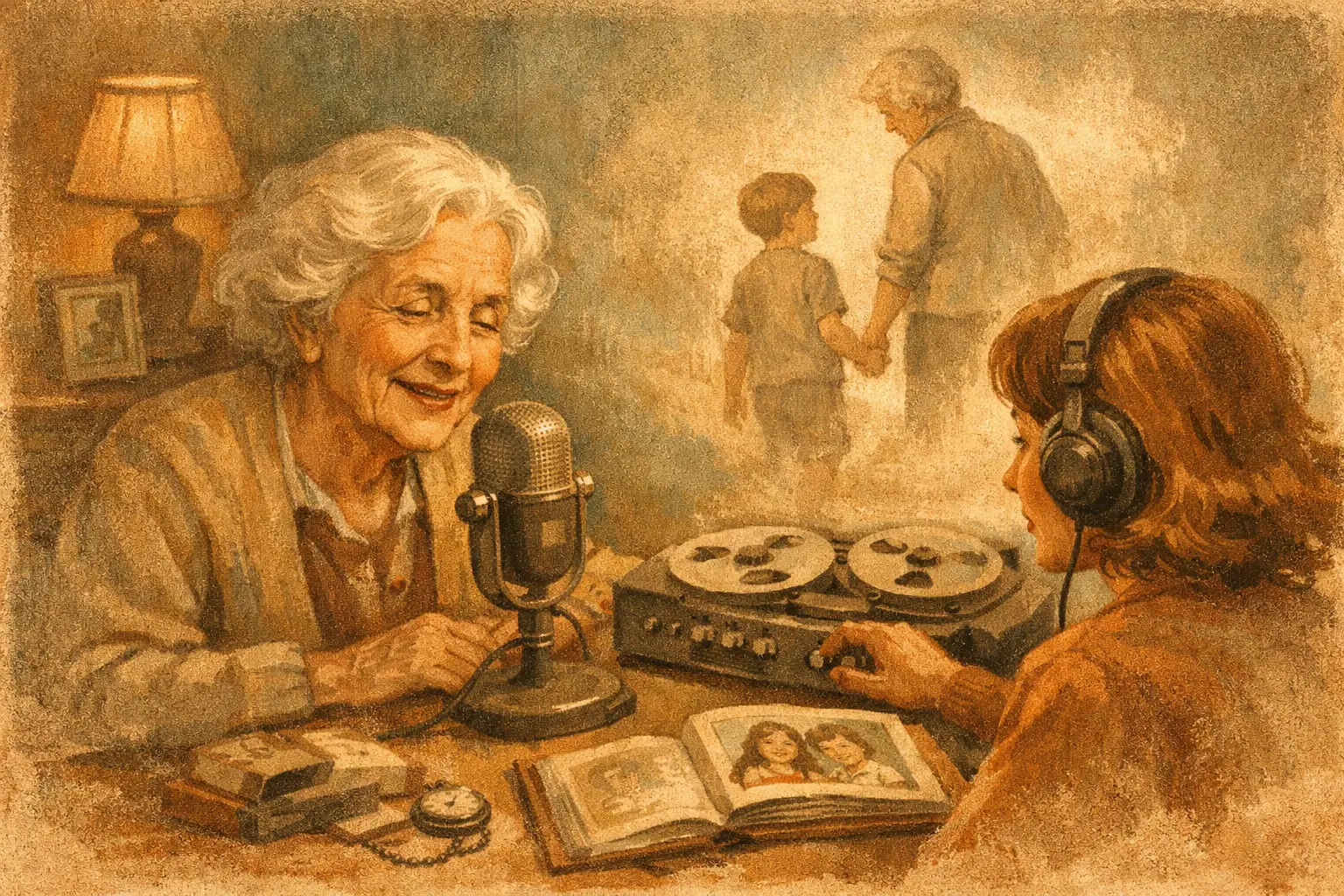
A voicemail you forgot to delete. A birthday message you replay after everyone else has gone to bed. A short story told in the same familiar cadence you have heard for decades. When people ask how to make a voice keepsake, they are rarely asking about audio files alone. They are asking how to hold on to someone in the most human way possible.
A voice carries more than words. It holds personality, humor, pauses, emotion, and the tiny details that photos and written memories cannot preserve. That is why a voice keepsake can become one of the most meaningful things a family creates, whether you are honoring someone who has passed or recording a loved one while you still have the chance.
How to make a voice keepsake with purpose
The best voice keepsakes start with intention, not equipment. Before you press record, take a moment to decide what you want this keepsake to become. For some families, it is a simple recording of a parent saying, "I love you." For others, it is a fuller archive of life stories, family history, advice, jokes, prayers, or messages for future milestones.
There is no single right version. A short keepsake can be powerful because it is easy to revisit. A longer collection can be priceless because it captures more of a person’s identity. What matters most is choosing a format that feels natural for the person speaking.
If your loved one gets tired easily, shorter recordings often work better than one long session. If they enjoy storytelling, a relaxed conversation may bring out far more than a formal interview. The goal is not perfection. The goal is recognition. When someone listens years from now, they should feel, immediately, that this is them.
Start with the voice you know and love
Many people delay recording because they think they need a perfect script. Usually, they do not. The most moving keepsakes are often the least polished. A laugh after a forgotten detail. A pause before a hard memory. A familiar phrase the family has heard a hundred times. These are not mistakes. They are part of the voice itself.
Begin with prompts that feel easy and personal. Ask about childhood memories, how they met their spouse, what they were proud of, what they want grandchildren to know, or the lessons life taught them slowly. You can also ask for direct messages: one for each child, one for future birthdays, one for moments of grief, one for moments of celebration.
For some families, it helps to mix stories with simple spoken phrases. A recording might include a life story, then end with everyday words the family never wants to forget: "Drive safely," "Call me when you get home," or "I’m proud of you." Those ordinary lines often become the most treasured.
Questions that bring out natural memories
A good question does not sound like a questionnaire. It sounds like an invitation. Instead of asking for dates and facts, ask what something felt like. Ask what they miss, what made them laugh, what they would do again, and what they hope the family carries forward.
If emotion makes the conversation difficult, start lighter. Favorite meals, songs, holiday traditions, childhood pets, and first jobs can open the door gently. Once someone feels comfortable, deeper stories often follow on their own.
Choose a recording method that keeps things simple
If recording feels complicated, people put it off. Simplicity matters, especially when emotions are already high. You can create a beautiful keepsake with a smartphone, a computer microphone, or a phone-based recording option. Clear audio is helpful, but emotional honesty matters more than studio quality.
Try to record in a quiet room with soft surfaces that reduce echo. Turn off televisions, fans, and phone notifications if possible. Place the microphone or phone close enough to capture the voice clearly without forcing anyone to speak unnaturally loudly.
If your loved one lives far away, remote recording can still work well. Some families record separate messages from different locations and bring them together into one memorial collection. That can be especially meaningful when children, siblings, and grandchildren all want to contribute.
There is one trade-off to keep in mind. A quick recording saved on a single device may feel easy in the moment, but it can become vulnerable over time. Phones break. Files get misplaced. Passwords are forgotten. If the recording matters deeply, preservation matters just as much as creation.
Make the experience feel gentle, not formal
The emotional tone of the session shapes the recording. If it feels like a task, the voice can sound guarded. If it feels like time together, the voice often relaxes. Sit somewhere comfortable. Keep water nearby. Let silence happen without rushing to fill it.
You do not have to finish everything in one sitting. In fact, many of the best keepsakes are built over several short sessions. One day might focus on childhood. Another might capture family traditions. Another might simply record loving messages for the people closest to them.
This approach also gives families room to adjust. You may realize after the first recording that you want to ask different questions, include other relatives, or save a few messages for private listening only. A voice keepsake can be as intimate or as shared as your family wants it to be.
How to make a voice keepsake last beyond the recording
This is the part many families do not think about until later. Recording the voice is only the first step. To truly make a voice keepsake, you need a safe and lasting way to store, organize, and revisit it.
At minimum, keep more than one copy. Save the original file in a secure digital location and back it up somewhere separate. Label recordings clearly so family members know what they are hearing and when it was made. A file named "Dad_story_1974_summer_job" is far more meaningful years later than "audio-final-2."
It also helps to organize recordings by theme. Personal messages, family history, milestone messages, favorite stories, and everyday sayings can each have their own place. When audio is organized thoughtfully, loved ones are more likely to return to it often instead of letting it sit unheard.
For families who want something more enduring than scattered files, a dedicated memorial platform can add real peace of mind. VoiceForEternity, for example, centers the voice itself as the heart of remembrance and gives families a permanent place to preserve recordings, stories, and shared memories in one accessible memorial space. That matters when the keepsake is meant to outlast devices, moves, and changing technology.
Pair the recording with context
A voice becomes even more meaningful when future listeners understand what they are hearing. Add names, dates, relationships, and a short note about the moment. Was this recorded before a wedding? During a birthday visit? After a diagnosis? In the first grandchild’s nursery?
Context turns audio into legacy. Someone listening twenty years from now may know the voice matters, but they may not know why this exact message was recorded. A few clear details can preserve that meaning.
Consider how your family will access it later
A keepsake should be easy to revisit, not locked away. Some families want private access for a small circle. Others want a memorial page that can be shared with relatives across the country. Some want a physical tribute, such as an engraved plaque with a QR code, so visitors can hear the voice at a gravesite, in a memorial garden, or beside an urn.
This is where practicality and emotion meet. The more accessible the recording is, the more often it can bring comfort. But access should still feel respectful. It depends on the family, the content, and the wishes of the person whose voice is being preserved.
There is no wrong choice here. A private archive may feel appropriate for deeply personal messages. A shareable memorial can be beautiful when the goal is to connect generations and keep stories alive for children and grandchildren who may one day want to hear the voice for the first time.
What if you are making one after a loss?
Sometimes there is no chance to create a fresh recording. Families may only have old voicemails, home videos, saved phone clips, or snippets from family gatherings. These still count. You are not creating something lesser. You are gathering what remains and giving it a safer home.
In those cases, start by collecting every source you can find. Ask siblings, cousins, and close friends to check their phones and computers. You may be surprised how many small recordings exist in different places. A ten-second clip can carry enormous comfort.
Then organize them with care. Remove duplicates, label each one, and note where it came from. Even a modest collection can become a powerful voice keepsake when it is preserved in one place and connected to the person’s story.
A voice keepsake does not need to be perfect to be precious. It only needs to be real. If you have the chance to record someone now, start small and start soon. If all you have are fragments, protect them. The voice you save today may become the one your family reaches for most in the years ahead.