How to Record Family History Stories Well
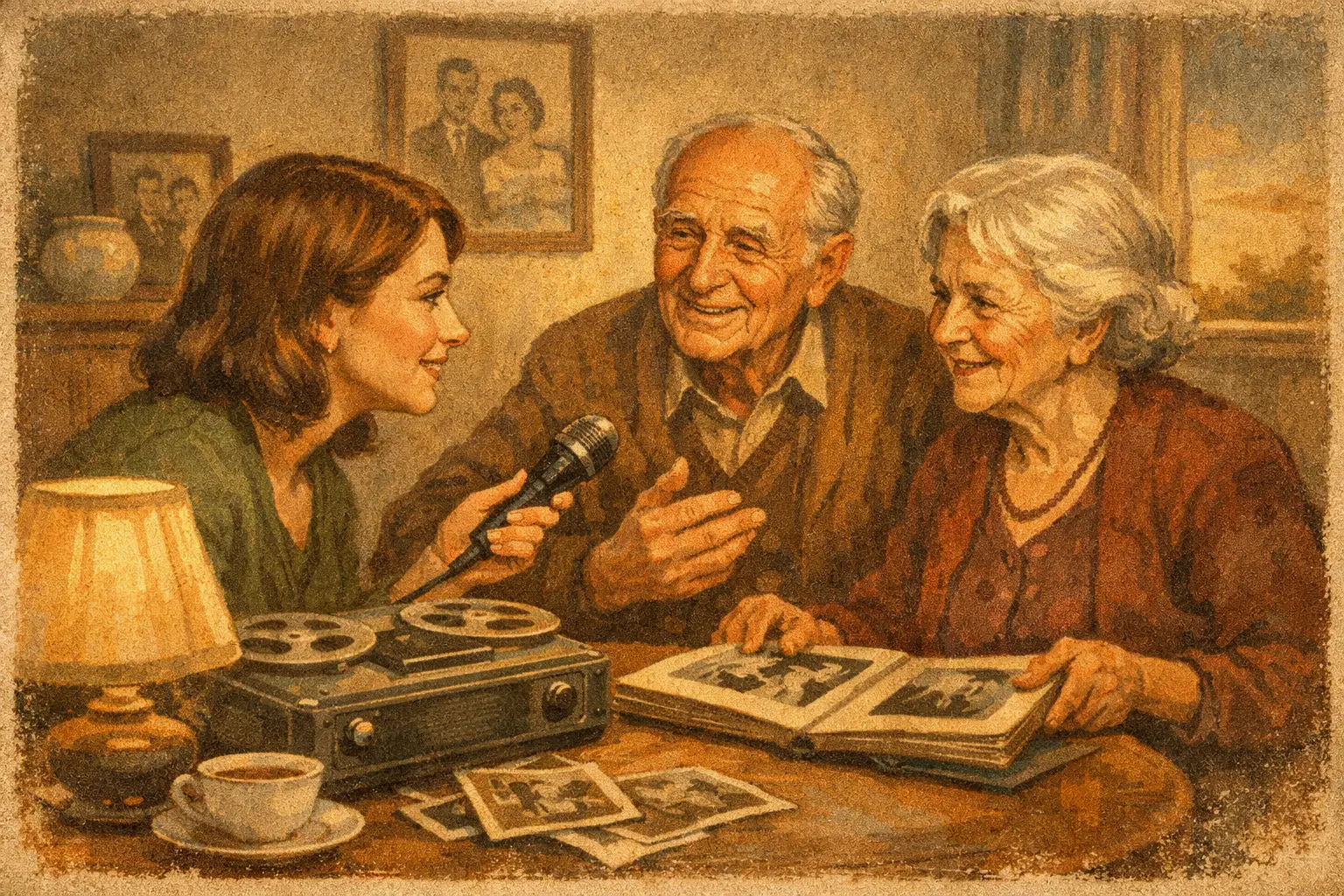
A voice can disappear faster than a photograph fades. Many families realize that too late, after a parent’s voicemail has been deleted or a grandparent’s stories survive only as fragments retold at holidays. If you are wondering how to record family history stories, the best time is usually sooner than feels convenient, and the good news is that it does not have to be complicated.
What matters most is not studio quality or a perfectly planned interview. What matters is capturing the way they laugh before a punchline, the pause before a hard memory, the exact phrasing they always use when they talk about home, faith, work, marriage, military service, immigration, or raising children. Those details are often the true inheritance.
Why recording family stories matters more than writing them down
Written notes are valuable, but they cannot hold a person’s cadence, warmth, or emotion. A transcript may preserve facts. A voice preserves presence.
That difference matters, especially when families are grieving or when generations live far apart. Hearing someone tell their own story creates an intimacy that text alone rarely can. Children and grandchildren do not just learn what happened. They hear who that person was.
There is also a practical reason to record stories now. Memory changes over time. Some stories sharpen with age, while others become less precise. Recording early gives your loved one room to revisit memories in their own words, while they still can.
How to record family history stories without making it feel like an interview
The biggest mistake families make is turning the moment into a formal project. A microphone on the table and a long list of questions can make even a talkative person shut down. Most people share better when the setting feels familiar and the conversation feels human.
Start where they are comfortable. That might be a kitchen table, a favorite chair, a porch, or a quiet room after dinner. If they are tired easily, keep the first session short. Twenty minutes of focused conversation is far better than an hour that feels exhausting.
It also helps to begin with the easy stories first. Ask about childhood routines, first jobs, favorite foods, nicknames, family traditions, or the neighborhood they grew up in. Once someone feels grounded in memory, they often move naturally into deeper stories without being pushed.
Do not interrupt too quickly when there is silence. Silence is often where memory is working. If you rush to fill it, you may miss the story that was just about to surface.
Ask questions that open a door, not questions that close one
Yes-or-no questions rarely lead anywhere. Gentle, open questions do.
Instead of asking, “Did you like school?” ask, “What do you remember most about school when you were young?” Instead of “Were times hard?” ask, “What did your family do to get through difficult times?” If you want emotional detail, ask what something felt like, not just what happened.
A few types of questions tend to work especially well. Ask about turning points, such as moving, serving, marrying, parenting, losing someone, changing careers, or surviving hardship. Ask about ordinary life too, because daily routines often become the memories families treasure most later on. And ask for advice, because many people become especially thoughtful when invited to speak directly to future generations.
Let the story belong to the person telling it
Not every memory will be polished or linear. Some stories wander. Some dates will be imperfect. Some family members may remember the same event differently.
That is normal. Your goal is not to produce a courtroom record. It is to preserve a person’s lived memory and voice. If something seems unclear, you can gently ask a follow-up question, but resist the urge to over-correct while they are speaking. Accuracy matters, but so does dignity.
The simple setup you actually need
Families often delay recording because they imagine expensive equipment or technical hassles. In most cases, you need far less than you think.
A smartphone, tablet, or computer can work very well if the room is quiet. Soft furnishings help reduce echo, so a living room is usually better than a kitchen with hard surfaces. Turn off televisions, fans, and notifications. Put the phone close enough to capture a natural voice clearly, but not so close that every breath sounds exaggerated.
If your loved one is speaking softly, do a short test first and play it back. That one-minute check can save an entire session. If hearing is limited on either side, speak clearly and keep your pace calm. Emotional conversations often slow naturally, and that is fine.
Good enough is the standard to aim for. Waiting for perfect conditions often means not recording at all.
Organizing stories so they are not lost later
Recording is only half the work. Families also need a simple way to name, store, and recognize what they have captured.
Label each recording with the speaker’s name, the date, and the topic. “Dad - June 2026 - Army service and meeting Mom” is far more useful than “audio 14.” If you can, add a few notes after each session while details are fresh. Mention key names, places, and themes. That will make it much easier for children and grandchildren to find meaningful stories later.
It also helps to think in chapters rather than one massive life interview. Childhood, marriage, military service, immigration, faith, career, parenting, holidays, loss, and life lessons can each become separate recordings. Shorter sessions are easier to manage, easier to revisit, and easier to share with family.
For many families, permanence matters as much as convenience. A scattered mix of voice memos, old emails, and unlabeled files can become its own kind of loss. This is one reason some families choose a dedicated legacy platform such as VoiceForEternity, where recordings, memories, and personal messages can be preserved in one place and shared in a way that still feels intimate and dignified.
When the stories are difficult
Some of the most meaningful family history stories involve grief, estrangement, war, illness, poverty, addiction, or regret. These stories deserve care.
Let the person set the pace. You can invite a hard story without demanding it. “If you’d like to talk about that time, I’d love to hear what you want future generations to understand.” That kind of phrasing offers respect and control.
Be prepared for strong emotion, including your own. Tears do not mean the conversation is going badly. Sometimes they mean you have reached something honest. If needed, pause, get water, and continue later. There is no prize for finishing everything in one sitting.
It is also wise to ask whether certain recordings should be shared widely, shared only with family, or kept private for a period of time. Preservation and privacy can coexist. In sensitive matters, they should.
How to record family history stories when relatives live far away
Distance no longer has to stop this work. If siblings, cousins, or grandchildren are spread across states, you can still gather stories in a coordinated way.
Choose one family member to guide the process so recordings do not become duplicated or forgotten. Create a shared question list, but allow each conversation to feel personal. Different relatives will draw out different memories. One daughter may hear stories about motherhood. A grandson may hear stories about military service or first jobs. A niece may hear family recipes and church traditions. That variety is valuable.
Phone and browser-based recording can make this much easier for older relatives who are not comfortable with complex technology. The best system is the one they will actually use.
What to preserve besides the big life story
Families often aim for milestones and overlook the smaller pieces that become precious later. Record the way they say your names. Ask about the songs they remember, the sayings they repeat, the meal they made every Sunday, the smell of their childhood home, the first thing they bought with their own money, the advice they wish they had followed sooner.
Also consider recording direct messages. A birthday message for a grandchild, a blessing for future generations, a story behind a wedding ring, or a few words about what they hope the family never forgets can carry enormous meaning. These are not side notes. Very often, they become the recordings people return to most.
If your loved one says, “My life isn’t that interesting,” do not argue. Just ask about one ordinary day from long ago. That is usually where the real story begins.
Start with one conversation, not a perfect archive. Ask one good question, record one clear answer, save it carefully, and come back for the next story when the time is right. Years from now, the people who listen will not be wishing you had made it more elaborate. They will be grateful you made sure that voice remained.