A Life Story Timeline Guide for Your Family
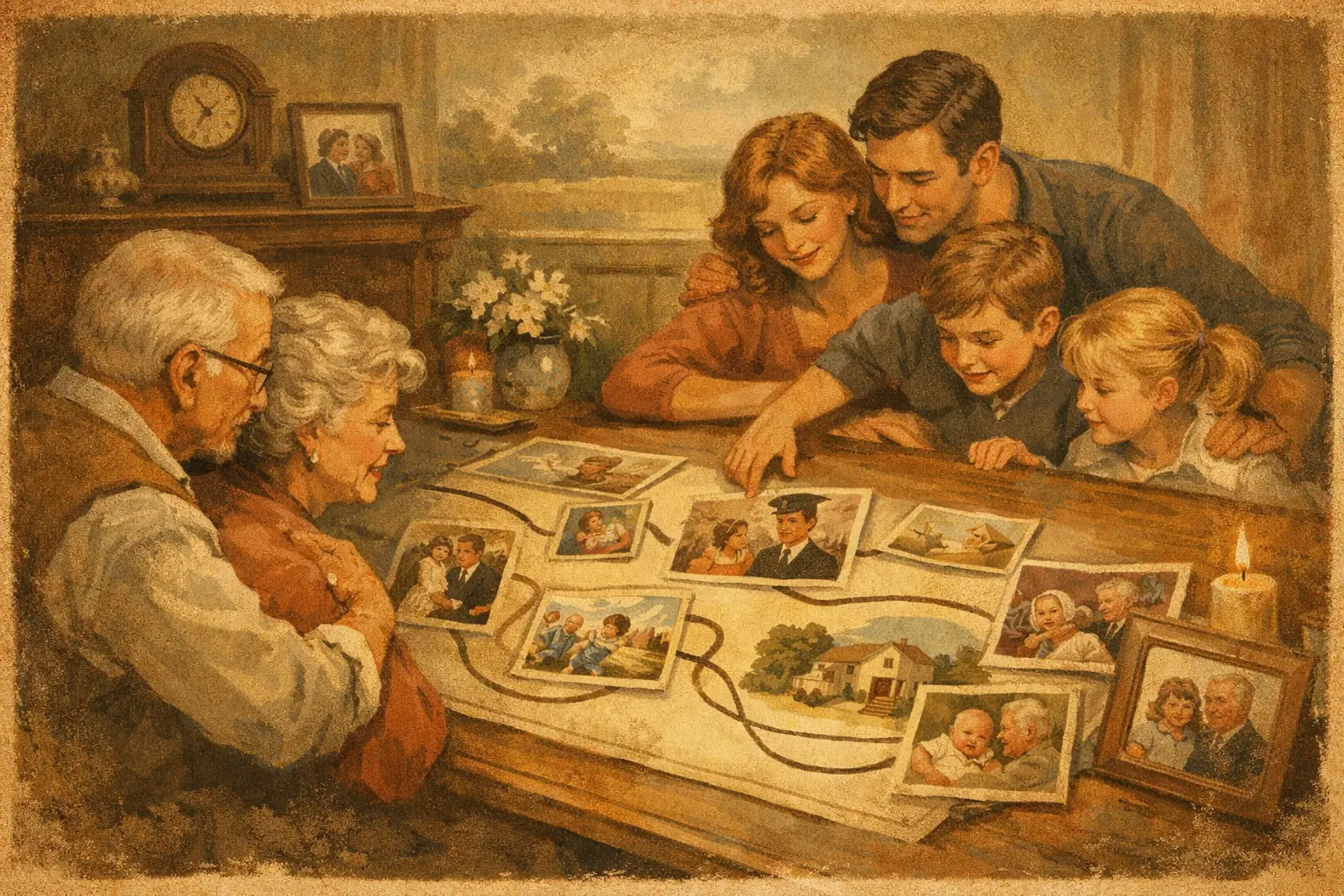
A life story timeline guide gives a family something more valuable than a list of dates. It creates a gentle path into the memories that made someone who they are: the voice of a parent recalling a first job, a grandmother laughing about a childhood friend, or a spouse describing the moment they knew they were home.
The goal is not to produce a perfect biography. It is to preserve the details that would otherwise leave with them: favorite sayings, hard-won lessons, family traditions, small acts of courage, and the stories behind familiar photographs. A timeline simply helps those memories arrive in a natural order.
Why a life story timeline matters
When families wait until a crisis, meaningful questions can feel too large or too urgent. A timeline makes the conversation manageable. Instead of asking, “Tell me your life story,” you can begin with one era, one place, or one person.
It also gives future generations context. A name on a family tree may tell a descendant when someone was born. A recorded story can tell them what that person sounded like, what they hoped for, what made them laugh, and how they faced change.
There is no single right version of a life story. Some people remember by year. Others remember through homes, schools, jobs, holidays, music, or the people they loved. Let the timeline serve the storyteller, not the other way around.
Start with the moments that hold meaning
Begin by sketching a few broad chapters. You do not need exact dates before you start recording. Approximate years are enough, and a story can still be deeply true even when the details of a calendar have softened over time.
For most families, these chapters provide a useful beginning:
- Early childhood, family roots, and the place they grew up
- School years, first friendships, and early dreams
- Work, service, moves, marriage, and raising a family
- Turning points, losses, achievements, and lessons learned
- Later years, favorite traditions, and messages for the people they love
Leave room between chapters. The most treasured memory may not fit neatly under a milestone. It may be the smell of a parent’s kitchen, a beloved dog, a summer job, or the reason someone always sets an extra place at the table.
If a loved one has lived through war, immigration, illness, discrimination, military service, adoption, or profound loss, allow them to decide whether and when to speak about it. A timeline should offer invitation, never pressure. Silence can be part of a person’s story, too.
Prepare for a conversation, not an interview
A life story recording works best when it feels like time spent together. Choose a quiet, comfortable place. Set aside more time than you expect, but plan for shorter sessions if your loved one tires easily. Twenty relaxed minutes can hold more warmth than two exhausting hours.
Bring a few memory prompts: old photos, a recipe card, a school yearbook, a favorite song title, or an object from a meaningful trip. These items often open doors that direct questions cannot.
Start with easy questions. Ask about a favorite childhood meal, the neighborhood they grew up in, or who made them feel safe. As the conversation settles, you can move toward larger moments.
Try questions that invite a story rather than a short answer. “What do you remember about your first home?” is more generous than “What year did you move?” “How did you meet?” gives a couple room to tell the version they want remembered.
Use questions that preserve personality
Dates and locations are useful anchors, but personality lives in the details. Ask what they were known for, what they worried about, what they were proud of, and what they wish younger family members understood.
A few thoughtful prompts can carry an entire session:
- What did a happy day look like when you were young?
- Who changed the direction of your life, and how?
- What was a difficult season that taught you something important?
- What family tradition would you most want to continue?
- What always made you laugh?
- What would you like your children, grandchildren, or friends to hear in your own words?
Follow the feeling in the answer. If they light up while remembering a neighbor, ask more about that person. If a story brings tears, pause. You do not need to fill every quiet moment. Being present is part of the gift.
Record the voice, not just the facts
Written notes are helpful, but a voice carries things a page cannot: a familiar pause, a chuckle, an accent, the tenderness in a message to a grandchild. For families, hearing that voice again can become one of the most comforting parts of remembrance.
Record in a quiet room and keep the phone or microphone close enough to capture clear speech. Do not worry about professional production. A glass of water, a natural conversation, and permission to begin again are usually all that is needed.
If they lose their place, reassure them. If a date is uncertain, record the memory anyway and mark it as approximate later. The emotional truth of a story often matters more than a perfectly verified year.
VoiceForEternity can help families organize these recordings alongside stories, photos, and personal messages in a lasting memorial space, making it easier for loved ones near and far to return to the person behind the dates.
Organize the timeline after you listen
After each recording, write down a simple label while the conversation is fresh. A title such as “Growing Up in Chicago,” “How We Met,” or “Dad’s First Day at the Factory” is enough. Add an approximate date range, the names mentioned, and a sentence about why the story matters.
Avoid trying to edit every pause or repeat. A life story should sound human. You may choose to trim a long interruption, but a familiar laugh or a moment of reflection is not clutter. It is part of their presence.
As you organize, look for connections. A story about a first apartment may lead into a story about meeting a spouse. A memory of a grandparent may explain a recipe that later became a family tradition. These connections turn separate recordings into a living portrait.
Invite the family without losing the storyteller
Family members often hold different pieces of the same history. A sister may remember the house differently than a brother. An adult child may know the public version of a parent’s career but not the uncertainty behind it. Those differences are not mistakes. They add dimension.
Invite relatives to contribute photos, questions, or their own memories. Still, make clear whose story is being centered. The person sharing should decide what belongs in the recording and what remains private.
For families in different states or time zones, assign small roles. One person can gather photographs, another can prepare questions, and another can listen back and label recordings. Shared work makes the process less overwhelming and helps everyone feel included.
When the person is no longer here
A timeline can also be created after a death. Gather voice messages, videos, letters, recipes, photo captions, and the stories relatives tell each other. Ask each contributor for one specific memory: a phrase they always used, a kindness they showed, a place they loved, or a lesson they passed on.
This version may not be complete, and it does not need to be. A memorial timeline is an act of care, not an attempt to capture every day of a life. Begin with what the family can lovingly hold now. More memories can be added as they surface.
Make room for the present
The most meaningful timelines are not only about the past. Save a message for a birthday yet to come, a blessing for a new baby, or a few words meant for a future holiday. Ask what they hope their family remembers when life feels difficult.
Start with one chapter, one recording, or one question this week. The story does not have to be finished to be precious. What matters is that someone’s voice, humor, love, and hard-earned wisdom have a place to remain.