10 Best Memorial Gifts With Audio (Beyond Soundwave Art)
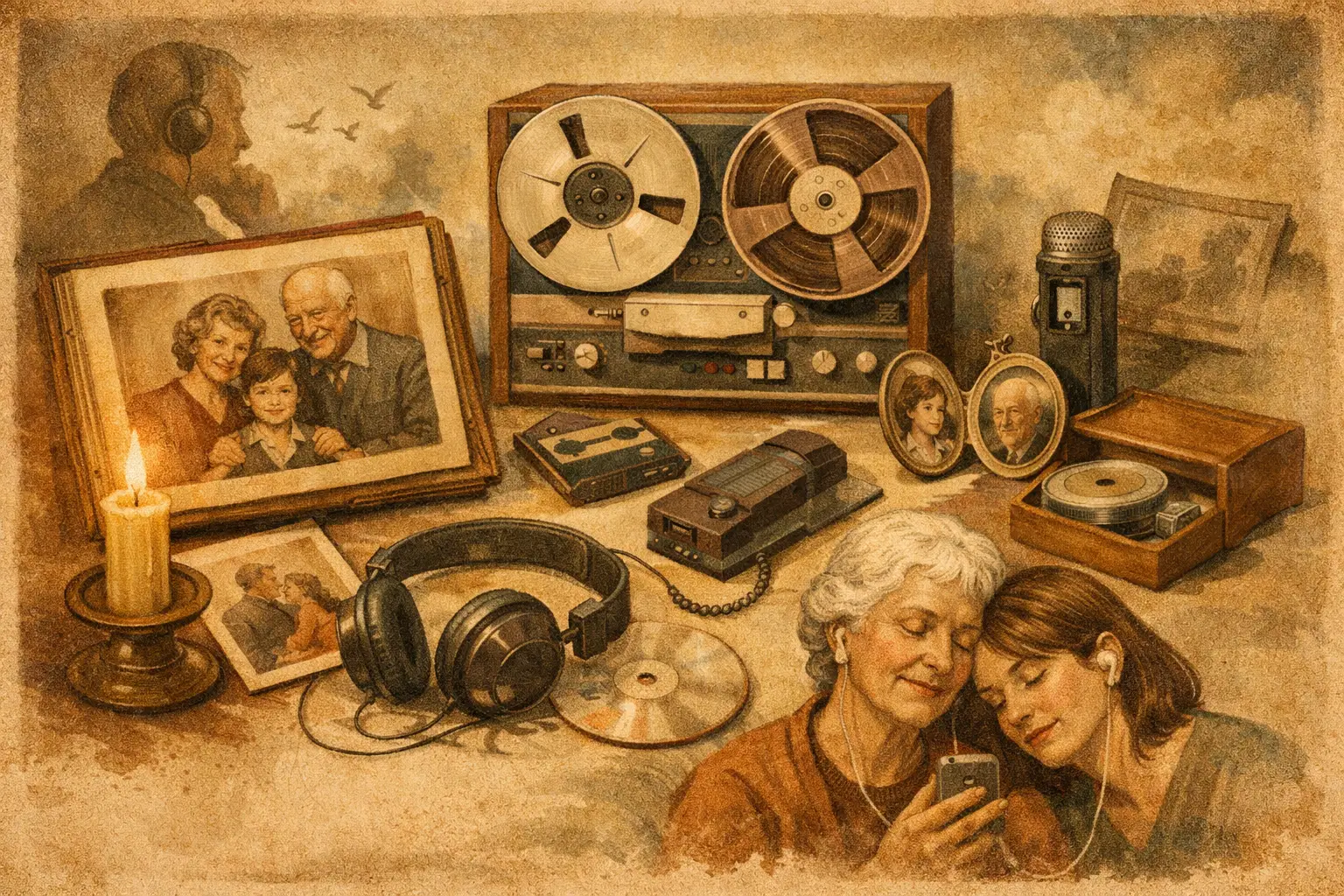
A saved voicemail can become the most replayed recording in a family. It may hold nothing more than a birthday greeting, a familiar laugh, or a simple “I love you,” yet hearing that voice can bring someone close in a way a photograph cannot. The best memorial gifts with audio make room for that closeness while treating a loved one’s voice with the dignity it deserves.
Audio is not only for after a loss. It can be a deeply meaningful gift for an aging parent, a grandparent telling family stories, or a spouse who wants to leave personal messages for the people they love. The right choice depends on whether the family needs a private keepsake, a shared legacy, or a memorial that visitors can experience together.
What Makes an Audio Memorial Gift Meaningful?
A thoughtful audio gift does more than play a recording. It gives the recording context. A child may treasure hearing Grandpa tell a fishing story, but that memory becomes even more valuable when the family knows where it happened, who was there, and why it mattered to him.
Look for a gift that is simple enough to use during an emotional time. Recording should not require technical confidence, and listening should not depend on one person remembering a password or keeping an old device charged. Consider who will be able to access the voice, where the gift will live, and what happens if the product or app changes years from now.
Permanence matters, but it takes different forms. A physical object can be comforting and immediate. A digital archive can hold many recordings and be shared across states or generations. For many families, the most enduring approach combines both: a tangible marker connected to a carefully preserved collection of stories.
10 Best Memorial Gifts With Audio to Consider
1. A QR-Linked Memorial Plaque With Voice Recordings
A memorial plaque that opens a dedicated audio memorial page offers something rare: a visitor can stand at a gravesite, urn niche, garden, or home memorial and hear the person being remembered. The plaque serves as a lasting physical point of connection, while the page can hold spoken memories, messages, photos, and stories.
This is especially meaningful for families who want remembrance to be shared rather than kept in a drawer. A service such as VoiceForEternity pairs engraved QR plaques with family audio recordings and collaborative memorial pages, helping loved ones listen from wherever they are. Before choosing any QR-based gift, ask how access is maintained, whether the family retains control of the content, and whether ongoing fees are required.
2. A Recorded Story Collection
A collection of short, labeled recordings is often more approachable than one long life interview. Invite a loved one to answer prompts such as how they met their partner, what their childhood home smelled like, what they learned from hardship, or what they hope their grandchildren remember.
This gift works beautifully before a loss because it turns a difficult subject into a series of ordinary conversations. It also gives relatives who live far apart a way to contribute questions and memories. The trade-off is that recordings need to be organized and backed up thoughtfully, or precious files can become difficult to find later.
3. A Voice Message Book or Audio Player
Some audio books and keepsake players allow a person to record messages that can be played with the touch of a button. They can be a tender choice for young children, a spouse, or a parent who wants something simple to hold close.
Their strength is immediacy. No phone, login, or scanning is needed to hear a familiar voice. Their limitation is capacity and longevity: batteries, speakers, and proprietary formats can fail. If the recording is irreplaceable, keep a separate digital copy in addition to the device.
4. A Custom Recordable Stuffed Animal or Pillow
For a child grieving a parent, grandparent, or sibling, a soft keepsake with a short recorded message can provide comfort at bedtime or during a hard transition. A familiar phrase such as “Goodnight, sweetheart” may mean more than a formal tribute.
Choose this option with care. It is best for a brief message, not a family archive, and the object may eventually wear out from frequent use. Save the original audio file and consider whether the child would prefer the recording to remain private rather than shared at a service.
5. A Digital Voice Archive for the Whole Family
A well-organized digital archive can preserve dozens or hundreds of clips: stories, prayers, jokes, recipes spoken aloud, family interviews, and messages recorded by friends. This is a strong choice when the goal is to preserve a person’s full presence rather than a single statement.
The details make the difference. Recordings should have clear titles, dates, and names of speakers. Families may also appreciate written summaries, particularly when younger relatives want to understand a story quickly before listening. Privacy controls are equally important because not every message is intended for every audience.
6. A Framed Photo With an Audio Code
A framed photograph can become interactive when it includes a discreet code that leads to a favorite song, spoken letter, or collection of voice recordings. It is an appealing gift for a home, celebration of life table, or anniversary remembrance because it looks familiar while offering a deeper experience.
This choice is best when the code leads to a stable destination that can be updated or protected by the family. A printed code that points only to a personal phone folder or a temporary social media post may not remain useful. Test it before gifting and keep the design respectful, with the code placed where it does not distract from the photo.
7. An Audio Guestbook From a Celebration of Life
At a funeral or celebration of life, guests may find it easier to speak than to write. An audio guestbook lets friends and relatives leave a memory, condolence, or story in their own voices. Later, the family can hear the people who gathered around them during a painful time.
The value here is communal remembrance. It captures accents, emotion, laughter, and small details that might never appear in a sympathy card. Because recordings made on an emotional day can vary in quality, designate someone to explain the process, check the device, and make sure files are saved promptly.
8. A Recorded Recipe or Family Tradition
A loved one explaining how they make Sunday sauce, fold holiday dumplings, repair a fishing line, or set a table for a special occasion is an audio gift rooted in daily life. These are the details families often miss most because they reveal personality without needing a formal biography.
Record the instructions, but leave room for the side stories. Ask who taught them, when the tradition began, and what they want the next generation to add. Pairing the audio with a written recipe or a photo can make it easier for others to carry the tradition forward.
9. A Spoken Letter for Milestones Ahead
A recorded message for a future graduation, wedding, birthday, or new baby can be profoundly personal. This gift is often created when someone is seriously ill, but it can also be a loving legacy practice for anyone who wants their voice present at life’s turning points.
Keep the pressure low. A message does not need to be perfect or long. A few honest words, a memory, and a wish for the future are enough. Decide in advance who will hold the recordings and when each message should be shared so the recipient’s experience feels caring rather than burdensome.
10. A Restored Voicemail Collection
If someone has already died, old voicemails may be the only recordings of their voice. Gathering and preserving them can be one of the most meaningful memorial gifts a family member creates. Even a short message about calling back can become precious when it carries a voice that is no longer heard every day.
Export the files in their original form whenever possible, then make copies in more than one secure location. Add notes about the date, occasion, and caller if known. The recordings may not be polished, and that is part of their power: they preserve a real moment of ordinary connection.
How to Choose the Right Gift for Your Family
Begin with the person being honored. Were they a natural storyteller, a private person, a devoted cook, a singer, or the one who always left warm messages at the end of a call? The gift should sound and feel like them, not like a generic memorial product.
Then consider the listener. A young child may need a simple object they can use alone. Adult children across the country may need a shared memorial page. A cemetery memorial may call for a weather-ready plaque and an experience that visitors can access without downloading anything.
Finally, protect the original recordings. Keep unedited files, label them clearly, and make sure more than one trusted family member knows where they are stored. Technology changes, but careful stewardship gives a voice its best chance of being heard long after the first recording.
The most meaningful audio memorial is not the one with the most features. It is the one that lets a family hear a beloved voice at the moment they need it most, and reminds them that the stories behind that voice still have a place in the family’s life.