Five Voice Tribute Ideas That Feel Personal
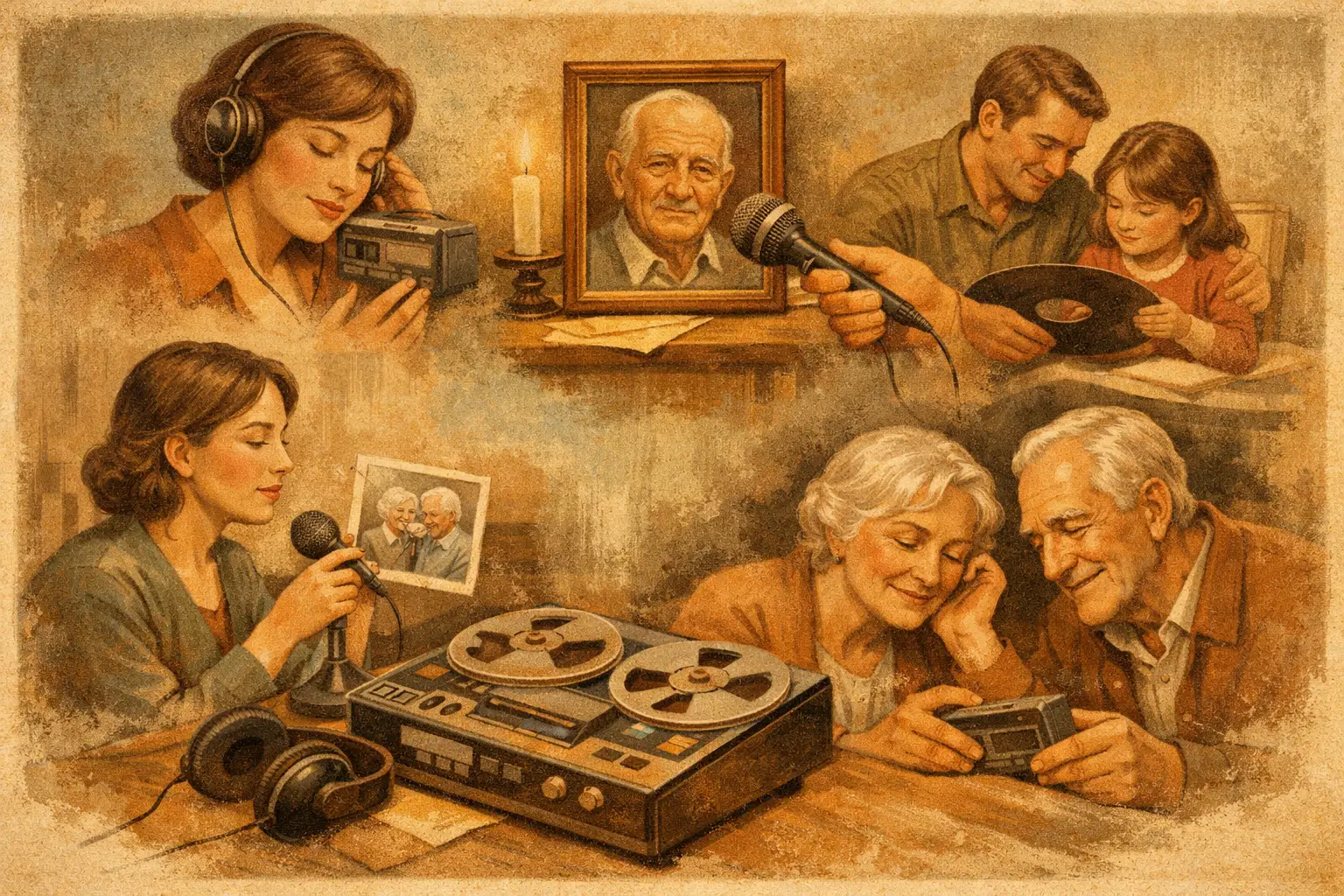
A photograph can show a familiar smile. A handwritten card can preserve a sentence. But hearing someone say your name, tell the family story, or laugh at their own punchline brings them close in a different way. These five voice tribute ideas help families preserve the sounds and stories that make a loved one unmistakably themselves.
A voice tribute does not need to be a polished recording or a complete autobiography. Often, the recordings people return to most are simple: a welcome home message, a memory of childhood, a favorite blessing before dinner. The goal is not to capture everything. It is to hold onto what matters most while you still can.
Why a Voice Tribute Feels So Lasting
Voice carries details that text cannot fully hold — an accent, a pause before a joke, the gentleness in a parent's reassurance, the way a grandparent says an old family nickname. For children and grandchildren, those details can become a living connection to someone they may miss deeply or never have had the chance to know well.
It also gives the person being remembered a place in the memorial itself. Rather than reading only about their life, visitors can hear from them or hear the people who loved them speak in their own voices. That small act turns remembrance from something observed into something felt.
The best format depends on your family. A single recording may be right when time is limited or emotions are tender. A larger collection can be meaningful when relatives live far apart and want to contribute over time. What matters is choosing a tribute that feels true to the person at its center.
Five Voice Tribute Ideas for a Meaningful Memorial
- Record a personal welcome in their own words
If your loved one is able and comfortable recording, begin with a short message in their own voice. It can be as simple as, "Hello, I'm glad you're here," followed by a few words about what they hope their family remembers. They might share a favorite saying, a blessing, a piece of advice, or a message of love for future generations.
This is especially meaningful on a QR-linked memorial page — shareable today by text, in an obituary, or with a printed QR code, and coming soon to an engraved memorial plaque for a headstone, urn, garden, or columbarium niche, so a visitor can scan and immediately hear that familiar voice.
If illness, fatigue, or speech changes make a longer recording difficult, keep it brief. A minute of a beloved voice is still a gift. Ask only one question at a time, give plenty of quiet space, and let them decide what they want to share.
- Create a collection of life-story chapters
A life story becomes easier to record when no one feels they must tell it all at once. Instead of sitting down for a formal interview, preserve it in short chapters. One recording might be about childhood, another about meeting a spouse, another about a first job, military service, parenthood, faith, friendship, or a hard-won lesson.
The questions that produce the richest answers are usually specific. Ask, "What did your home smell like when you were growing up?" or "Who taught you how to cook that dish?" rather than "Tell me about your childhood." Details invite memories. They also give younger listeners a sense of the world their loved one knew.
Organizing recordings by topic makes them easier for family members to revisit. A digital memorial can hold those chapters together alongside photos and written notes, so the voice remains part of a fuller family archive rather than becoming another file lost on an old phone.
- Save messages for future milestones
Some of the most tender voice tributes are meant for moments that have not happened yet. A parent or grandparent may want to record a message for a child's graduation, wedding day, first home, birthday, or the birth of a future grandchild. These messages can be joyful, funny, practical, or simply full of love.
There is no need to make the recordings overly formal. A message such as, "If you are listening to this on your graduation day, I hope you know how proud I am," can become an anchor during a major life moment. It reminds the listener that love can continue to guide them, even when the speaker cannot be physically present.
Consider privacy when creating milestone messages. Some may be right for the whole family to hear, while others are intended for one person at one time. Label recordings clearly and decide together who should have access. Thoughtful organization protects both the message and the trust behind it.
- Invite family members to tell one story each
A person's legacy is not held by one voice alone. Invite relatives, close friends, coworkers, neighbors, and members of their faith community to record one memory. The prompt can be wonderfully simple: "Tell us about a time they made you feel loved," or "What will you always remember about them?"
This approach works well after a funeral or memorial service, when many people want to offer something more personal than a condolence card. It also gives faraway family members a way to participate without needing to travel. A niece in another state, an old friend from college, and a former colleague can each add a piece of the story.
Not every recording needs to be solemn. Someone's mischievous humor, devotion to a sports team, talent for fixing things, or unforgettable way of hosting Sunday dinner belongs in the record too. A complete tribute leaves room for laughter. It honors the life that was lived, not only the loss that followed.
- Preserve the ordinary phrases everyone remembers
Families often grieve the everyday sounds first: "Drive safe," "Did you eat?" "I love you more," or the phrase someone repeated at every holiday gathering. These words may seem small, yet they can carry enormous comfort because they are woven into ordinary life.
Gather voicemail clips, casual phone recordings, birthday videos, or recordings made around the kitchen table, then organize them with a short description of the moment. If you are creating new recordings, ask your loved one to say favorite sayings, family recipes, pet names, prayers, or songs they are comfortable sharing. A familiar phrase can bring back a whole room, a whole season, or a whole relationship.
Be mindful with music and old recordings. Background noise, other people's voices, and emotional context can affect whether a clip feels comforting or difficult. You do not need to preserve every file. Choose the ones that feel respectful, clear, and genuinely representative of the person you love.
Make the Recording Process Gentle
The most meaningful recordings usually happen when the pressure is low. Use a quiet room, keep sessions short, and let conversation unfold naturally. A phone is often enough. Clear sound matters more than professional equipment, and a few pauses or tears do not ruin the recording. They are part of a real moment.
Before recording, make a small list of questions, but do not treat it like a test. Start with a memory they enjoy telling. If they become tired, stop and return another day. For families recording after someone has died, consider asking contributors to speak from the heart rather than trying to write and perform a perfect script.
VoiceForEternity.com helps families gather these recordings in one lasting place, with a permanent QR-linked memorial page that can be shared wherever remembrance happens. Its guided recording and family collaboration tools can make it easier to begin, especially when several people want to contribute from different places.
A voice tribute is an act of attention. It says that a person's stories, humor, wisdom, and way of loving deserve more than a passing mention. Begin with one question, one message, or one familiar phrase. Years from now, someone you love may press play and feel close again.