How to Write a Eulogy (and How It's Different From an Obituary)
If someone just asked you to give the eulogy, you're probably feeling two things at once: honored, and completely unsure where to start. That's normal. Most people who write a eulogy have never done it before, and they're doing it while grieving, which makes even simple tasks feel harder than they should.
Here's the good news: a eulogy doesn't have to be perfect. It doesn't need to cover someone's entire life, and it doesn't need fancy language. It needs to sound like you, talking honestly about someone you loved.
Eulogy vs. obituary — they're not the same thing
People mix these up constantly, and it's worth clearing up before you start writing. An obituary is a factual announcement — usually published in a newspaper or online, written in the third person, covering the basics: who they were, when they were born and died, who survives them, and service details. It's information, not a performance.
A eulogy is spoken out loud, at the service, by someone who knew them. It's personal, it's in your own voice, and its job is to help the room remember who this person actually was — not just list their accomplishments. If you've been asked to do one, you're not writing a summary. You're telling a story.
Start with memory, not biography
The instinct is to open with dates and facts — born here, worked there, married in this year. Resist that. The most memorable eulogies almost always open with a specific moment: something the person said, a habit everyone in the family teased them about, the way they walked into a room. Start there, and the rest of the eulogy can build outward from it.
Ask yourself: what's one thing about them that, if you said it out loud, would make people in the room nod or smile because they immediately know exactly who you're talking about? That's your opening line.
You don't need to cover their whole life
This is where a lot of people get stuck — trying to fit 80 years into five minutes. You can't, and you shouldn't try. Pick two or three moments or qualities that really capture who they were, and go deep on those instead of skimming everything. A eulogy about someone's whole life often ends up saying very little about any of it. A eulogy about their sense of humor, or how they showed love, or one specific relationship, says everything.
Write like you talk
If you wouldn't say it out loud in conversation, don't put it in the eulogy. Formal language and big words tend to create distance right when the room needs the opposite — someone speaking plainly about someone they loved. Read your draft out loud as you write it. If a sentence feels stiff coming out of your mouth, simplify it.
It's okay to include humor
Some of the most memorable eulogies get genuine laughs. If the person had a great sense of humor, or there's a story that's funny precisely because it's so them, include it. Grief and laughter aren't opposites — a room that laughs together at a funeral is often a room that needed that moment of relief.
A simple structure that works
If you're staring at a blank page, this basic shape covers most of what a eulogy needs:
An opening memory or moment that captures who they were. A little about their relationships — family, friends, the people they showed up for. One or two stories that reveal something true about their character, not just what they did for a living. What they cared about, or what they were proud of. A closing thought — often something about what they leave behind, or what you hope people carry forward.
You don't have to follow this in order, and you don't need all five pieces. Use it as a starting point, not a checklist.
Keep it short
Three to five minutes is usually right — long enough to say something real, short enough that the room stays with you the whole time. If you're worried about forgetting something important, write it down and read from the page. Nobody expects you to have it memorized, and nobody will think less of you for holding notes.
If you're struggling to remember the details
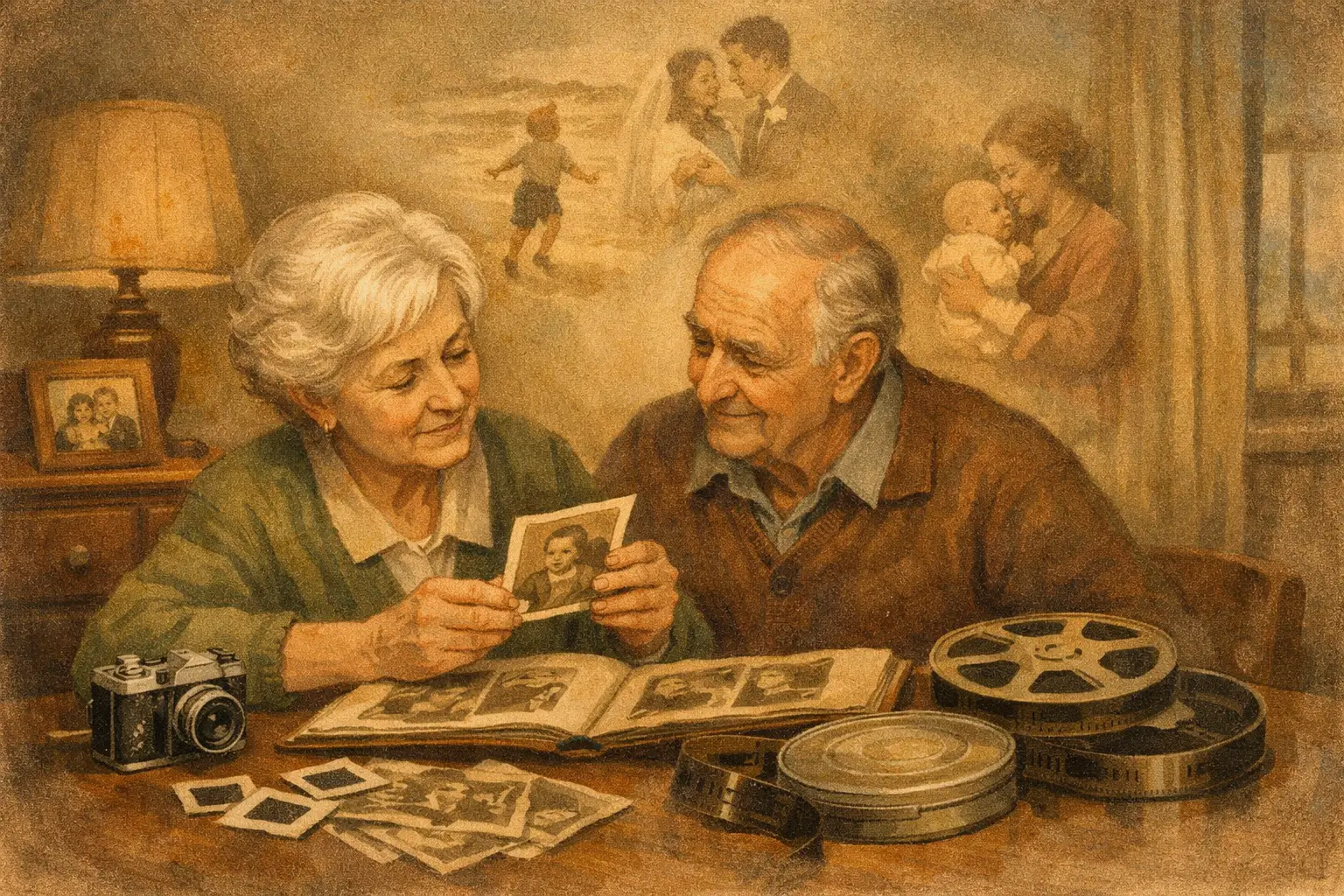
Sometimes the hardest part isn't writing — it's remembering. The specific way someone laughed, the exact phrase they always used, the sound of their voice telling a story you've heard a hundred times. Those details fade faster than people expect, which is part of why some families start recording a loved one's voice and stories while they still can, so those small, specific things aren't left to memory alone when it's time to write something like this.
Give yourself grace
However this eulogy turns out, it will be enough. Nobody in that room is judging your writing — they're grieving alongside you, grateful that someone loved this person enough to stand up and say so. Say something true, keep it simple, and trust that the people listening already know how much this person mattered. You don't have to convince them. You just have to remind them.