How to Share Funeral Recordings With Care
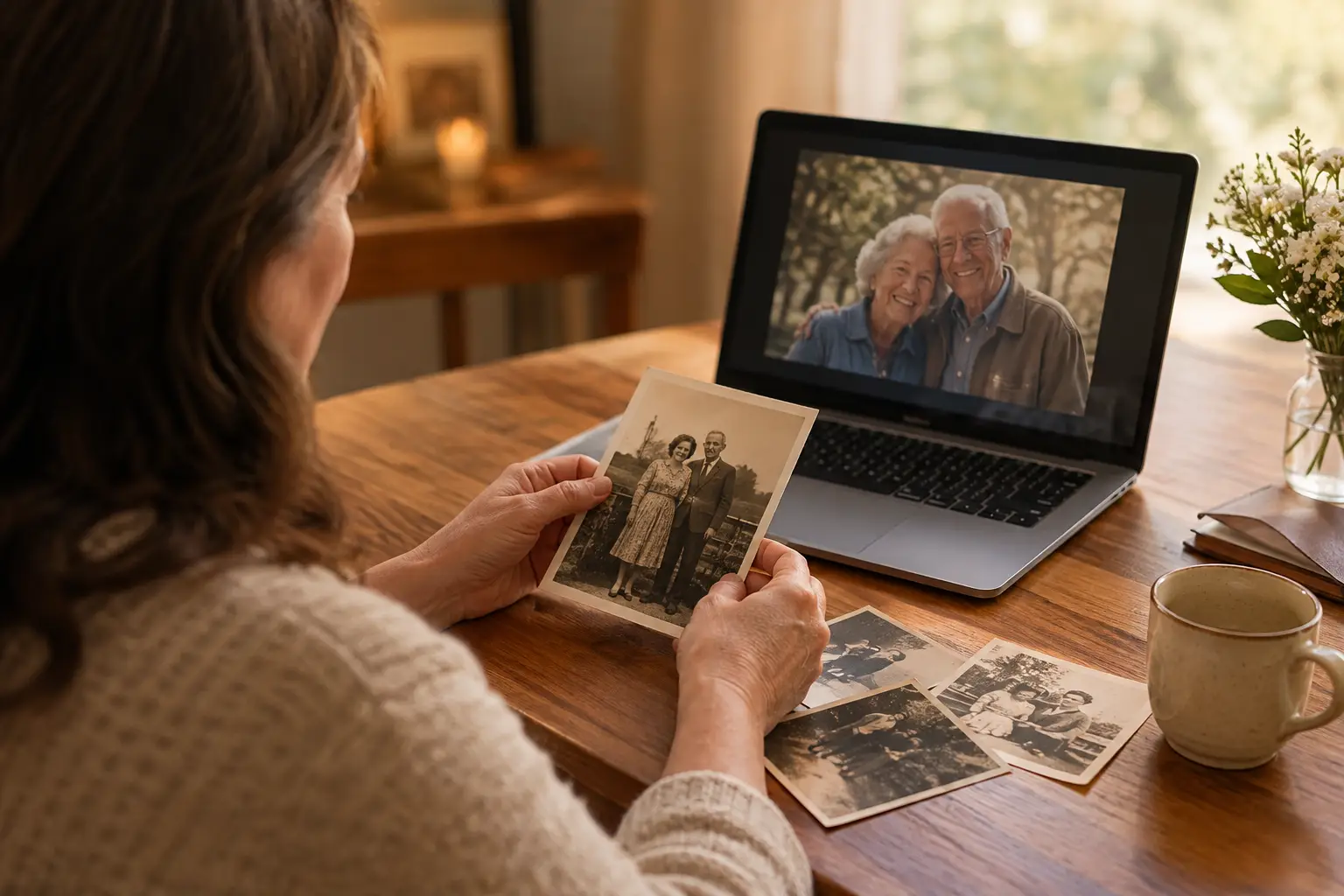
A funeral recording may hold more than the service itself. It may capture a granddaughter reading a poem through tears, a favorite hymn, the quiet strength in a eulogy, or the voices of friends who traveled across the country to say goodbye. Knowing how to share funeral recordings gives people who could not attend a way to be present, while protecting the tenderness of a difficult day.
There is no single right way to do it. Some families want a private recording available only to close relatives. Others want to include a wider circle of friends, coworkers, neighbors, and community members. The best approach is the one that respects your loved one, honors the people who spoke, and feels manageable for the person carrying the responsibility.
Begin with permission and family expectations
Before sending or posting anything, decide who should be able to hear or watch the recording. A funeral is often public in the sense that people may attend, but that does not automatically mean every moment should be shared online. A eulogy may include personal stories, a reading may name family members, or the video may show mourners who did not expect to appear on social media.
If a funeral home, videographer, or place of worship made the recording, ask what rights you have to distribute it. Some providers include personal sharing in their service, while others have limits around copying, editing, or public posting. If music was performed during the service, public platforms may also mute or remove the recording because of copyright rules.
Then have a brief family conversation. You do not need a formal meeting. A simple question can prevent hurt later: “Would we like this kept within the family, shared with invited guests, or posted publicly?” If someone has concerns, privacy is usually the kinder default. You can always share more widely later. It is much harder to take a recording back once it has circulated.
Choose the right way to share funeral recordings
The format should match the audience and the kind of recording you have. A full two-hour service is meaningful for immediate family, but a shorter clip of a tribute or musical performance may be easier for friends to receive and revisit.
For a small, trusted group, sending a private link through email or a family group message can be enough. This works well when relatives are already comfortable with technology and the recording will not need to be found years from now. Include a short note that tells people what it is, how long it runs, and whether you would prefer they keep it private.
For a broader group, a password-protected memorial page or private online album offers more control. It gives family members one place to return to instead of searching old text threads or emails. A memorial page can also hold the service recording beside photos, written tributes, an obituary, and messages from those who could not attend.
Social media may be appropriate when the family wants to reach a large community, especially for a public figure, longtime educator, faith leader, or someone deeply involved in a local organization. Still, consider sharing a brief excerpt rather than the complete service. A public post should be intentional, not simply the fastest available option.
Prepare the recording before you send it
A few small steps can make the experience gentler for everyone receiving it. Watch or listen through the recording once if you can. You are not looking for perfection. You are checking that the sound is clear, the video begins and ends where it should, and no private conversations were captured before or after the service.
Give the file a clear name, such as “Remembering Maria Lopez - Funeral Service - May 2026.” Avoid labels like “final video” or “new recording,” which become confusing once multiple versions exist. If the service is long, consider dividing it into named sections: arrival music, eulogies, readings, military honors, or graveside service. People who are grieving often appreciate being able to return to one specific moment without searching through a long video.
If possible, add captions or a written transcript. Captions help older relatives, people with hearing loss, and anyone watching quietly at work or while traveling. A transcript also preserves the words of the eulogies and readings in a searchable form. The spoken voice remains irreplaceable, but written words make the memory more accessible.
For recordings with sensitive moments, create two versions. One can be the complete family copy. The other can be a shortened version for a larger audience. This is not about hiding grief. It is about giving each moment the setting it deserves.
Write a message that gives people space
The note accompanying a funeral recording matters. Do not assume recipients will know whether they should respond, whether the service was private, or whether the recording may be forwarded. A few calm, direct sentences can set the tone.
You might write: “We are sharing this recording of Dad’s service for those who were unable to join us. We hope hearing the stories and music brings you close to him. Please keep it within our family and friends, and feel no pressure to reply.”
That final sentence can be a relief. Some people will want to share a memory immediately. Others may need days or weeks before they can listen. Grief does not follow a schedule, and a recording can feel too difficult at first. Giving people permission to receive it in their own time is an act of care.
Make access simple for every generation
The most meaningful recording cannot comfort anyone if they cannot open it. Before you distribute it, test the link on a phone as well as a computer. Make sure the sharing settings do not require a login unless everyone invited already has one. If a password is needed, send it separately from the link and use a simple, memorable word rather than a complicated string of characters.
Older relatives may appreciate a personal call or a printed instruction card. You might say, “Tap the blue link, then press the triangle in the center of the screen.” It may feel basic, but simple guidance can mean the difference between someone hearing a beloved voice and quietly giving up.
For family members without reliable internet access, a USB drive or DVD can still be thoughtful. Physical copies are useful, though they should not be the only copy. Devices change, discs can degrade, and files stored in one person’s home may be lost during a move or emergency.
Preserve more than the service itself
A funeral recording documents one important day, but it is not the whole story of a person’s life. The clearest expression of someone’s personality may live in their own voice: telling a childhood story, offering advice to grandchildren, laughing at a familiar joke, or describing what they loved most.
Consider placing the funeral recording alongside voice messages, family interviews, photographs, and written memories in one organized archive. That way, future generations will not only learn how people honored your loved one. They can also hear who that person was.
Services such as VoiceForEternity are designed around this kind of lasting remembrance, allowing families to preserve recordings and stories in a memorial space that can be revisited and shared with intention. A permanent, QR-linked memorial can give relatives a simple way to hear a voice at a gravesite, at home, or from far away.
Protect the recording for the years ahead
Sending a recording is one task. Keeping it safe is another. Store the original, highest-quality file in more than one place. Keep a copy on a personal external drive and another in a trusted digital archive or cloud storage account. Let at least one other family member know where it is and how to access it.
It also helps to save basic context with the file: the date and location of the service, names of speakers, the officiant, music titles, and the name of the person who recorded it. Years from now, these details may answer questions no one thought to ask at the time.
Avoid relying only on a social media post, a phone gallery, or a temporary file-transfer link. Those spaces are convenient for sharing, but they are not a complete preservation plan. Accounts close, platforms change, and old messages disappear into crowded inboxes.
The recording does not need to be polished to be precious. A shaky camera, a pause before a speaker begins, even a child’s soft voice in the background can become part of what makes the day real. Share it with care, preserve it with purpose, and let those who loved them return to those voices whenever they need to feel close again.