What Does Digital Inheritance Mean for Families?
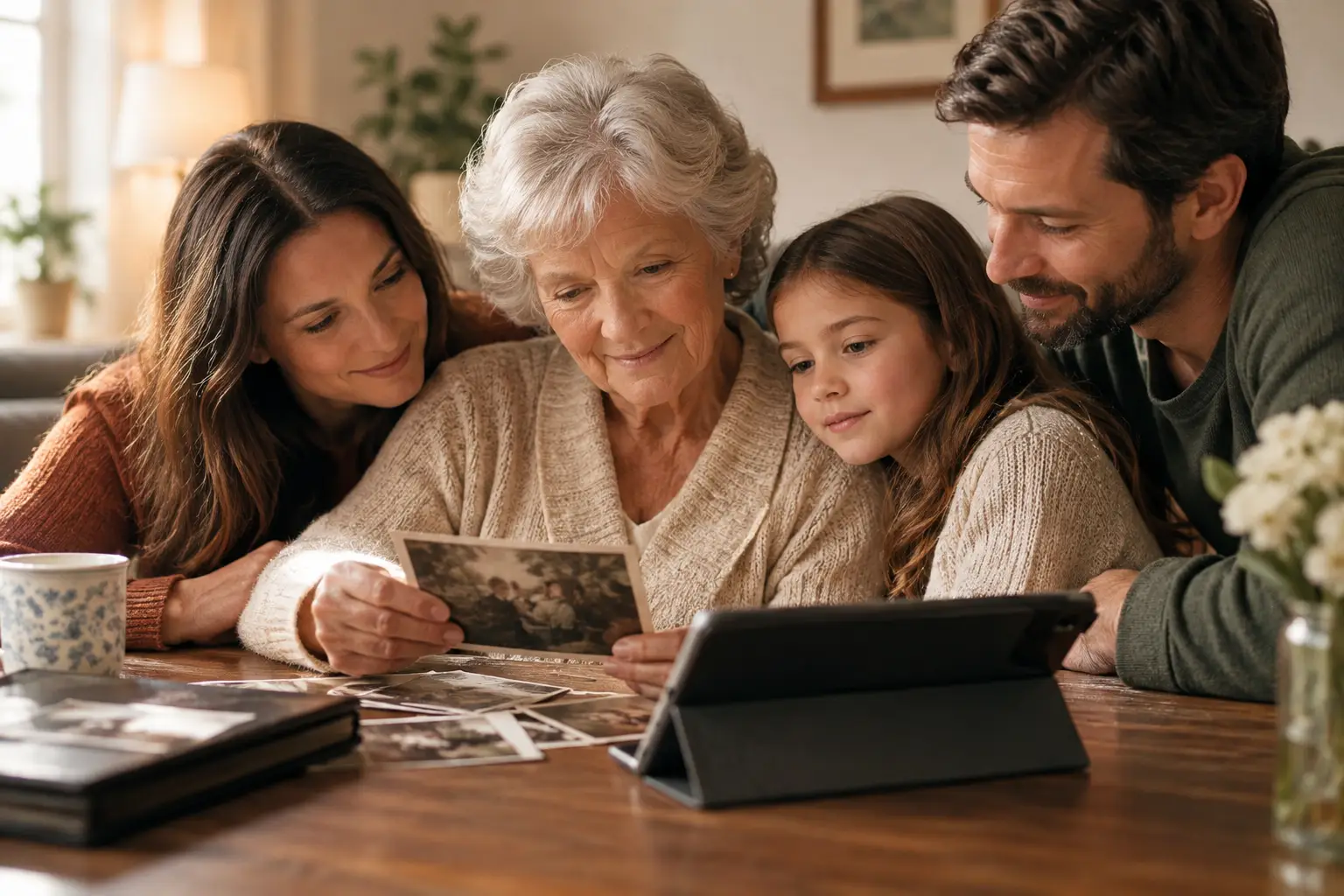
Digital inheritance is the plan for caring for a person's online accounts, digital files, and recorded memories when they cannot manage them themselves. For families, the most meaningful part is often preserving access to the stories, messages, and familiar voice that carry a loved one's presence forward.
A phone can hold a lifetime in miniature: a voicemail saved after a birthday call, a video of Grandpa telling the same cherished joke, a folder of family recipes, or a note written for a child years ago. Without a plan, those pieces can be difficult to find, understand, or share when a family most wants them.
Digital inheritance includes more than passwords
Digital inheritance often brings legal and practical matters to mind first. Families may need to address email, financial accounts, subscriptions, social media profiles, cloud storage, and devices. Each service has its own rules, and access after a death or during incapacity can depend on account settings, state law, and the authority given to an executor or agent.
Personal memories belong in the conversation too. Photos and documents matter, but audio can hold something different: a pause before a laugh, the rhythm of a familiar greeting, the way someone says a family nickname. A voice recording can make a story feel close in a way a written transcript cannot fully recreate.
A thoughtful plan treats both needs with care. One part helps trusted people locate and manage practical accounts. Another part gathers the human record of a life - stories, messages, values, humor, and words family members may want to hear again.
Why does a digital inheritance plan matter?
Grief can make ordinary tasks feel heavy. Families may be asked to make decisions quickly while also searching through devices, email inboxes, and boxes of old photographs. A simple record of what exists and where it is kept can reduce some of that uncertainty.
Family history also becomes easier to lose than many people expect. A recording left only on an old phone may be overlooked. A story shared at the dinner table may never be written down. A relative who lives across the country may have memories no one else has heard. Gathering those pieces before a crisis, or inviting them after a loss, gives a family a fuller picture of the person they love.
Planning ahead is not an admission that a goodbye is near. For many families, it is a gentle way to say, “Your stories matter to us. We want to know them.” A birthday, anniversary, retirement, move, serious diagnosis, or new grandchild can all create a natural moment to begin.
Start with the practical record
A digital inheritance plan does not need to be complicated. Begin by making a private inventory of important digital property. Include the name of each account or service, its purpose, where access information is stored, and any instructions about what should happen to it.
Avoid putting passwords in a casual document that several people can open. A reputable password manager, estate-planning file, or other secure method may be more appropriate. Legal guidance can help when an estate is complex, when business accounts are involved, or when a family is unsure who has authority to act.
Account access is not the same as permission. A loved one may want an email account closed, a social profile memorialized, certain files deleted, or selected photographs shared only with immediate family. Clear wishes can spare relatives from guessing during an already tender time.
Choose the right people
One trusted person may be best suited to handle account administration. Another may be the family historian who recognizes the value of an old recording or knows which cousin has the missing photo album. Naming both roles, even informally, can help practical work and remembrance receive equal attention.
Families should also talk about privacy. Some messages were written for one person only. Some recordings may be intended for children or grandchildren at a particular stage of life. Respecting those boundaries is part of caring for a person's digital legacy.
Preserve the memories only your family can tell
The emotional side of digital inheritance begins with a simple question: what would you miss hearing? The answer may be a favorite story, but it may also be a blessing before a wedding, advice for a grandchild, a memory of military service, or a description of how two people met.
Recording does not require a polished interview. A quiet conversation in a living room can be enough. Short sessions are often easier than asking someone to tell their whole life story at once. One memory tends to lead naturally to another.
Helpful prompts can make the first recording feel less daunting:
- What did your home feel like when you were growing up?
- Who taught you something you still carry with you?
- What do you want younger family members to understand about our family?
- Which small moment still makes you smile?
- What would you like to say in your own voice to the people you love?
A recording can remain imperfect and still be precious. Background noise, a moment of tears, or a story told twice may become part of what makes it real. The goal is not a flawless archive. The goal is to make room for someone to be heard.
How should families organize shared memories?
Organization helps memories stay understandable to the people who come later. Give recordings and files simple names that include a person, topic, and approximate date when possible. “Mom - first job story - 2026” is more useful than “audio final 2.”
A shared memorial space can also give relatives a respectful place to contribute from different homes. One sibling may upload a recording, while a grandchild adds a written memory and an aunt identifies people in an old photograph. Families do not need to finish every detail before sharing what they have gathered.
VoiceForEternity offers families a private or shared memorial page where loved ones can record by browser or phone, organize memories, and invite relatives to add their own recordings. AI-generated story summaries can help bring together themes from those recordings, while the original voice remains at the center of the experience.
No digital service can remove the need for a family's own care and attention. Before choosing where to keep meaningful material, consider who can contribute, who should be allowed to listen, what privacy controls are available, and how the family can download or retain copies of important recordings. Clear answers matter more than grand promises.
Make space for consent and changing wishes
A digital inheritance plan should be revisited when life changes. A new marriage, divorce, move, diagnosis, new child, or change in executor may affect who should have access or what should be shared. Families can update a memory collection gradually, without turning the process into a difficult project.
Consent deserves special attention when recording another person. Ask before pressing record, explain where the memory may be shared, and honor a request to stop or keep something private. A person may be glad to share childhood stories but prefer not to discuss painful events. Loving preservation leaves room for that choice.
After a death, relatives may disagree about what belongs in a public tribute or a private family collection. A smaller audience is often the kinder choice when uncertainty exists. Family members can always decide to share more later; recovering a private story after it has been widely shared is much harder.
A gentle place to begin
Digital inheritance does not have to start with a long checklist. Start with one name, one story, or one recording. Ask a parent about their first home. Save a voicemail that makes the family smile. Write down where important accounts are kept and who should be contacted if help is needed.
Every small act of preparation can become a gift of clarity, connection, and remembrance for the people who will one day be grateful to hear a familiar voice again.
Drafted with AI assistance and reviewed by Steve. Learn more