12 Top Gifts for Grieving Families That Offer Comfort
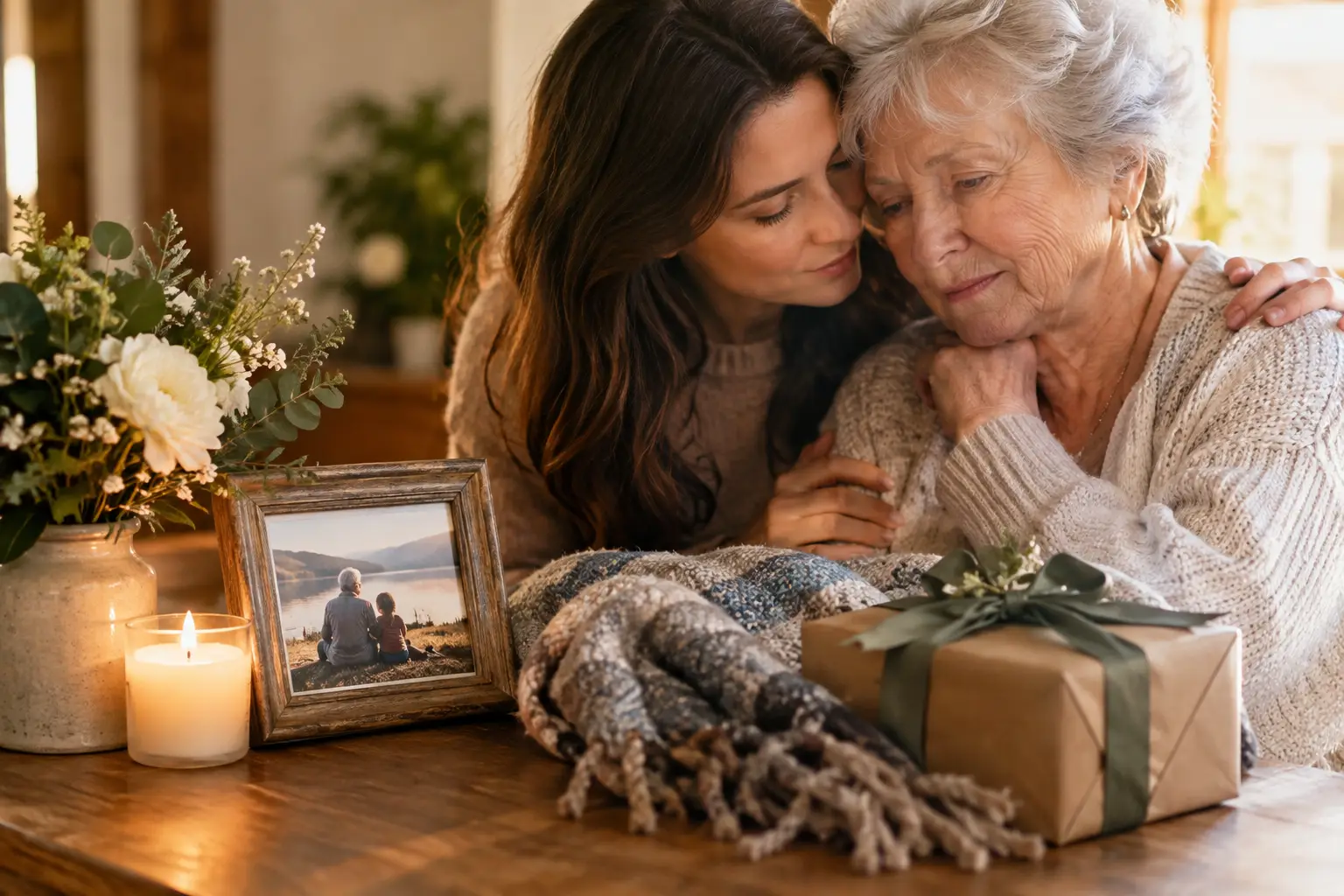
Grief changes the meaning of a gift. The top gifts for grieving families are not meant to solve sorrow or ask someone to feel better on a schedule. They say something quieter: I see that this loss is real, I remember this person, and you do not have to carry everything alone.
The most meaningful choice depends on the family, the timing, and the relationship you shared with the person who died. Some families need dinner and childcare this week. Others are searching for a lasting way to hear a familiar voice, gather stories, or create a place where future generations can know someone they never had the chance to meet.
What Makes a Gift Helpful After a Loss?
A helpful grief gift removes pressure rather than adding another task. It is personal without being intrusive, useful without feeling cold, and lasting without forcing the family to preserve every memory right away.
Before choosing, consider what the family is facing now. A household with young children may be grateful for practical support. A spouse who has lost a lifelong partner may value an intimate keepsake. A family planning a memorial may need a meaningful way to collect photos, stories, and recordings from relatives in different places.
Avoid gifts that imply grief has an endpoint. Phrases such as “cheer up” or items centered on moving on can land painfully, even when offered with love. A gift that makes room for remembrance is usually the safer, kinder choice.
12 Top Gifts for Grieving Families
1. A meal that asks nothing in return
A gift card for a local restaurant, grocery delivery, or a meal you prepare and leave at the door can be deeply practical. In the first days and weeks after a death, even ordinary decisions can feel exhausting.
If you bring food, choose something easy to store, reheat, or share with visitors. Include a simple note that does not require a response. “Thinking of you and sending dinner for whenever it helps” is enough.
2. Help with the everyday details
Grief comes with errands, paperwork, phone calls, and a home that still needs to run. Offering to mow the lawn, walk the dog, pick up children from school, or coordinate a meal train can be more valuable than a physical object.
Specific offers work best. Rather than saying, “Let me know if you need anything,” try, “I can take care of your grocery pickup Thursday afternoon.” It gives the family an easy way to accept support without having to organize it.
3. A memorial tree or garden plant
A tree, flowering shrub, or perennial can create a gentle ritual of remembrance. It gives family members a living place to visit, tend, or simply notice as the seasons change.
Consider the recipient’s space and capacity. A potted plant may become one more responsibility for someone overwhelmed by loss. For that reason, a tree planted in a memorial grove or a gift that covers professional planting may be a better fit than a delicate houseplant.
4. A framed photograph chosen with care
One meaningful photograph can be more comforting than an album of hundreds. Choose an image that reflects the person’s spirit: laughing at a family gathering, holding a grandchild, standing somewhere they loved.
If you are not certain which photo would feel right, give a beautiful frame with a note offering to help print a favorite image later. The timing matters. Some families want photos immediately; others need space before they can look closely.
5. A handwritten collection of memories
Ask a few friends or relatives to write a short memory, a favorite quality, or a story about the person who died. Gather the notes in a simple box, bound booklet, or folder. This gift becomes especially meaningful when the memories come from different chapters of a life.
Keep the request easy and open-ended. A few sentences are enough. The point is not to create a polished biography. It is to let the family discover moments and details they may not have known.
6. A donation in their loved one’s name
For a person who cared deeply about a cause, a donation can be a fitting gesture. Choose an organization connected to their work, values, illness, military service, faith community, animals, or local neighborhood.
This is most meaningful when the connection is clear. A note that names why you chose the cause makes the gift feel personal rather than automatic. If the family has asked for donations instead of flowers, honoring that request is a thoughtful place to begin.
7. A comfort basket with useful essentials
Comfort does not have to be elaborate. A small basket with tea, coffee, snacks, tissues, a soft blanket, and a candle can offer care during long days at home. For a family receiving visitors, include paper goods or easy-to-serve treats.
Skip strongly scented products unless you know the household well. Scents can be emotionally intense, and grief can heighten sensitivity. Quiet, practical items are often the most welcome.
8. A meaningful piece of jewelry
A necklace, bracelet, or keychain engraved with a name, date, fingerprint, handwriting, or small symbol can give someone a private way to carry their loved one with them. This is often a deeply personal gift for a spouse, parent, or adult child.
Because taste is so individual, consider whether a gift certificate or a conversation is more appropriate than selecting the piece yourself. The thought matters, but so does giving the recipient control over an item they may wear for years.
9. A memorial experience for the whole family
A shared experience can honor a life while gently bringing people together. It might be tickets to a place the person loved, a family portrait session at a meaningful location, or a private gathering with their favorite meal and music.
This works best after the immediate rush of the funeral has passed. Anniversaries, birthdays, and the first holiday season can be difficult moments. An experience offered with no expectation of a certain date gives the family room to decide when they are ready.
10. A children’s memory activity
Children grieve differently from adults, often returning to the subject in small moments over time. A memory box, age-appropriate journal, art supplies, or a book about loss can help them express what they cannot yet explain.
Include simple prompts if they would help: “What made them laugh?” “What did you love doing together?” “What do you want to remember?” Let the child decide whether to answer now, later, or not at all.
11. A recording session for stories and voices
Photos preserve a face. A voice preserves laughter, cadence, familiar sayings, and the way someone told a story. For many families, hearing a loved one speak again can feel profoundly close.
A voice-and-story memorial gives relatives a way to record recollections, save existing voicemails, and gather messages from family members wherever they live. It can be especially meaningful when someone’s recordings already exist, or when family stories risk being scattered across phones and inboxes.
VoiceForEternity helps families preserve those recordings, stories, and personal messages on a permanent QR-linked memorial page that can be accessed at a grave, urn, garden, or from home. The gift is not simply a digital file. It is a place for a life to be heard and remembered, in the person’s own voice and through the voices of those who loved them.
12. Your continued presence
The gift many grieving families remember most is not something given at the service. It is the friend who checks in three weeks later, brings coffee on the deceased person’s birthday, or says their name without hesitation.
Put a reminder on your calendar for a future date. Send a short message: “I have been thinking about your dad today,” or “I remember how much she loved this time of year.” You do not need perfect words. Consistent kindness is its own form of remembrance.
When to Give a Grief Gift
There is no single correct timeline. In the first days, practical help is usually best. In the weeks after the funeral, when calls and casseroles begin to fade, a personal keepsake or offer of help can mean a great deal. Months later, a memorial gift may arrive at exactly the moment a family feels the rest of the world has moved on.
If you are attending a funeral or memorial service, a card with a sincere note is always appropriate. For more personal gifts, consider sending them directly to the home after the service, when the family has more privacy to receive them.
A Few Words Matter as Much as the Gift
Do not let fear of saying the wrong thing keep you silent. Keep your message honest and uncomplicated. You might write, “I loved hearing his stories,” “She made people feel welcome,” or “I am here beside you in this loss.” If you have a specific memory, share it.
Grief does not need to be fixed. A thoughtful gift, offered with patience and without expectation, can remind a family that their loved one’s life still matters and will continue to be spoken of with care.