Graveside QR Code Memorials That Feel Personal
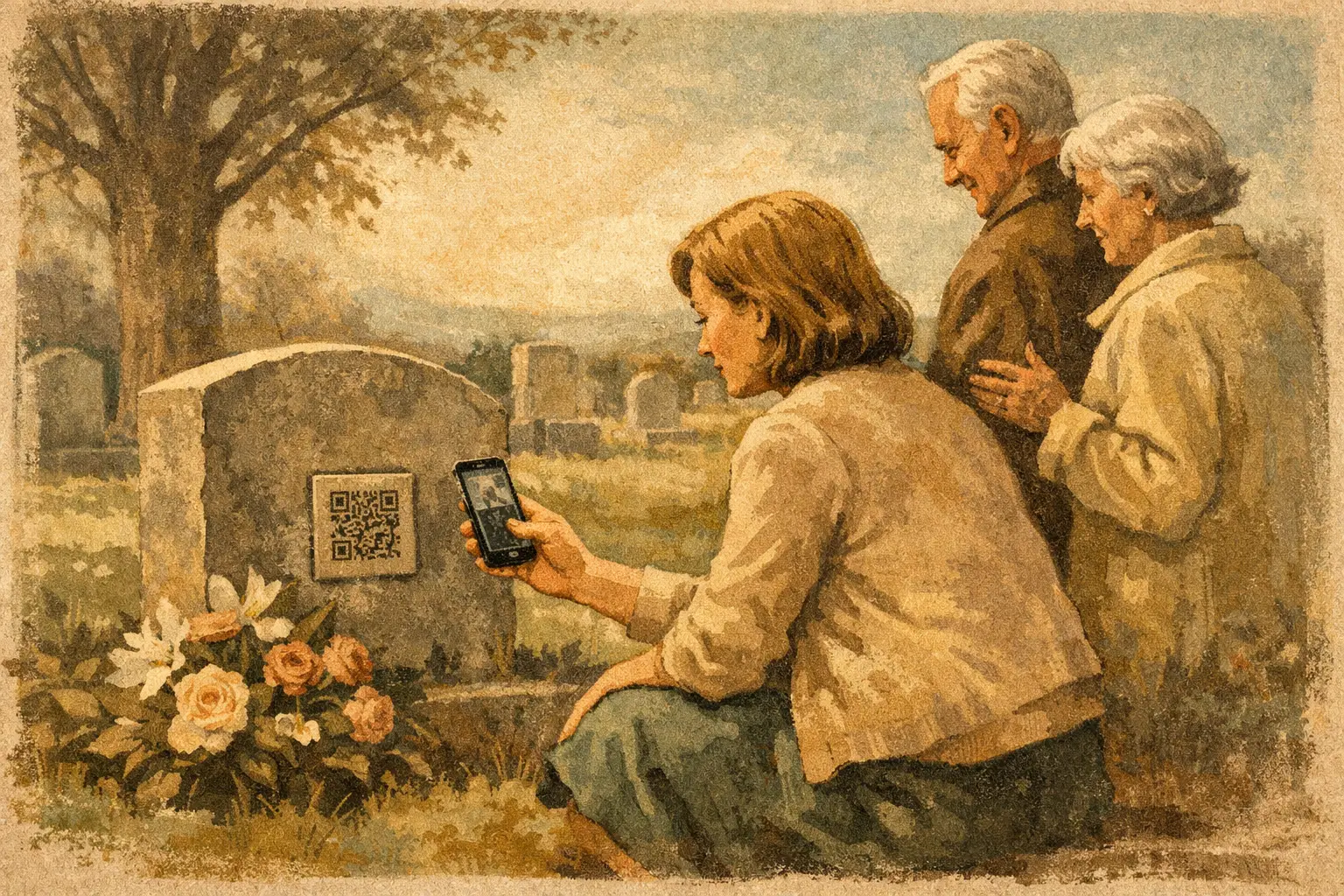
A name, two dates, and a few carved words can never hold a whole life. That is why many families are choosing a graveside qr code memorial - not to replace tradition, but to gently add what stone alone cannot say. A simple scan at the cemetery can open a space filled with a loved one’s voice, stories, photographs, and messages, creating a remembrance that feels more human and more complete.
For many people, the most painful part of loss is how quickly details can fade. The sound of a laugh. The way someone told a favorite story. The exact words they always used with their children or grandchildren. A digital memorial connected to a physical resting place helps protect those details. It gives family and friends a way to return not only to a grave, but to a living archive of memory.
What a graveside qr code memorial actually does
A graveside QR code memorial is usually a small engraved plaque or marker placed on or near a headstone, monument, niche, or memorial bench. When someone scans the code with a phone, it opens a private or shareable memorial page. That page can include an obituary, photos, family-written tributes, timelines, and in some cases, something even more meaningful - audio.
That last part matters more than many people expect. Reading about someone is valuable. Hearing them is different. A voice carries personality in a way text never can. It preserves warmth, humor, accent, pacing, and emotion. For children and grandchildren, that can become one of the most treasured parts of a memorial.
This is also why families are moving beyond static remembrance. They do not just want a place to visit. They want a way to stay connected.
Why families are choosing a graveside QR code memorial
Most families are not looking for technology for its own sake. They are looking for comfort, permanence, and a way to honor someone fully. A graveside qr code memorial answers a quiet but common need: how do you preserve a person, not just the facts of their death?
For some, the answer is practical. Relatives live in different states. Not everyone can visit the cemetery often. A memorial page gives every family member access to the same stories, recordings, and photos from anywhere. For others, the motivation is emotional. A scan at the graveside can become a moment of reunion. Someone can hear a father’s voice, revisit a grandmother’s memories, or listen to a message left for future generations.
There is also a growing awareness that many older memorial formats are limited. Printed programs get lost. Online tributes can feel temporary or scattered. Social media is not designed for reverent remembrance. Families want something more lasting and more dignified.
The difference between a modern memorial and a digital add-on
Not every QR memorial is created with the same care. Some are little more than a link to a basic webpage. Others are designed as true legacy spaces, where the memorial is organized, easy to update, and built around what families most want to keep.
This is where the trade-offs matter. If a memorial page only stores text and a few images, it may still be meaningful, but it can feel incomplete over time. If it includes recordings, guided storytelling, and a clear place for family members to contribute, it becomes much richer. The best memorials do not just display information. They preserve identity.
That is especially true when voice is at the center. A page that lets someone hear birthday wishes, family stories, life lessons, or simple everyday greetings often becomes more than a tribute. It becomes a source of comfort people return to again and again.
What to include in a graveside QR code memorial
The strongest memorial pages are rarely the most complicated. They are the ones that feel sincere, personal, and easy to revisit. A few carefully chosen elements usually matter more than an overloaded page.
Photos are a natural starting point. Most families already have meaningful images they want to preserve. A written life story or obituary adds context. But audio is often what transforms the experience. Even a short recording can hold tremendous value. A two-minute story told in someone’s own voice may be remembered more vividly than several written paragraphs.
You can also include family reflections, favorite sayings, military or service history, important dates, recipes, letters, or messages for children and grandchildren. What matters is not volume. What matters is capturing the qualities that made that person unmistakably themselves.
If the memorial is being created in advance, while a loved one is still alive, the possibilities become even more meaningful. They can record stories in their own words, answer guided questions, and leave intentional messages. That gives families something no one can recreate later.
Practical questions families should ask before choosing one
Emotion matters, but so does peace of mind. Before selecting a graveside QR code memorial, it helps to ask a few clear questions about durability, ownership, and long-term access.
First, consider the physical plaque itself. It should be made for outdoor conditions and engraved in a way that remains readable over time. Weather resistance matters. So does placement. Some cemeteries have rules about what can be attached to a headstone or where a plaque may be installed, so it is wise to confirm those details early.
Second, ask what happens to the digital memorial over the long term. Families often worry, understandably, about paying ongoing fees or losing access years later. A memorial tied to subscription uncertainty can create stress at the very moment people are seeking reassurance. Permanent access, clear ownership, and simple family management make a real difference.
Third, think about ease of use. Grief is not the right time for a complicated setup. The process should feel gentle and manageable, especially for relatives who are not highly technical. Recording, uploading, organizing, and sharing should be straightforward.
Why voice changes the experience
At the graveside, people often grow quiet. They reflect, remember, and search for some sense of connection. In that setting, hearing a loved one speak can be deeply grounding. It brings the person closer in a way that is hard to explain until you experience it.
A voice carries life. It is immediate. It can soften the distance between then and now. For a spouse, it may bring comfort. For a child, it may preserve familiarity. For future generations, it becomes a way to know someone they may have been too young to remember.
This is one reason services such as VoiceForEternity center remembrance around audio, not only images and text. Families are not just saving content. They are preserving presence.
Is a graveside QR code memorial right for every family?
Not always, and that is worth saying clearly. Some families prefer a completely traditional memorial without any digital element. Others may worry about privacy or want a tribute that remains very simple. Those concerns are valid.
But for many families, the idea feels natural once they understand it. A QR memorial does not make a gravesite less sacred. If handled with dignity, it can do the opposite. It can make the visit more personal, more reflective, and more connected to the person being honored.
It also depends on timing. Some people create a memorial after a loss, gathering stories and recordings from family members. Others begin earlier, while parents or grandparents are still here, so memories can be captured firsthand. Neither approach is wrong. One is responsive, the other proactive. Both can be beautiful.
A more human way to be remembered
A graveside memorial should do more than mark where someone rests. It should help carry forward who they were. That might mean a favorite story told in their own voice. It might mean a page where grandchildren can see photos, hear laughter, and understand the life that came before them. It might simply mean that one scan at the cemetery opens something warm, familiar, and lasting.
When families choose a graveside qr code memorial, they are not choosing technology over tradition. They are choosing memory with more room to breathe. And for many people, that small addition becomes one of the most meaningful parts of remembrance - a way to stand in a quiet place, lift a phone, and hear love answer back.