Legacy Platforms That Keep Family Stories Close
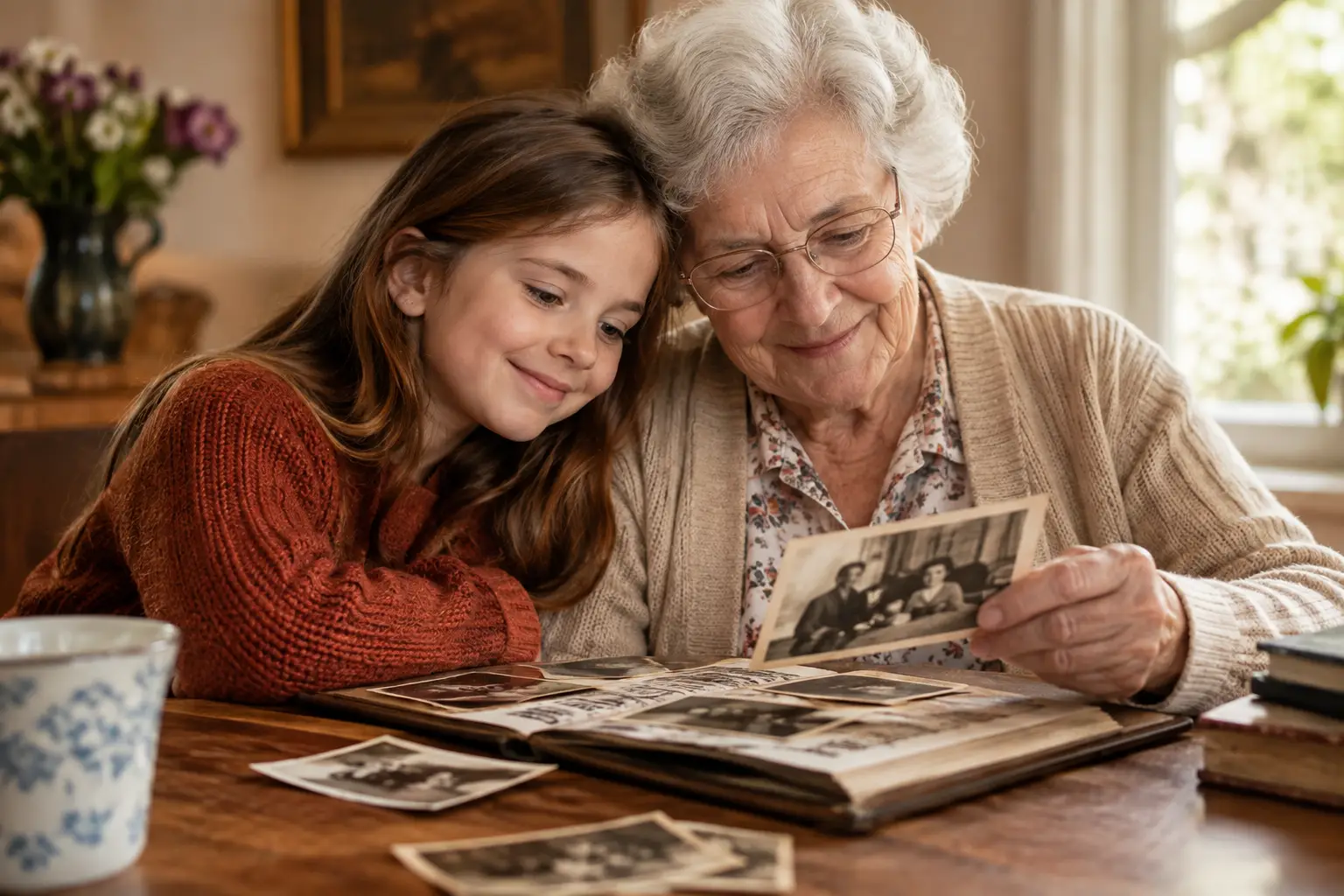
A voice disappears faster than people expect. The exact way your grandfather told a joke. The particular way your mom said your name when she was proud of you. Give it a few years without hearing it, and those details start to blur, even when you'd swear you'd never forget them.
That's why a place meant to hold someone's legacy has to be more than a folder for photos and documents. So when you're comparing platforms, the real question isn't "where do I put this stuff." It's: will this still feel like them — accessible, personal, easy to find — the day someone actually needs it?
What a Legacy Platform Actually Has to Protect
"Legacy platform" covers a lot of ground — family tree sites, cloud storage, memorial pages, end-of-life planning tools. They all do something useful. But not all of them were built for the weight of holding what a family has left of a person.
A folder of old recordings keeps the files, sure, but good luck telling your grandkids who's talking, when it was recorded, or why it mattered. A Facebook profile has years of posts, but it was built for sharing in the moment, not for someone to visit fifteen years from now. A memorial page with photos and a paragraph gives you something, but if it's missing the person's actual voice, it's missing the part that makes them feel present instead of just remembered.
The platforms that get this right treat the story, the relationships, and the voice as one thing — not three separate features bolted together.
A voice isn't just another file type
Most families start with photos, because photos are already sitting on someone's phone. Fair enough. But hearing someone speak does something a photo can't — it brings back the humor, the cadence, the little verbal tics that were them.
This matters most for the grandkids who barely got to know someone, or the ones who weren't born yet. A two-minute recording — a birthday message, a recipe told in their own words, some offhand advice, just an "I love you" — can end up being the thing that comforts someone decades from now.
And it should be easy to make. If recording a voice requires a tech-savvy grandchild standing over someone's shoulder, most families won't do it. Recording from a browser or a phone call, with simple prompts, removes the excuse.
Without context, a recording is just a mystery
A voice clip with no label is a strange thing to find later. Who's talking? Who's mentioned? Was this recorded at a birthday party, or after bad news, or just on a random Tuesday?
Names, dates, a line or two of context — that's what turns a clip into a story instead of a puzzle. (Here's more on organizing family recordings with some care.) AI-written summaries can help here too, pointing someone toward the right story in a long recording — but the summary should be a signpost, never a replacement for actually hearing the person say it.
The Real Test Is Whether It's Still There in 20 Years
Most people choose a platform based on what it lets them do today. Understandable — but the thing that actually matters with a memorial is what happens behind the scenes over time: who owns it, who can get in, what it costs, and whether the company plans to still exist.
A monthly subscription is fine for active storage. It's a strange fit for something meant to last generations. If the payments stop, what happens to the recordings? If the person who set it up is gone, can the rest of the family still get in? These aren't dark questions — they're just the practical ones nobody wants to ask until it's too late to ask them.
A one-time price fixes the mismatch: nobody's holding a parent's voice hostage to a recurring bill. Either way, read the fine print. Who can manage it. How people contribute. What happens if something goes wrong.
No company can promise nothing will ever change. What you can ask for is whether a platform was actually built with that reality in mind, instead of treating a memorial like just another SaaS account.
Picking the Right One for Your Family
It depends what you're actually trying to hold onto. A private cloud folder is enough for a stack of documents. A genealogy site makes sense if you're digging into ancestry. A dedicated memorial platform earns its keep when you want someone's voice, stories, and photos living in one place the family can actually go back to.
Ask the boring-but-important questions: Can your uncle record something without help? Can your sister in another state add her own memory? Will a stranger — or a great-grandchild — understand who this person was from what's there? Can the family control what's private and what's shared?
And think about how people actually find it later. Some families want it locked down. Others want something simple at the gravesite or the mantle — a QR plaque that turns a headstone into something you can scan and hear, not just read.
That's the part that gets me, honestly. A grave gives you a place to stand. A voice gives you something to listen to while you're standing there.
Start before it feels urgent
Everyone waits, because everyone assumes there'll be more time. Sometimes there is. Sometimes there really isn't, and there's no way to know which one you're in right now. Starting doesn't have to feel like preparing for a funeral — it can just be a Sunday afternoon project while the stories are still easy to laugh about.
Don't try to capture a whole life in one sitting. Ask one question — first job, childhood house, how they met their spouse, a holiday they loved. One small answer tends to open up three stories nobody thought to ask for.
If bringing it up feels awkward, frame it as a gift, not a project. Nobody thinks their own life is that interesting. It's almost always the small stuff — a kitchen smell, a saying they repeated, the real reason behind some family tradition — that ends up mattering most.
VoiceForEternity exists because of that one idea: a memorial means more when you can actually hear the person. Record, organize, invite family to add their own pieces, connect it to a plaque people can find in person. The goal was never to make grief more technical. It was to make remembering someone feel like them again, not like paperwork.
A Legacy Should Feel Like Someone Was Here
A good legacy platform doesn't just store a life. It helps you feel close to the person who shaped yours — structured enough to keep things safe, warm enough that it still feels like them when you open it.
There's no perfect moment to start. There's just the next conversation you could have, and the choice to save it while it can still be told in the voice that made it worth hearing in the first place.