Can Relatives Contribute Remotely to a Memorial?
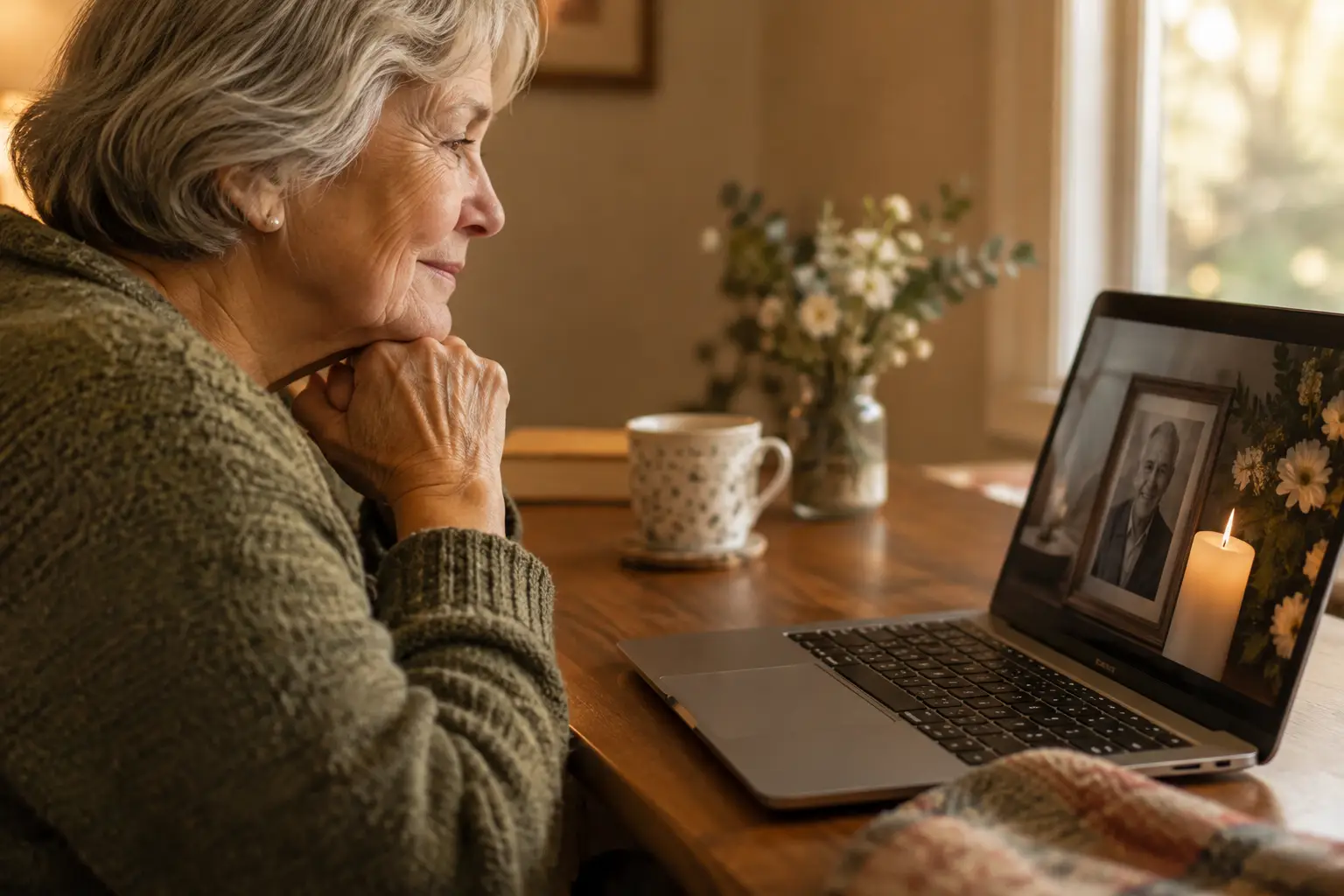
A memorial can begin in one home, but the stories that give it meaning often live across many homes. Can relatives contribute remotely when a family is preserving a loved one’s voice, memories, and personal messages? Yes. In many cases, distance can make each contribution feel even more intentional: a grandson records a favorite story from college, a sister shares a voicemail-like message from across the country, and an old friend recalls the laugh everyone remembers.
For families separated by miles, remote participation is more than a convenience. It is a way to make sure remembrance does not belong only to the person who happens to be nearby. With a thoughtful process, relatives can add their voices without creating confusion, pressure, or an overwhelming collection of files.
Can Relatives Contribute Remotely to a Memorial?
They can, and they should be invited in with care. A digital memorial makes it possible for family members and close friends to contribute from their own phones or computers, on their own time. They may record a spoken memory, answer a meaningful question, share a personal message, or help identify the stories that matter most.
Not every relative will want to participate in the same way. Some people speak freely and warmly when they see a simple recording prompt. Others may prefer to write a memory that another family member reads aloud. A cousin who does not feel comfortable recording may still know the name of a childhood pet, the recipe that brought everyone to the table, or the song your loved one played every Sunday morning.
The goal is not to collect everything. It is to preserve what feels true. A few honest recordings, each made by someone who loved them, can create a much fuller portrait than a polished biography ever could.
Why Remote Contributions Matter
When a loved one is nearing the end of life or has already passed, families often discover how many stories were held quietly by different people. The person who grew up with them remembers one version of their life. Their spouse knows another. Their colleagues, neighbors, grandchildren, and lifelong friends each carry small pieces that no one else can replace.
Remote contribution gives those people a place in the memorial. It also gives them a gentle way to participate when travel is difficult, schedules are tight, or grief makes a gathering feel impossible. A voice recording made from a kitchen table in another state can still become part of a shared act of love.
For future generations, these recordings offer something photographs and written timelines cannot fully hold: personality. They can hear the affection in an aunt’s voice as she tells a story, the pause before a brother remembers something funny, or the tenderness in a granddaughter’s goodbye. Those details help a memorial feel lived in rather than simply documented.
Start With One Clear Invitation
Families often hesitate to ask for contributions because they worry about burdening people. A warm, specific invitation usually makes participation easier. Instead of sending a broad message asking everyone to share memories, explain what you are creating and offer one simple next step.
You might say that you are gathering voice recordings and stories for a lasting memorial page, and that even a two-minute memory would mean a great deal. Let relatives know they do not need special equipment, editing skills, or the perfect words. They only need a quiet moment and something real to share.
A clear deadline can help, particularly before a service or anniversary, but it should not feel final in a painful way. Memory does not work on a schedule. A family member may need weeks or months before they are ready to speak. When the memorial allows contributions to be added over time, it can grow with the family’s remembrance.
Give People a Prompt, Not a Script
The blank space of an open recording can feel intimidating. Prompts give relatives a place to begin while leaving room for their own voice. Ask about a favorite lesson, a tradition, a phrase your loved one always used, or a moment that still makes them smile.
Gentle prompts such as these often bring forward vivid stories:
- What is one moment with them that you will never forget?
- What did they do that made you feel loved or understood?
- What is something they taught you without realizing it?
- If future generations could hear one story about them, what should it be?
For someone recording a message directly to the person who has died, a different invitation may feel right: “What would you like them to know?” This can be especially meaningful for children, grandchildren, and relatives who could not be present at the end of life.
Keep the Process Simple and Private
The emotional part should be the memory, not the technology. Before inviting others, decide who will organize submissions, who can review them, and how the family will name or group recordings. One person does not have to carry the whole task, but a clear point of contact prevents messages from being lost across texts, emails, and social media.
VoiceForEternity is designed for this kind of family collaboration, allowing loved ones to record and preserve contributions from wherever they are. A shared memorial space can bring recordings, stories, and messages together so the family is not left sorting through scattered files later.
Privacy deserves the same attention as participation. Let contributors know who will be able to hear their recording and whether it will be part of a QR-linked memorial page, kept within the family, or shared only at a service. Some memories are deeply personal. Giving relatives permission to mark a contribution as private, or to share it only with close family, creates trust.
It also helps to set a gentle standard: speak with kindness, avoid unresolved conflicts, and focus on memories that honor the person at the center of the memorial. A remembrance does not need to pretend someone was perfect. It should, however, be a place where loved ones feel safe returning.
Make Room for Different Kinds of Love
Remote contributions do not all have to be stories. One relative may record a prayer. Another may sing a few lines of a lullaby your loved one sang to the children. A former coworker may offer a brief tribute about the way they showed up for others. Someone else may simply say, “I miss you,” in the language that was spoken at home.
These moments may be short, but they are not small. A 30-second recording can become the one a child listens to again and again. The value is not measured by length, polish, or how much someone knows about the family history.
If your loved one is still living, remote contributions can also become a gift for them now. Relatives can record messages of gratitude, ask questions they have been meaning to ask, or share stories that invite conversation. This approach can be especially comforting when an aging parent or grandparent lives far away. It turns distance into an opportunity to listen more closely while there is still time.
When Participation Feels Difficult
Families are not always united, and grief does not make old tensions disappear. In some situations, inviting every relative to contribute may not be wise or emotionally safe. The right approach depends on the relationship, the wishes of the person being honored, and the needs of those closest to them.
You can begin with a smaller circle and expand later. You can ask one trusted person to gather stories from a branch of the family. You can also keep the memorial focused on recordings that are loving, appropriate, and meaningful rather than trying to represent every perspective.
There is no requirement to make the process public or comprehensive. A lasting memorial should feel like care, not an obligation. The family has permission to protect the peace of the space they are creating.
Let the Memorial Keep Growing
The first gathering of recordings is only the beginning. A birthday, holiday, wedding, graduation, or visit to a gravesite may bring a new memory to the surface years later. When relatives can contribute remotely, the memorial can remain a living place of connection rather than a project that ends after the funeral.
Invite the people who loved them to speak in their own time and in their own words. One day, someone in the family may scan a memorial plaque, hear a familiar voice, and understand that love was carried across every mile.