Memorial QR Plaque Versus NFC: Which Lasts?
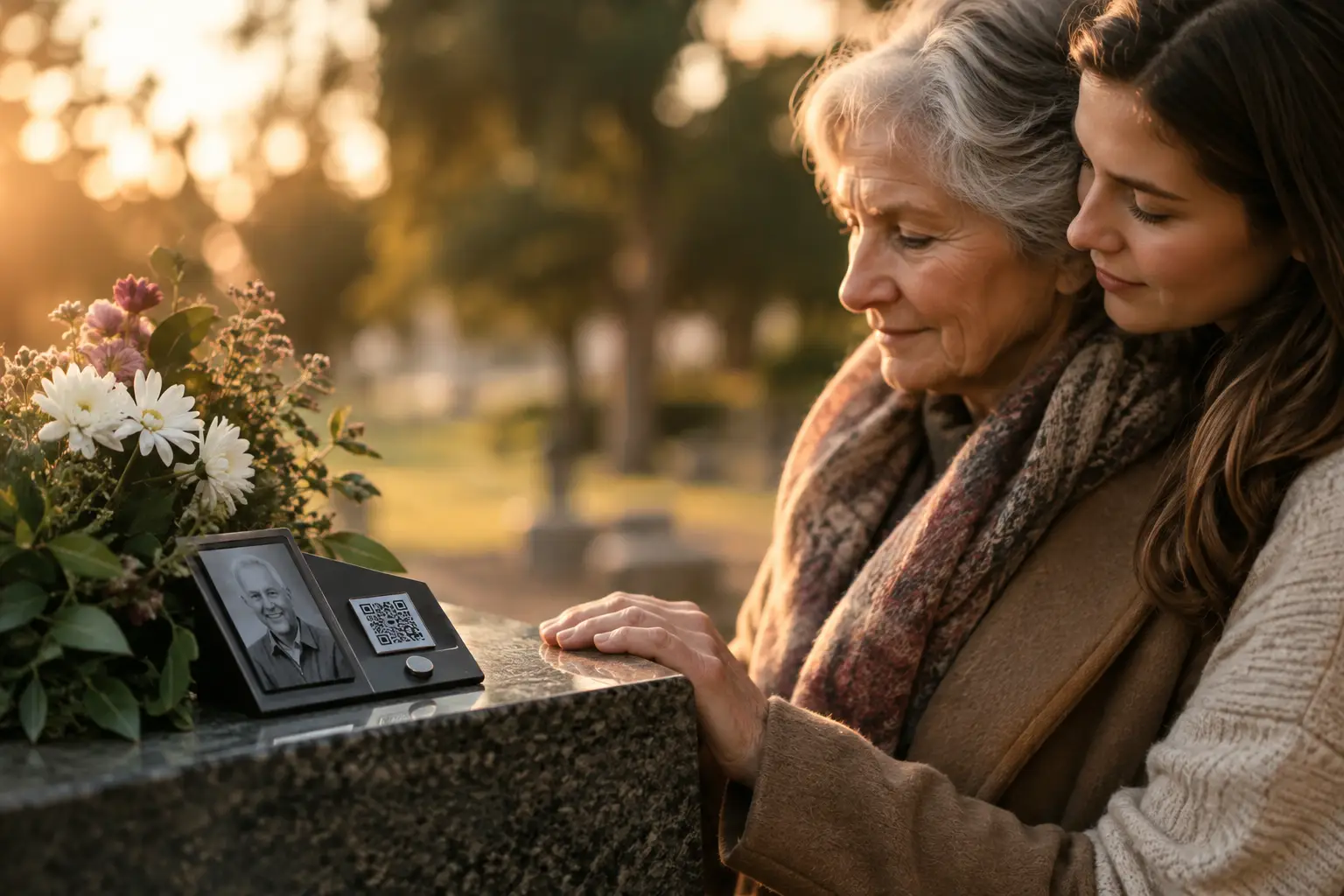
A small plaque can hold an extraordinary invitation: scan or tap here, and hear their voice again. When families consider a memorial QR plaque versus NFC, the decision is rarely only about technology. It is about whether a grandchild can easily hear Grandpa tell his favorite story, whether a visitor at a gravesite knows what to do without instructions, and whether the memory remains reachable years from now.
Both QR codes and NFC can connect a physical memorial to a digital page of photos, stories, and recordings. Yet they work differently in the moments that matter. Understanding those differences can help you choose a tribute that feels simple, dignified, and built for the people who will return to it.
Memorial QR Plaque Versus NFC: The Essential Difference
A QR plaque uses a printed or engraved square code. A visitor opens the camera on their smartphone, points it at the code, and follows the prompt to the memorial page. The page may hold an obituary, written memories, family photos, and, most personally, audio recordings of a loved one speaking in their own voice.
NFC stands for near-field communication. It uses a tiny chip inside or behind a plaque. Instead of scanning a visible code, a visitor holds or taps a compatible phone close to the plaque. The phone may then open the memorial page.
The experience can look similar after the page opens. The meaningful difference is how people get there. QR codes are visible and familiar. NFC feels more hidden and modern, but it asks more of the visitor's phone and their confidence using it.
Why a QR Plaque Often Feels Easier for Families
At a cemetery, garden, columbarium, or memorial service, visitors range widely in age and comfort with technology. A QR code gives a clear visual cue. Most people recognize it immediately, and nearly every current smartphone camera can scan one without downloading a special app.
That simplicity matters when someone is standing quietly at a gravesite. They should not need to search for a tap point, remove a bulky phone case, change settings, or wonder whether their device supports NFC. They can simply open their camera and scan.
A QR code also makes the purpose of the plaque more apparent from a short distance. Even before scanning, guests understand that the memorial has another layer to discover. For families who want to share a voice recording, this gentle invitation can be deeply moving: a familiar voice is only one scan away.
NFC has an advantage when visual minimalism is the highest priority. A family may prefer a plaque with no visible code, especially on a private indoor display or a carefully designed keepsake. But on a public memorial, invisibility can create uncertainty. If visitors do not know the chip is there, they may never access the memories it carries.
Accessibility is about more than the phone
Accessibility also includes what happens when a visitor arrives from far away, has limited time, or is carrying flowers and personal items. Scanning a QR code is intuitive in a way that does not need explanation. A small line such as “Scan to hear their story” can make the experience feel welcoming rather than technical.
NFC can be quick when it works, but it requires close physical placement and an enabled NFC reader. Some older phones, certain phone settings, and thick metal or wallet-style cases can interfere. For a memorial meant to serve multiple generations, fewer points of friction are usually better.
Durability Depends on the Plaque, Not Just the Technology
Neither QR nor NFC is automatically permanent simply because it is digital. The long-term success of a memorial depends on two separate things: the physical plaque’s ability to withstand its environment and the memorial provider’s commitment to preserving the page behind it.
For an outdoor QR plaque, the code needs strong contrast, sufficient size, and precise engraving or printing. Fine details can become harder to scan if a plaque is scratched, covered in dirt, exposed to weather, or placed in deep shadow. Quality materials and a thoughtfully sized code make a real difference. A code should remain easy for a standard phone camera to read, not merely look attractive when it is new.
An NFC chip is protected from casual scratching because it can sit beneath the surface. Still, it is an electronic component. Extreme weather, impact, moisture intrusion, manufacturing defects, or separation from the plaque can affect performance. And because the chip is not visible, a visitor may not know whether the problem is the phone, the tap location, or the plaque itself.
For many families, the strongest practical choice is a QR code on a durable engraved plaque. It is simple to inspect, easy to recognize, and can be tested anytime with an ordinary phone. Some memorial products use both QR and NFC, providing a backup path. That can be useful, provided the QR code remains clear and the overall design still feels respectful.
The Memorial Page Is the Part That Holds the Legacy
A plaque is the doorway, not the whole memorial. Before choosing QR, NFC, or both, ask what waits on the other side.
Can family members add memories from different locations? Can recordings be organized so visitors hear a loved one tell stories in their own words? Are photos, written tributes, and private messages handled with care? Is there a clear plan for long-term access, and does the family understand who manages the page?
These questions are especially meaningful when preserving a voice. A voice carries humor, pacing, accent, and affection in a way text cannot. Hearing Mom say “I love you,” listening to an uncle recall a childhood summer, or sharing a grandparent’s advice with a future generation can make a memorial feel present rather than static.
VoiceForEternity centers this experience around a permanent QR-linked memorial page, allowing families to record and organize stories, messages, and audio in one place. Its one-time pricing approach is designed to give families greater confidence that remembrance is not dependent on an ongoing subscription.
No technology provider can make a thoughtful review unnecessary. Ask direct questions about account ownership, the ability to download or retain original recordings, privacy controls, and how loved ones can access the memorial in the future. The best digital memorial plan respects both emotional permanence and practical stewardship.
When NFC May Be the Right Choice
NFC is not a poor choice. It can be a lovely addition when the memorial will be used primarily by immediate family who understand how it works. It also suits indoor remembrance displays, framed photographs, keepsake boxes, and other settings where people can receive simple instructions and have time to tap carefully.
A hidden NFC tag may appeal to someone who wants the plaque surface to remain entirely traditional. It can also create a quiet, personal interaction: a family member taps their phone and finds a message meant just for them.
The trade-off is discoverability. If the tribute is intended for friends, extended relatives, or future visitors who may not know the family, include a visible cue or pair NFC with a QR code. A memorial should never make someone feel as though they need special knowledge to remember well.
A Thoughtful Choice for a Public Memorial
For most headstones, urn placements, gardens, and columbarium niches, a well-made memorial QR plaque is the more universally accessible option. It is familiar, visible, and easy for visitors to use with the phone already in their hand. NFC can be a meaningful companion feature, but QR is usually the clearer front door.
As you decide, picture the person you hope will visit ten or twenty years from now. They may be a child not yet born, a cousin who lives across the country, or a friend who comes alone with flowers. Choose the option that lets them spend less time figuring out the technology and more time listening, remembering, and feeling close to the person they miss.