Memorial Audio Quality Review for Lasting Voices
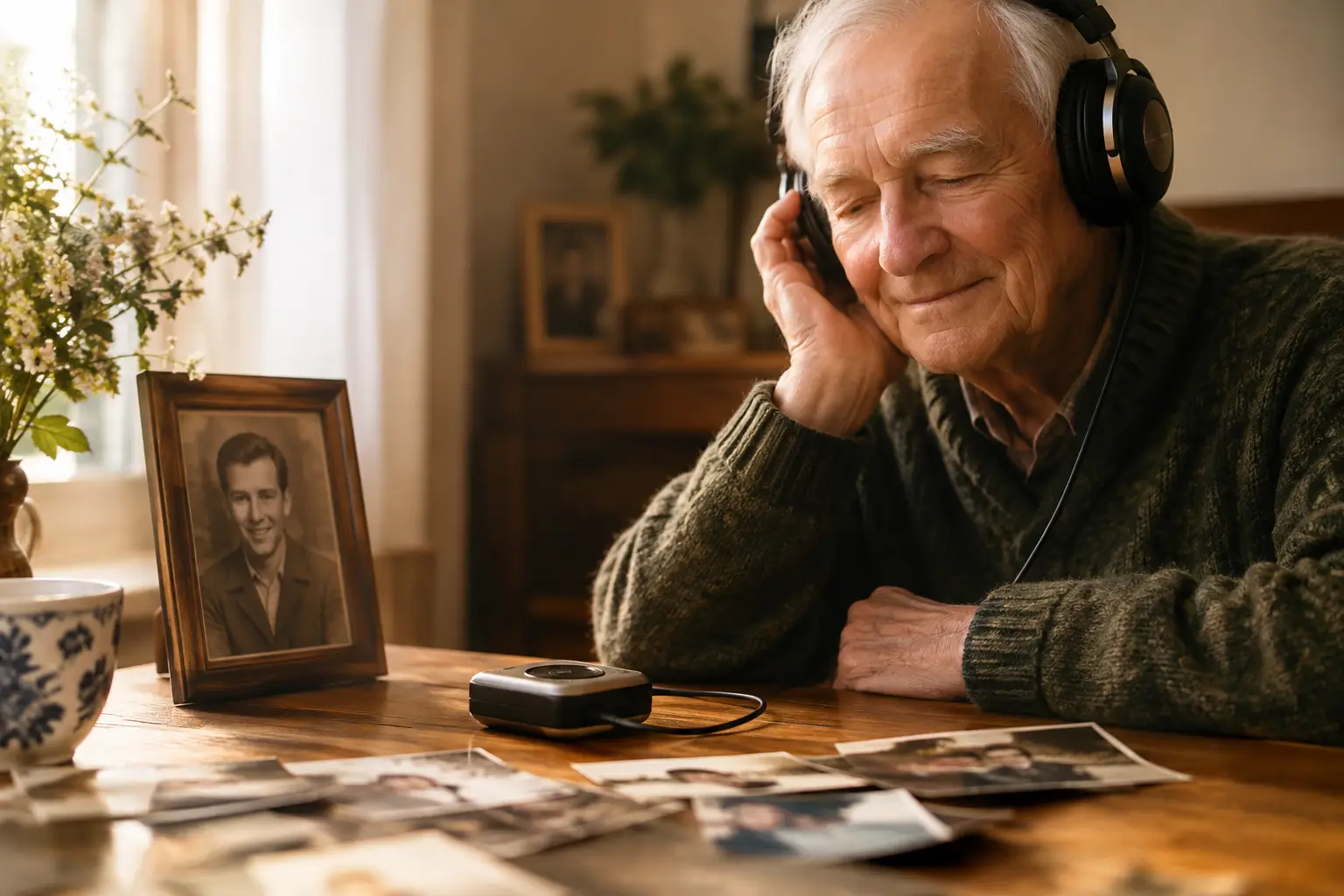
A familiar laugh, the way someone says your name, a pause before a favorite family story - these details can bring a loved one close in a way photographs cannot. A memorial audio quality review is not about making a voice sound like a studio production. It is about making sure the voice is clear enough to be understood, natural enough to feel true, and safely preserved enough to be heard again when it matters.
For families creating an audio memorial, the most meaningful recording is rarely the most polished one. It is the one that carries personality: a grandfather’s dry humor, a mother’s encouragement, a spouse’s quiet way of telling a story. Quality matters because poor audio can put distance between a family and the person they are trying to remember. But perfection should never become a reason to postpone recording.
What Memorial Audio Quality Really Means
When people think of audio quality, they often think of microphones, editing software, or technical specifications. Those tools can help, but memorial recordings are judged differently. The real question is simple: when a child, grandchild, or friend listens years from now, can they hear and recognize the person they love?
Good memorial audio has three qualities. First, it is understandable. Words should not be buried under television noise, traffic, wind, or an echoing room. Second, it feels natural. Heavy filtering, artificial voice correction, and aggressive noise removal can make a recording feel flat or unfamiliar. Third, it has emotional context. A short message in someone’s own voice may carry more meaning than a flawlessly edited recording with nothing personal to say.
This is why a quiet recording made on a phone can be more valuable than an old voicemail that crackles and cuts out. At the same time, an old voicemail may be irreplaceable even if it is imperfect. The goal is not to discard imperfect recordings. It is to preserve what exists while giving families a simple way to capture clearer stories and messages now.
Memorial Audio Quality Review: What to Listen For
A thoughtful memorial audio quality review begins with an ordinary listening test. Play the recording through headphones and through a phone speaker. Different family members may listen in different ways, especially when a memorial page is shared across generations. If the message is understandable in both settings, it is likely strong enough to preserve and share.
Listen for whether the speaker’s words are easy to follow. If you need to strain to understand full sentences, the recording may benefit from a quieter re-recording or careful cleanup. Pay attention to volume as well. Voices that are too soft can feel distant, while recordings that are overly loud may distort on certain speakers.
Background noise is another consideration, but it should be assessed with care. The gentle sound of birds in a garden or family laughter in another room may add warmth to a memory. A blaring television, a running appliance, or constant wind noise can compete with the person’s voice. Context is the difference. Ask whether the sound supports the memory or distracts from it.
Also listen for abrupt starts and endings. A recording does not need a formal introduction, but it helps when a listener knows who is speaking and what they are hearing. A simple opening such as, “Hi, this is Grandma, and I want to tell you about the day I met your grandfather,” gives a future listener a place to begin.
Clear Audio Does Not Need to Sound Clinical
Families sometimes worry that a wavering voice, a long pause, or the sound of emotion means a recording is not good enough. Often, those are the moments that make it real. A person speaking slowly because of age or illness is still speaking in their own voice. A shaky breath before a final message can hold profound meaning for the people who love them.
Editing should serve the speaker, not erase them. Removing a loud interruption or raising a very quiet voice can make a recording easier to hear. Removing every pause, breath, laugh, and imperfection can remove the human presence families hoped to preserve.
There are exceptions. If a recording contains private medical information, conflict, or a message the speaker did not intend to share broadly, it deserves thoughtful handling. Families should decide together what belongs on a memorial page and what should remain in a more private family archive. Audio quality includes the quality of that care.
How to Record a Better Voice Memory at Home
You do not need professional equipment to capture a meaningful recording. A recent smartphone, a quiet space, and a little preparation are usually enough. The best place is often a room with soft furnishings, such as a living room or bedroom, because curtains, rugs, and furniture reduce echo.
Place the phone about one to two feet from the speaker, rather than across the room. Ask them to speak at a comfortable, everyday volume. Holding the phone too close can cause breath sounds and distortion; setting it down too far away makes the room louder than the voice. If possible, silence notifications and turn off nearby televisions, fans, and appliances before you begin.
Most importantly, make the conversation feel like a conversation. Formal questions can be useful, but simple prompts often bring out the best stories: “What did you love doing as a child?” “What do you want your grandchildren to know?” “What always makes you laugh?” “Tell me about the home where you grew up.”
Record in shorter sessions if fatigue is a concern. Ten relaxed minutes can hold more warmth and clarity than an exhausting hour. You can always return another day for more stories, favorite sayings, recipes, life lessons, or messages for future milestones.
When Older Recordings Are All You Have
Sometimes a family begins after a loss, with only voicemails, home videos, answering-machine tapes, or recordings from gatherings. These files may have hiss, low volume, or uneven sound. They are still worth saving.
Start by preserving the original file exactly as it is. Do not rely on a single phone, laptop, or social media post to hold something irreplaceable. If light enhancement is available, use it carefully to improve audibility without changing the character of the voice. If a recording remains difficult to understand, add a written note identifying the speaker, the date or occasion if known, and a brief description of what is being said. That context helps future listeners receive the memory with greater understanding.
A less-than-perfect recording can become one part of a richer collection. Pair an old voicemail with new recordings from relatives who remember the moment, or with a spoken introduction explaining why that small clip matters. The result is not merely an audio file. It is a family memory held with intention.
Preservation Matters as Much as Recording Quality
A clear recording loses its value if loved ones cannot find it, access it, or understand who it belongs to. Organization is part of memorial audio quality. Give recordings meaningful titles, identify the speaker, and group them by theme when possible: childhood stories, military service, family traditions, advice, celebrations, or personal messages.
VoiceForEternity helps families organize these spoken memories on a QR-linked memorial page, so a visitor can hear the person behind the name and dates. This can be especially meaningful at a headstone, urn, garden memorial, or family gathering, where a scan can open a direct connection to the voice itself.
Before sharing, consider who should have access and how the page should be introduced. Some families want a public space that welcomes friends and community members. Others prefer a more private circle. Neither choice is more loving. The right choice is the one that honors the person and gives the family peace of mind.
A Recording Is a Gift That Does Not Need to Wait
The best time to record a loved one is not after you have found the ideal microphone, written the perfect questions, or gathered every member of the family. It is while there is still time to say, “Tell me that story again.”
Let the voice be imperfect if it must be. Let the room be ordinary. What a family may cherish most, years from now, is not a perfect performance. It is the comfort of hearing someone they love speak, laugh, remember, and say their name one more time.