Interactive Plaques Versus Headstones Compared
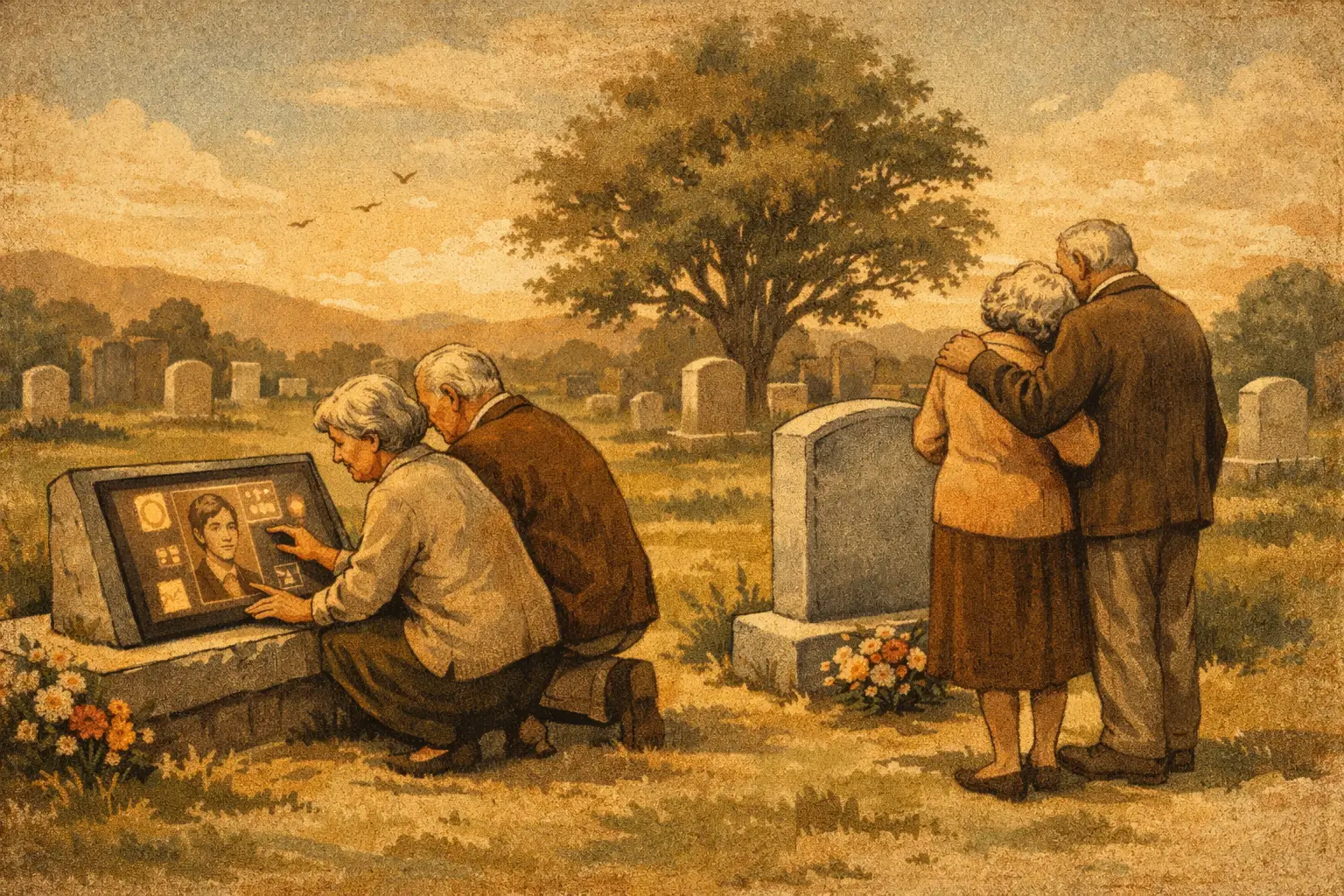
A headstone may tell future visitors a name, two dates, and a few chosen words. An interactive memorial can let them hear the familiar laugh behind that name, a favorite blessing, or a story told in the person’s own voice. When families consider interactive plaques versus headstones, the real question is rarely which one matters more. It is how to preserve both a physical place of remembrance and the person who made that place meaningful.
Interactive Plaques Versus Headstones: What Is Different?
A traditional headstone is a permanent, visible marker. It identifies where someone rests and gives family and friends a place to visit. Its strength is its physical presence. Stone, bronze, and engraved lettering can endure for generations when properly selected and maintained.
An interactive plaque adds a digital doorway to that physical memorial. Typically, it is an engraved plaque with a QR code that visitors can scan with a phone. The code opens a memorial page where family-approved photos, written memories, video, and, most movingly, recorded voice messages can be preserved.
The difference is not simply old versus new. A headstone offers a quiet statement. An interactive plaque can offer conversation, context, and connection. It may answer the questions a stone cannot hold: What did she sound like when she sang? What advice did he give his grandchildren? What stories did they tell about childhood, service, work, faith, or family?
For many families, this is not an either-or decision. The plaque can be placed on a headstone, near an urn, in a garden, or at a columbarium niche. It extends the memorial without asking the stone to carry more than it was designed to hold.
What a Traditional Headstone Does Beautifully
There is a reason headstones remain central to memorialization. They create a tangible destination in a difficult time. A person can bring flowers, stand quietly, place a hand on the stone, and feel the weight of a life acknowledged.
Headstones also work without a phone, an internet connection, or any explanation. Their message is immediate. For families who value simplicity, religious symbolism, historic cemetery traditions, or a strong visual monument, a well-designed headstone may be the most fitting foundation for remembrance.
A stone’s limits are also part of its dignity. Space is finite, so each word carries meaning. A beloved phrase, an epitaph, a military emblem, or a small image can express a great deal with restraint.
But those limits can become painful when a family wants to save more. An obituary cannot capture a cadence of speech. An inscription cannot preserve the sound of “I love you,” a bedtime story, a recipe explained in a parent’s voice, or the family jokes that make someone instantly recognizable. Those are the moments an interactive memorial is designed to hold.
What an Interactive Plaque Can Preserve
The most meaningful digital memorials do not replace a person with a screen. They make it easier to encounter the person behind the dates. A visitor scans the plaque, then chooses whether to listen, read, look, or simply pause.
Voice is especially powerful because it carries personality without needing interpretation. A familiar accent, a laugh between sentences, or the gentle way someone says a child’s name can bring comfort that written words cannot fully recreate. For children and grandchildren, it can also become a bridge to someone they were too young to remember well.
An interactive plaque can give a family room for a fuller record of a life. That might include a personal message recorded before death, tributes from relatives in different states, stories organized by life chapter, photographs with names and dates, or a collection of favorite sayings. The memorial can grow as family members remember more.
This flexibility is particularly helpful after a sudden loss. No one should feel pressured to capture an entire life during the days surrounding a funeral. A physical plaque can be installed when the family is ready, while the digital memorial is built gradually and thoughtfully over time.
VoiceForEternity centers this experience on the human voice, helping families record and organize stories into a permanent QR-linked memorial page without turning remembrance into a complicated technology project.
The Trade-Offs Families Should Consider
An interactive plaque has real benefits, but it deserves the same careful consideration as a cemetery monument. The quality of the experience depends on both the physical plaque and the long-term stewardship of the memorial page.
First, ask about permanence. A QR code should be engraved or otherwise made to last, not printed on a material that may peel or fade. More importantly, ask how the digital content will remain available over the years. Families often feel uneasy about subscriptions, expiring accounts, or the possibility that memories could disappear when a service changes. Clear ownership, one-time pricing when available, and a thoughtful preservation plan can provide needed reassurance.
Second, consider accessibility. Most visitors can scan a QR code easily, but not every person carries a smartphone or wants to use one at a gravesite. This is why an interactive plaque works best as an addition to an already meaningful physical marker, not as a replacement for a name and inscription. The stone should still stand on its own.
Third, think about privacy. A memorial page may be a beautiful way to gather family stories, but not every recording or photograph needs to be public. Look for options that let a family decide what is shared, who can contribute, and how sensitive information is handled. Consent matters, especially when recordings include living relatives or intimate family history.
Finally, check the rules where the plaque will be placed. Cemeteries, columbaria, and memorial gardens can have specific requirements about dimensions, materials, installation, and QR codes. Confirming these details early prevents disappointment and helps ensure the memorial is treated with respect.
Choosing the Right Memorial for Your Family
The best choice begins with the kind of remembrance your family needs now and hopes to leave later. A traditional headstone may be enough when the goal is a simple, enduring marker. An interactive plaque may be especially fitting when stories, voices, and shared participation are central to the person’s legacy.
It can help to ask a few gentle questions. Is there a voice recording you would regret losing? Are family members spread across the country? Would grandchildren benefit from hearing stories in their grandparent’s own words? Is there more to preserve than can fit on an inscription? Do you want a memorial that can be added to after the service, rather than finalized during the hardest week of loss?
If the answers point toward a fuller story, the most thoughtful approach may be both: a headstone that honors the person’s place in the world, and an interactive plaque that shares the life they lived.
When a Headstone May Be Enough
A headstone alone can be the right choice when a family prefers a private, uncomplicated memorial or when cemetery rules are restrictive. It is also appropriate when there are few available recordings or materials and the family finds peace in a brief, traditional tribute. There is no lesser form of love in choosing simplicity.
When an Interactive Plaque Adds Something Essential
An interactive plaque becomes especially meaningful when a person’s voice, storytelling, humor, faith, or family role shaped the people around them. It can be a gentle invitation for visitors to know more than the inscription can say. For a loved one who was the keeper of family history, the one who always left voicemails, or the one whose voice made everyone feel safe, preserving sound can feel essential rather than optional.
A Memorial That Can Keep Giving
A headstone marks a life with permanence. An interactive plaque can keep that life present in the ways families recognize most: a voice, a memory, a message shared across generations. Together, they honor both the stillness of a sacred place and the living connection that remains.
If you are making this decision for someone you love, begin with one recording or one story. You do not need to preserve everything at once. Often, the first voice you save becomes the one your family returns to when they most need to feel close again.