How a QR Memorial for Urn Keeps Voices Close
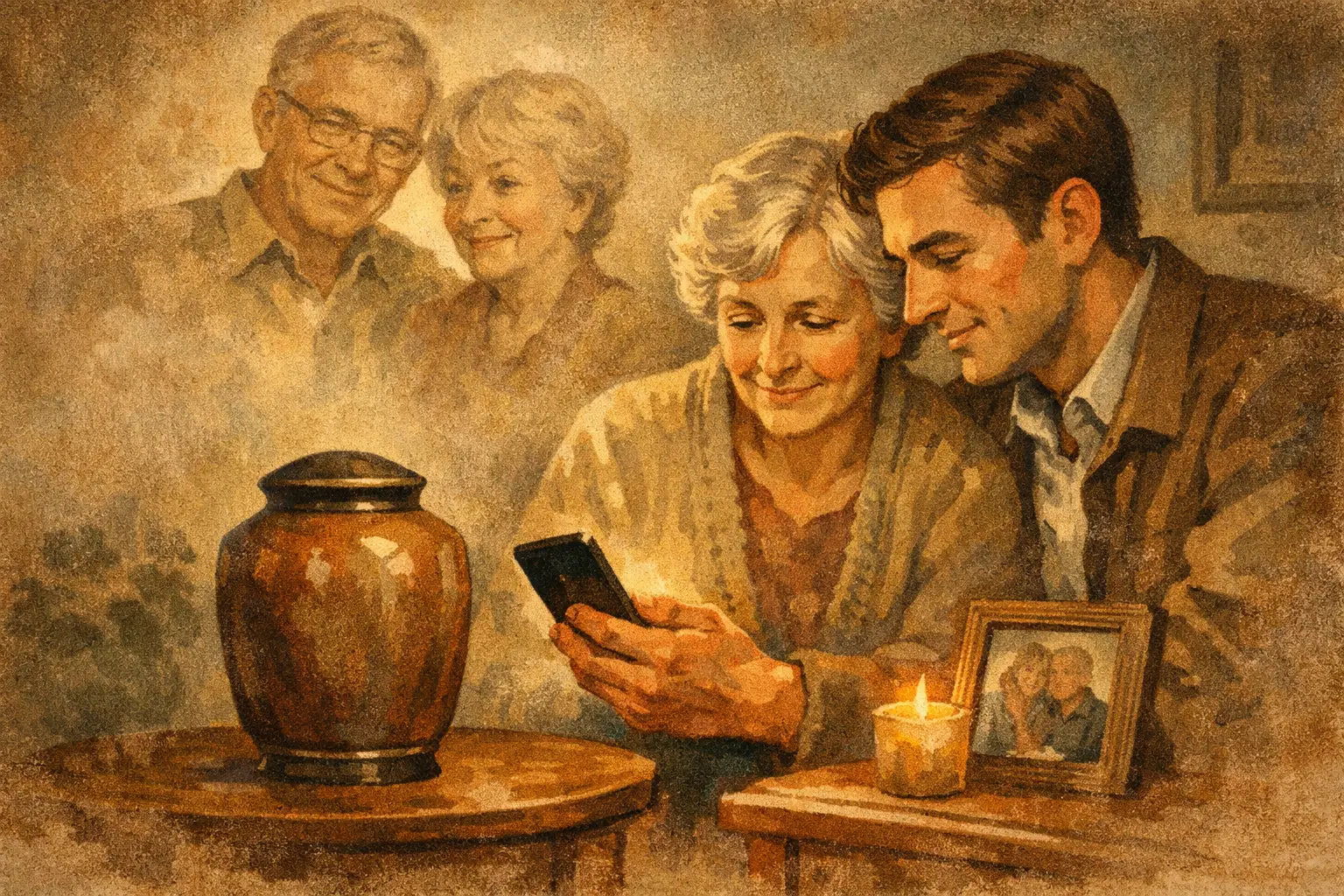
An urn often holds more than ashes. It holds a family’s attention, grief, and love in one quiet place. A qr memorial for urn adds something many families realize they need only after loss - a way to hear the voice, remember the stories, and revisit the personality that made that person unmistakably themselves.
For some families, that means a brief audio message that says, “I love you, and I’m proud of you.” For others, it means a memorial page with recordings, favorite photos, written memories, and shared tributes from relatives in different states. The technology matters, but the real purpose is simple: to make remembrance feel personal again.
What a qr memorial for urn actually does
A QR memorial attached to or placed near an urn connects a physical memorial with a digital memory page. When someone scans the code with a phone, they are taken to a private or shareable space that can hold voice recordings, life stories, photos, videos, dates, and messages from family and friends.
That may sound straightforward, but the emotional difference is significant. A traditional urn can be beautiful, dignified, and deeply meaningful. Still, it cannot tell a granddaughter how her grandfather laughed, how her mother sounded when she sang, or what stories were passed down in that family. A QR memorial gives the urn a living dimension without taking away from its quiet elegance.
This is especially meaningful when voice is included. Text can preserve facts. A voice preserves presence. The pace of speech, a familiar phrase, a gentle joke, even a pause between words can bring comfort in a way few other memorial elements can.
Why families are choosing more than a name and date
Memorial preferences have changed. Families still want beauty, reverence, and permanence, but many also want access. Children move away. Grandchildren grow up in different cities. Loved ones may visit an urn at home, in a columbarium niche, or in a memorial garden only occasionally. When they do, they want that visit to feel connected, not limited.
A QR memorial can meet that need without becoming intrusive. The urn remains the focal point. The digital layer simply allows more of the person’s life to be present. Instead of reducing someone to a line of text, it opens the door to the fullness of who they were.
That matters for families who worry that stories will fade. It also matters for those making arrangements under emotional pressure. After a loss, there is often little time to gather memories in an organized way. A memorial page linked to the urn creates one place where those memories can live together rather than being scattered across phones, text threads, and old hard drives.
The most meaningful part is often the voice
Many memorial products focus on photos and written tributes. Those are valuable, but voice reaches people differently. Hearing a parent say your name again can be deeply grounding. Hearing a spouse retell a favorite story can restore a sense of closeness. Hearing a grandparent’s accent, humor, or advice can help younger generations know them as a person rather than only a memory.
That is why families are increasingly drawn to memorial options that do more than display information. They want to preserve identity. A voice recording, even a short one, can carry warmth and character in a way that no engraving can fully capture.
For some, this begins after death with saved voicemails, videos, or existing recordings. For others, it begins earlier, while a loved one is still living. That can be a gift in itself. Recording stories, messages, and reflections before they are lost gives families something enduring and deeply personal. Their Voice, Forever, is not just a comforting phrase. It reflects a real need families feel.
Where a QR code belongs on or near an urn
Placement depends on the urn style and the setting. Some families prefer a small engraved plaque attached directly to the urn. Others choose a nearby display piece, a memory shelf plaque, or a companion marker if the urn is kept in a niche or memorial space.
The right choice usually comes down to visibility, aesthetics, and practicality. If the urn has a highly decorative surface, a separate plaque may preserve the design better. If the urn is displayed in a home, a code placed discreetly on the back or base may feel more private. In a columbarium, placement may be shaped by cemetery or facility rules, so it is worth checking dimensions and material requirements in advance.
The best memorials do not force a choice between beauty and access. They let both coexist. A well-made QR plaque should feel respectful and permanent, not like an afterthought.
What to include in a QR memorial page
Less is not always better, but more is not always more meaningful either. The strongest memorial pages are carefully chosen, easy to navigate, and centered on the person’s voice and story.
A simple page might include an obituary, a handful of favorite photos, and one audio recording. A fuller page may include multiple recordings, a life timeline, family stories, written tributes, and messages contributed by children, siblings, or friends. There is no single correct format. It depends on what the family has, what feels emotionally right, and how the memorial will be used over time.
When families are unsure where to begin, starting with voice is often easiest. Add one recording that captures something real - a greeting, a blessing, a favorite memory, or a short life reflection. From there, photos and written context can support the listening experience rather than overwhelm it.
Some families also appreciate AI-assisted story organization or summaries, especially when they have hours of recordings and do not know how to shape them into something future generations can easily revisit. Used thoughtfully, that kind of support can make a memorial feel more accessible without losing its humanity.
Choosing a lasting qr memorial for urn
Not every digital memorial is built with permanence in mind. This is where families should slow down and ask practical questions. Who owns the memorial content? Is there a recurring fee? What happens years from now if the account is inactive? Is the QR code permanent, and is the page designed to be easy for relatives of different ages to use?
These details matter because memorials are different from everyday tech. Families are not looking for another app to manage. They want confidence that what they create will remain available and organized for the long term.
A one-time purchase model often feels more reassuring than an ongoing subscription, especially in memorial planning. It aligns better with the emotional purpose of the product. Permanence should feel like a promise, not a monthly obligation.
It also helps to choose a system that makes family collaboration simple. Grief is rarely local. Brothers, daughters, cousins, and old friends may all hold different pieces of the story. A memorial becomes richer when they can contribute without friction.
VoiceForEternity is built around that idea, giving families a way to preserve voice, stories, and memorial pages in a format that feels both personal and lasting.
When this kind of memorial feels especially right
A QR memorial for an urn can be meaningful in many situations, but it tends to resonate most when a family wants more than a static tribute. If someone was known for their storytelling, their singing, their advice, or the sound of their laugh, preserving voice can feel essential rather than optional.
It can also be a gentle choice for families who are planning ahead. Creating recordings before loss gives everyone more time, less pressure, and often better conversations. People share more when they are not rushed. They remember details they might not think to write down. They leave messages they never got to say in formal settings.
There are trade-offs, of course. Some families prefer very private remembrance and may not want any digital element connected to an urn. Others may want a memorial page but not a visible QR code on the urn itself. Those preferences are valid. The best memorial is not the most advanced one. It is the one that fits the person, the family, and the setting with dignity.
What matters most is that remembrance feels true. A beautiful urn honors presence in one way. A voice, story, or shared memory honors it in another. When those two come together, families often feel they have not just marked a life, but kept something of it within reach.
Years from now, someone may scan that small code and hear a familiar voice speak again. In that moment, the memorial is no longer only about loss. It becomes an act of continued love.