QR Code for Headstone Memorial Guide
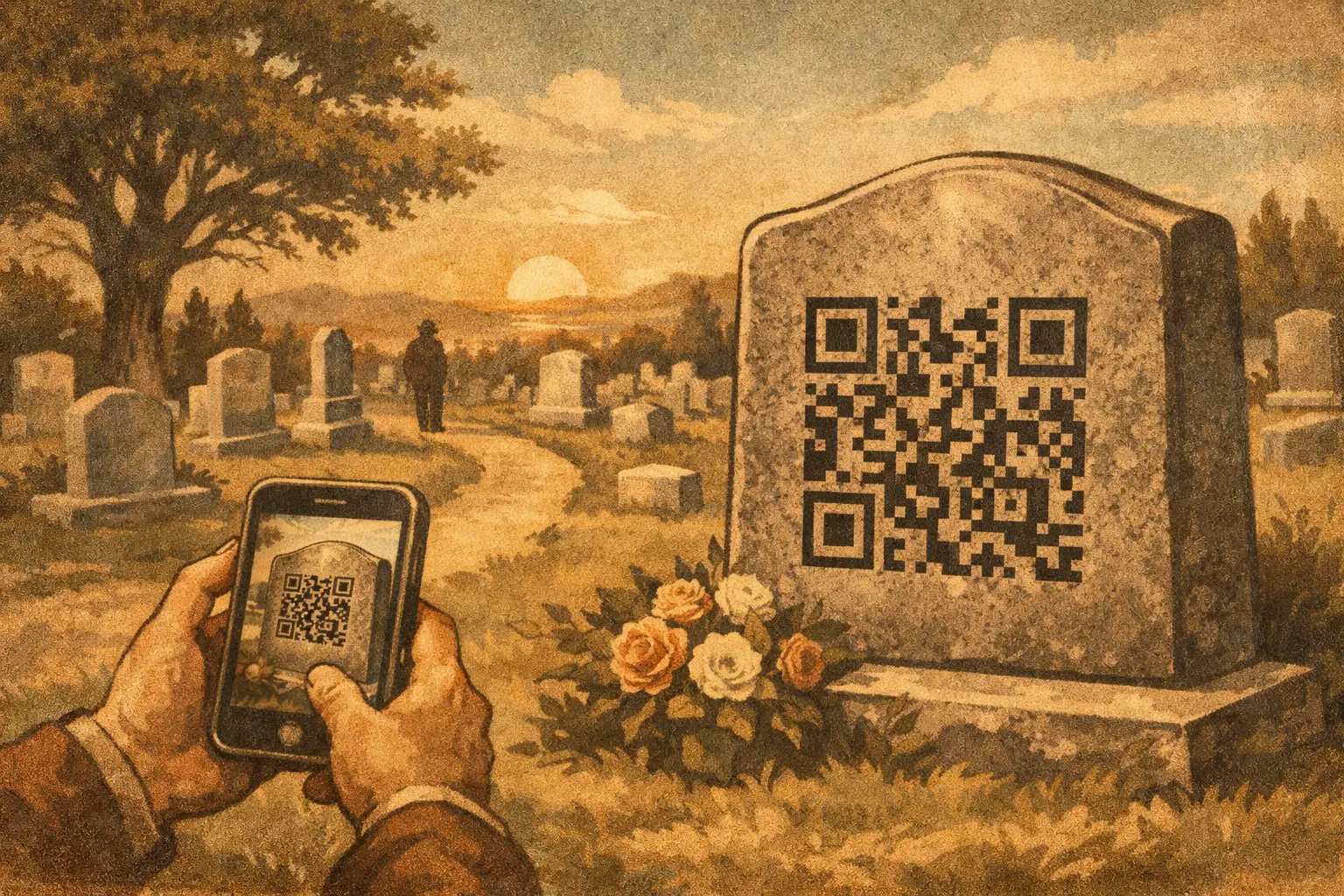
A name, two dates, and a few words can mark a life with dignity. But for many families, that no longer feels like enough. A qr code for headstone memorial pages gives visitors a way to go beyond the stone itself and hear a voice, see family photos, read stories, and feel closer to the person being remembered.
That is why this choice matters. It is not about adding technology for its own sake. It is about preserving the parts of a person that are hardest to hold onto over time - the sound of their laugh, the way they told a story, the message they would want future generations to hear.
What a qr code for headstone memorial does
A memorial QR code is a small scannable code placed on or near a headstone, grave marker, urn, or memorial plaque. When someone scans it with a smartphone camera, it opens a digital memorial page. That page can include an obituary, photos, videos, written memories, service details, and, most meaningfully for many families, audio recordings.
The difference is emotional as much as practical. A traditional memorial marker honors presence. A QR-linked memorial can also preserve personality. It allows a grandchild to hear a grandparent's voice years later. It lets a friend who lives far away visit the memorial page from anywhere. It gives families a place to gather memories in one lasting space instead of scattering them across phones, texts, and social media accounts.
For some families, this feels modern in the best possible way. For others, it raises fair questions about permanence, appearance, and ease of use. Those questions are worth asking before anything is attached to a headstone.
Why families choose a qr code for headstone memorial pages
Most people are not looking for a tech feature. They are looking for comfort, connection, and a way to remember someone more fully.
A QR memorial often appeals to families because a physical marker has limited space. Even a beautifully engraved stone cannot hold every story, every photo, or the sound of a person's own words. A digital page can. It can also be updated over time, which matters when grief unfolds in stages and family members want to contribute memories later.
There is also a practical side. Families are often spread across states or countries. Not everyone can visit the cemetery regularly, and not every loved one is buried in a place that is easy to reach. A digital memorial page allows access from anywhere while still keeping the headstone as the central place of remembrance.
For many, the most meaningful feature is voice. Photos show what someone looked like. Writing tells you what happened. Voice carries warmth, humor, cadence, and affection in a way nothing else can. That is why some memorial platforms, including VoiceForEternity, place audio at the heart of the experience.
What to include on a memorial page
The best memorial pages are not always the most elaborate. They are the ones that feel true to the person.
Start with the essentials: full name, dates, a portrait, and a short life tribute. From there, families often add a photo gallery, service information, favorite sayings, and written memories from relatives and friends. If audio is available, a short welcome message or personal recording can become the most treasured part of the page.
Sometimes less is better. A simple page with one cherished recording and a handful of meaningful photos can feel more intimate than a page overloaded with materials. It depends on the family, the personality of the loved one, and how public or private they want the memorial to be.
Privacy matters here too. Some families want a fully open page so anyone visiting the grave can view it. Others prefer controlled access, especially if the page includes sensitive recordings, family messages, or details about children and living relatives. Before creating a memorial, it helps to decide what should be public and what should stay within the family.
How the process usually works
Setting up a QR memorial is often simpler than families expect. In most cases, the process begins by creating the digital memorial page. That includes uploading photos, adding written content, and recording or importing audio messages if the platform supports voice preservation.
Once the page is ready, a unique QR code is generated and connected to that memorial. The code is then engraved or printed onto a durable plaque, medallion, or marker designed for outdoor memorial use. That plaque can be attached to a headstone if cemetery rules allow it, or placed nearby on a companion memorial item such as a garden stone, bench, urn plaque, or niche plate.
Durability matters more than many people realize. Outdoor memorials face sun, rain, snow, temperature shifts, and years of wear. A paper sticker or low-grade print is rarely enough. Families should look for materials and engraving methods intended for permanent outdoor placement.
Testing matters too. Before anything is installed, scan the code with multiple phones and make sure the page loads quickly and clearly. A beautiful idea only works if it remains easy for visitors to access.
What to ask before you order
This is where thoughtful planning makes all the difference. Not every memorial QR product offers the same level of permanence or care.
First, ask where the memorial page is hosted and how long it is intended to remain active. Families often assume digital means permanent, but that depends on the provider's model. If access relies on ongoing subscriptions or uncertain future payments, that can create anxiety later. Many families prefer one-time pricing because it aligns with the purpose of a memorial - lasting remembrance without recurring concerns.
Second, ask who controls the content. Can family members contribute? Can updates be made later? Is there a clear process if one person originally set up the memorial and another relative needs access in the future?
Third, ask what happens if the company changes over time. This can be an uncomfortable question, but it is a necessary one. Memorial products should be built with permanence, ownership, and continuity in mind.
Finally, ask your cemetery or memorial park about their rules. Some allow QR plaques on headstones without issue. Others have size, material, or placement restrictions. It is better to confirm those details early than to order something that cannot be installed as planned.
The trade-offs families should consider
A QR memorial can be deeply meaningful, but it is not one-size-fits-all.
Some families want the headstone to remain visually traditional and minimal. In those cases, a small companion plaque nearby may feel more appropriate than adding anything directly to the stone. Others worry that older visitors may not use smartphones. That is a fair concern, although most families find that the QR code adds an option rather than replacing the physical memorial itself.
There is also the question of timing. Right after a loss, some people want to create a rich memorial page immediately. Others need space and prefer to begin with a simple tribute, then add recordings and stories months later. Both approaches are valid.
The right choice depends on the family, the setting, and the kind of remembrance that feels most respectful. A digital memorial should support grief gently, not pressure anyone into making fast decisions.
Why voice changes the memorial experience
There is something unmistakable about hearing someone speak after they are gone. It can be tender, grounding, and profoundly comforting.
That is what makes voice such a powerful part of a headstone memorial. A visitor can stand at the gravesite, scan the code, and hear a favorite story in the person's own words. A future great-grandchild can learn not just their ancestor's name, but their personality. The memorial becomes more than a record. It becomes an encounter.
This is especially meaningful for families who are planning ahead. Recording a parent or grandparent now, while there is still time, can spare regret later. Many people do not realize how much they will miss a voice until they can no longer hear it.
A stone marks a life. A voice carries it forward.
If you are considering a QR memorial, the kindest approach is often the simplest one: choose something durable, clear, and easy for your family to use, then fill it with what matters most. Not everything needs to be captured. One real story, one familiar laugh, one message spoken with love can be enough to keep someone close.